Top 8 Categories of Marketing Internship Interview Questions for 2025
Landing a great marketing internship is the first step toward a dynamic career. But before you can start creating campaigns and analyzing data, you have to ace the interview. Hiring managers are looking for more than just textbook knowledge; they want to see your strategic thinking, creativity, and genuine passion for the industry. Success in this process hinges on your ability to articulate your value, demonstrate practical skills, and show you're a proactive learner ready to contribute from day one.
This comprehensive guide is your playbook for success. We break down the eight essential categories of marketing internship interview questions you are almost guaranteed to face. From behavioral assessments using the STAR method to technical queries about analytics, we cover the entire spectrum of what hiring teams will ask. Understanding the why behind each question is just as important as knowing what to say. We'll explore the interviewer's intent, helping you frame responses that highlight your strengths and align with the company's goals.
Here, you won't find generic advice. Instead, you'll get structured, actionable insights and model answers designed to make you stand out. We will dissect questions related to your marketing knowledge, creative problem-solving abilities, and communication skills. For a comprehensive approach to mastering your marketing internship interview, explore these actionable job interview preparation tips. By preparing for these specific categories, you can walk into your next interview feeling confident, articulate, and ready to secure the role.
1. Behavioral Questions (STAR Method)
Behavioral questions are a cornerstone of modern interviews, especially for roles like marketing where soft skills are just as crucial as technical ones. Instead of asking hypothetical questions, interviewers ask you to describe past experiences to predict your future performance. These questions often start with prompts like, "Tell me about a time when..." or "Describe a situation where..." to gauge your real-world problem-solving abilities, teamwork skills, and resilience.
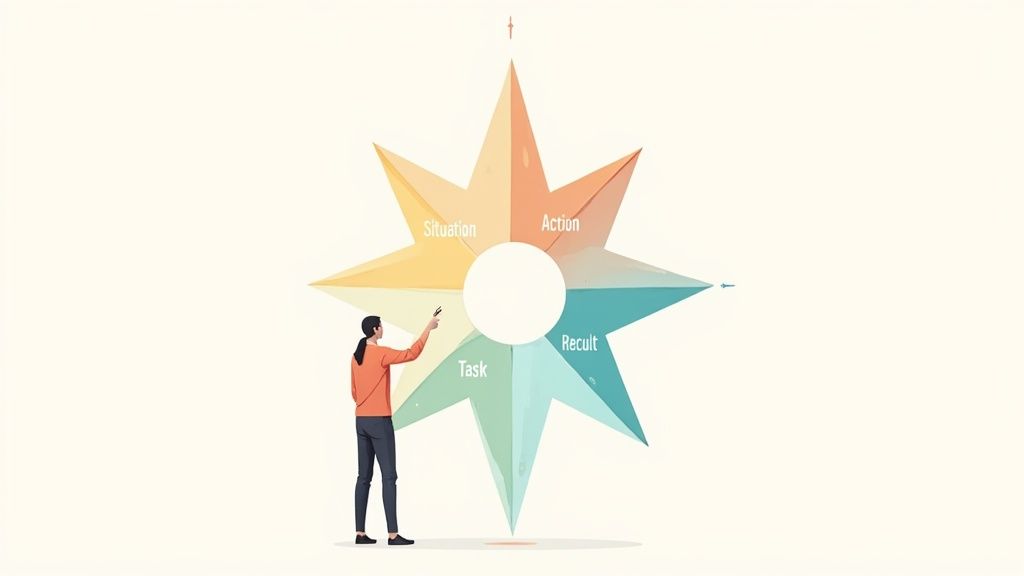
The best way to answer these is by using the STAR method, a structured storytelling framework that ensures your answer is clear, concise, and impactful.
How the STAR Method Works
The STAR framework breaks your story into four key components:
- S - Situation: Briefly describe the context. Where were you working? What was the project or challenge?
- T - Task: Explain your specific responsibility or goal in that situation. What needed to be accomplished?
- A - Action: Detail the specific steps you took to address the task. This is the core of your answer, so focus on your individual contributions and the skills you used.
- R - Result: Share the outcome of your actions. Quantify your success with metrics and data whenever possible. What was the impact on the project, team, or company?
Example STAR Method Answer
Let's apply this to a common marketing internship interview question: “Tell me about a time you managed a project with a tight deadline.”
Situation: "In my previous role as a social media assistant for a campus club, we were tasked with promoting our annual charity event, which was only two weeks away. Our initial promotional plan fell through, and we had almost no online engagement."
Task: "My specific task was to develop and execute a new, rapid social media campaign to sell at least 100 tickets before the event date."
Action: "I immediately analyzed our past engagement data and saw that video content performed best. I created a content calendar focusing on short-form videos, including student testimonials and behind-the-scenes clips. I used Canva to design quick, eye-catching graphics and scheduled all posts using a free tool to ensure consistent timing."
Result: "As a result of the targeted campaign, we sold 135 tickets, exceeding our goal by 35%. Our Instagram account’s engagement rate increased by 25% over the two-week period, and the event was a success."
This structured approach transforms a simple answer into a compelling story that showcases your skills in action. You can discover more essential strategies for interview success and learn how to prepare for your interview by exploring additional resources.
2. Marketing Knowledge & Industry Awareness Questions
Beyond your past experiences, interviewers need to know that you have a genuine passion for marketing and a solid grasp of its core principles. These questions test your foundational knowledge, from key terminology and classic frameworks to your awareness of the latest industry trends and digital platforms. They show the hiring manager that you're not just looking for any job, but that you are an engaged, curious, and proactive future marketer.
These questions often sound like, "What are the key differences between B2B and B2C marketing?" or "What marketing trends are you most excited about right now?" They reveal if you've done your homework on both the industry and their specific company.
How to Demonstrate Your Knowledge
The goal is to connect theoretical knowledge with practical application, showing you can think like a marketer.
- S - Study Fundamentals: Understand core concepts like the marketing funnel, SWOT analysis, and the 4 Ps of marketing. Be able to explain them clearly.
- T - Track Trends: Follow industry news and thought leaders. Mention recent campaigns you admire, new technologies like generative AI, or shifts in consumer behavior.
- A - Analyze the Company: Research the company’s marketing efforts. Who are their competitors? What is their target audience? How do they position themselves in the market?
- R - Relate to the Role: Connect your knowledge directly to the company. When discussing a trend, explain how they could leverage it.
Example Answer
Let's apply this to a common marketing knowledge question: “Describe the marketing funnel and how it applies to our industry.”
Situation: "The marketing funnel is a model that illustrates the customer's journey, from initial awareness of a brand to the final action of making a purchase. It's typically broken down into stages like Awareness, Interest, Consideration, and Conversion."
Task: "For a B2B SaaS company like yours, the funnel is often longer and more complex than in B2C. The goal is not just a single purchase but to build a long-term relationship and guide a business through a more considered decision-making process."
Action: "At the Awareness stage, you might use SEO-focused blog posts or a targeted LinkedIn marketing strategy for B2B to reach potential clients. For Interest and Consideration, webinars, case studies, and detailed whitepapers are effective for nurturing leads. Finally, the Conversion stage is driven by personalized demos and free trials, followed by post-sale support to encourage retention and advocacy."
Result: "By understanding and applying this funnel, a company can allocate resources more effectively at each stage, creating a cohesive journey that turns prospects into loyal customers. This strategic approach helps improve lead quality and increases the overall return on marketing investment."
This answer shows you not only know the definition but can also apply it thoughtfully to the interviewer’s specific business context. To build a strong foundation, you can explore the essential marketing skills to learn for a successful career.
3. Technical & Analytics Questions
Modern marketing runs on data, and interviewers need to know you can handle the tools and metrics that drive decisions. Technical and analytics questions are designed to assess your comfort level with digital marketing platforms, your ability to interpret data, and your understanding of key performance indicators (KPIs). These questions move beyond theory to test your practical, hands-on skills with the software and analytics frameworks used every day.
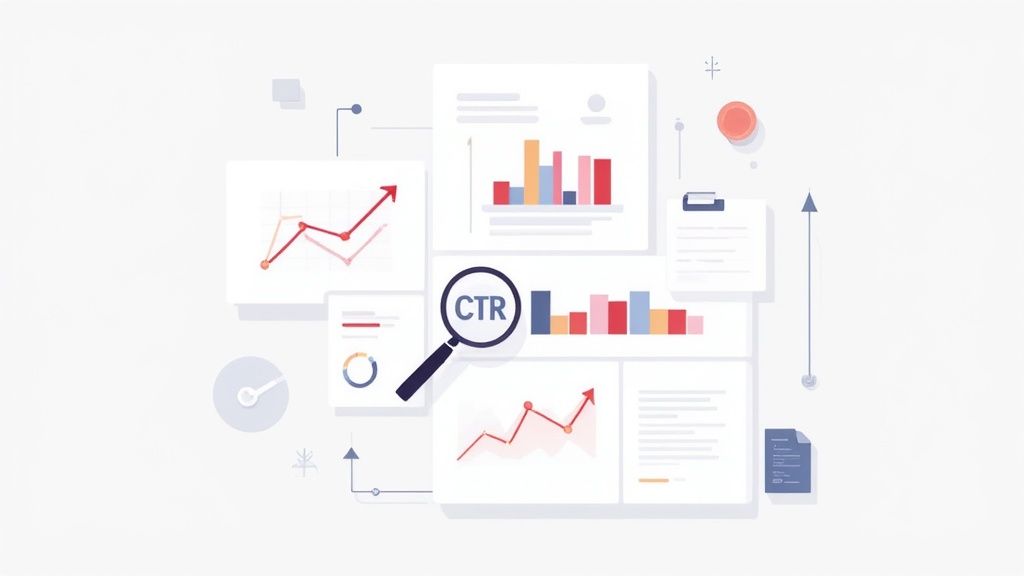
Hiring managers ask these marketing internship interview questions to see if you can translate raw numbers into actionable insights. They want to confirm you understand the "why" behind the data, not just the "what."
What Interviewers Are Looking For
When asking technical questions, employers are evaluating several key competencies:
- Platform Proficiency: Have you used essential marketing tools like Google Analytics, social media schedulers, email marketing software, or a CRM?
- Data Literacy: Can you define and differentiate core metrics like impressions, click-through rate (CTR), and conversion rate?
- Analytical Thinking: How do you use data to diagnose a problem, measure success, or recommend a strategic change?
- Technical Curiosity: Do you show an interest in learning new technologies and understanding how marketing campaigns are tracked and measured?
Example Technical Answer
Let's look at a common technical question: “What is a UTM parameter, and why is it important?”
Answer: "A UTM parameter is a small piece of code added to the end of a URL to help track the effectiveness of different marketing campaigns. It tells analytics platforms, like Google Analytics, exactly where a website visitor came from."
"They are crucial because they solve the problem of attribution. For example, if we're running a campaign on Facebook, LinkedIn, and through an email newsletter, UTMs allow us to see which specific source, medium, and campaign generated the most traffic and conversions. Without them, all that traffic might just show up as 'direct' or 'social,' and we wouldn't know which channel delivered the best ROI. This detailed tracking allows us to make data-driven decisions to optimize our marketing spend and effort."
This answer not only defines the term but also explains its strategic importance with a clear, practical example, demonstrating a deeper understanding of marketing analytics.
4. Creative & Campaign Development Questions
Beyond technical skills, marketing thrives on fresh ideas and strategic creativity. These questions are designed to assess your ability to think outside the box, conceptualize a campaign from start to finish, and connect innovative ideas to business objectives. Interviewers want to see how you approach a creative brief, generate concepts, and plan for execution, often within realistic constraints like budget and time.

This is your chance to show your passion for the industry and your understanding of what makes a campaign memorable and effective. These aren't just tests of creativity; they are evaluations of your strategic thinking and problem-solving skills under pressure.
How to Structure Your Campaign Pitch
When asked to develop a campaign on the spot, use a simple, clear framework to structure your thoughts. This shows the interviewer you can organize a creative idea into an actionable plan.
- Objective: What is the primary goal? (e.g., Increase brand awareness, drive lead generation, boost sales).
- Target Audience: Who are you trying to reach? Be specific about demographics, psychographics, and behaviors.
- Core Message: What is the one key takeaway you want the audience to remember?
- Creative Concept & Channels: Describe the big idea. Which platforms will you use to execute it (e.g., TikTok, email, paid search)?
- Measurement: How will you define and measure success? (e.g., Engagement rate, click-through rate, conversions).
Example Campaign Pitch Answer
Let's apply this to a common creative marketing interview question: “If you had a $5,000 budget to increase our brand awareness among college students, what would you do?”
Objective: "My main goal would be to increase brand awareness and engagement among students aged 18-22 in a memorable, authentic way."
Target Audience: "I'd focus on undergraduate students who are active on TikTok and Instagram, particularly those involved in campus organizations."
Core Message: "The message would be that our brand understands the student lifestyle and offers a solution that is both smart and convenient."
Creative Concept & Channels: "I'd launch a user-generated content (UGC) campaign called '#CampusHustle' on TikTok and Instagram Reels. I would partner with 5-10 campus micro-influencers ($2,000 budget) to kick it off. The remaining $3,000 would be used for targeted ads promoting the best UGC submissions and for prizes for the top three most creative videos."
Measurement: "I'd measure success by tracking the hashtag's usage and reach, the total number of UGC submissions, the engagement rate on our posts, and the growth in followers from our target demographic."
A well-structured pitch demonstrates your ability to balance creativity with strategic planning. You can prepare for these questions by building a strong portfolio. Discover how to create one by learning more about how to build a marketing portfolio on salaryguide.com.
5. Communication & Presentation Skills Questions
Marketing is fundamentally about communication. Whether you're writing ad copy, pitching a campaign idea, or explaining results to a stakeholder, your ability to convey information clearly and persuasively is paramount. Interviewers use communication and presentation-based questions to assess how you articulate complex ideas, adapt your style to different audiences, and present with confidence.

These questions test your verbal clarity, logical thinking, and interpersonal skills. The goal is to see if you can be a compelling and effective representative for the team and its ideas, a crucial skill for any aspiring marketer.
How to Approach Communication Questions
Answering these questions well requires a combination of structured thinking and authentic delivery. Your response should be organized, easy to follow, and demonstrate self-awareness of your communication style.
- Structure Your Idea: Before speaking, take a moment to outline your answer. A simple introduction, body (main points), and conclusion will make your response more coherent.
- Simplify Complexity: A key skill is breaking down jargon-heavy topics. Use analogies or the "explain like I'm five" technique to make complex marketing concepts accessible.
- Focus on Audience: Show that you understand the importance of tailoring your message. Explain how you would communicate the same information differently to a fellow marketer versus a non-marketing executive.
- Use Examples: Just like with behavioral questions, grounding your answer in a real or hypothetical example makes it more tangible and memorable.
Example Communication Question and Answer
Let’s apply this approach to a common marketing internship interview question: “Explain the concept of SEO to someone with no marketing background.”
"I'd start with an analogy they can easily relate to. I would say, 'Think of Google as a massive library with billions of books, but with no card catalog. SEO, or Search Engine Optimization, is how you make your book (your website) the easiest one for the librarian (Google) to find and recommend when someone asks for a specific topic.'
From there, I'd break it down into two simple parts. 'First, we make sure the book's title and chapters (your website's titles and content) clearly state what it's about, using words people are actually searching for. Second, we get other trusted books to reference ours (this is called backlinking), which tells the librarian that our book is a credible and popular source.'
I would conclude by saying, 'Essentially, SEO is the process of making your website the most helpful and trustworthy answer to a person's question, so Google shows it to them first. The better we do this, the more visitors we get without paying for ads.'"
This answer uses an analogy, breaks the concept into simple parts, and avoids technical jargon, demonstrating strong communication skills.
6. Company & Role-Specific Questions
Beyond your skills and past experiences, interviewers need to know that you are genuinely invested in their company and this specific role. These questions are designed to gauge your level of preparation, enthusiasm, and strategic thinking. Answering them well proves you've done your homework and aren't just sending out mass applications, which immediately sets you apart from other candidates.
These questions evaluate your understanding of the company's market position, culture, and business objectives. They reveal whether you have a clear grasp of what the internship entails and how your contributions could align with the team's goals. A well-researched answer shows initiative and a proactive mindset, both highly valued traits in any marketing intern.
How to Prepare for Company-Specific Questions
Thorough research is non-negotiable. Your goal is to connect your personal interest and skills directly to the company's identity and the role's requirements.
- S - Study the Company: Go beyond the homepage. Read their "About Us" page, mission statement, recent press releases, and any blog posts. Understand their core values and recent achievements.
- T - Target Market & Products: Clearly identify who their customers are. What problems do their products or services solve? Familiarize yourself with their key offerings.
- A - Analyze their Marketing: Follow them on social media (LinkedIn, Instagram, X, etc.) and analyze their content strategy. What is their tone? Who are their main competitors, and how does their marketing differ?
- R - Role Alignment: Carefully re-read the job description. Pinpoint the key responsibilities and required skills. Be ready to explain why those aspects of the role specifically appeal to you.
Example Answer Format
Let's apply this to a common company-specific question: “Why are you interested in this marketing internship at our company?”
Initial Hook: "I've been following [Company Name] for a while, and I was particularly impressed by your recent [mention a specific campaign, product launch, or company news] campaign. The creative approach you took to connect with [mention their target audience] really stood out to me."
Connect to the Role: "What specifically attracts me to this internship is the opportunity to work on [mention a specific responsibility from the job description, e.g., content creation for social media or SEO analysis]. My experience in [mention a relevant skill, e.g., using Canva or Google Analytics] aligns directly with this, and I'm eager to apply my skills to support your team's goals."
Show Cultural Fit: "Furthermore, your company's commitment to [mention a company value, e.g., sustainability or innovation] resonates with my own personal values. I am confident that I would not only learn a great deal but also contribute positively to your team's collaborative environment."
This comprehensive approach shows the interviewer you are not just looking for any internship; you are specifically targeting an opportunity to contribute to their company's success.
7. Growth Mindset & Learning Agility Questions
Marketing changes at lightning speed. A social media strategy that worked last year might be obsolete today. Interviewers ask growth mindset and learning agility questions to see if you are adaptable, resilient, and genuinely curious. They want to know if you can handle feedback, learn from failure, and proactively seek out new knowledge to stay relevant.
These questions explore your capacity for personal and professional development. Hiring managers are not just hiring for the skills you have now; they are investing in the marketer you have the potential to become. Demonstrating a love for learning is a powerful way to show your long-term value.
Why Interviewers Ask These Questions
Questions about your learning process reveal several key traits that are critical for a successful marketing intern:
- Adaptability: Can you pivot when a campaign isn't working or when a new technology emerges?
- Resilience: How do you react to failure or constructive criticism? Do you shut down or use it as a learning opportunity?
- Proactivity: Are you a passive learner who waits to be taught, or do you actively seek out new information and skills?
- Self-Awareness: Do you understand your own strengths and weaknesses and have a plan to address areas for improvement?
Example Growth Mindset Answer
Let's break down a common question in this category: “Tell me about a time you failed at something and what you learned from it.”
Situation: "During a group project in my digital marketing class, I was responsible for running the paid social media ads for our mock campaign. I was confident in my initial strategy and launched the ads without thoroughly researching the target audience's platform preferences."
Task: "Our goal was to generate 50 leads within a week on a small budget. However, after three days, we had only generated five leads, and our cost-per-lead was extremely high. My initial approach had failed."
Action: "I immediately paused the campaign and owned the mistake with my team. I then dedicated several hours to analyzing audience insights on different platforms and discovered our target demographic was far more active on Pinterest than on Facebook, which I had prioritized. I reallocated the remaining budget to a new Pinterest ad campaign with tailored creative assets."
Result: "Although we missed our initial goal, the new Pinterest campaign generated 30 high-quality leads in just four days, dramatically lowering our cost-per-lead. I learned the critical importance of data-driven audience research before allocating a budget and the value of admitting a mistake quickly to pivot strategy. I even earned a certificate in social media advertising after the class to solidify that knowledge."
This answer shows you can be accountable, learn from errors, and take concrete steps to improve. It’s a powerful story that showcases your resilience and commitment to growth, which is essential for any marketing internship interview questions you might face.
8. Questions About Motivation, Goals & Fit Assessment
Beyond your skills and experience, interviewers want to understand your underlying drive and long-term aspirations. These questions are designed to assess your genuine interest in the field of marketing, the company, and this specific internship. They help hiring managers determine if your personal and professional goals align with the opportunity, which is a key predictor of your engagement and success in the role.
Questions about your motivation reveal whether you see this internship as a meaningful step in your career or just another line on your resume. Answering them thoughtfully demonstrates self-awareness, ambition, and a clear vision for your future, assuring the interviewer that you are a purposeful and committed candidate.
Why Interviewers Ask These Questions
Hiring managers use these questions to gauge several critical factors beyond your technical qualifications. They want to see if your career narrative makes sense and if this internship is a logical and desired part of it.
- Assess Genuine Interest: They want to confirm your passion for marketing is real and not just a fleeting interest.
- Predict Future Engagement: A candidate whose goals align with the internship is more likely to be motivated, proactive, and invested in their work.
- Evaluate Long-Term Fit: Companies often view interns as a talent pipeline. They are looking for individuals who could potentially grow into full-time roles.
- Understand Your Ambition: Your goals provide insight into your level of ambition and what you hope to contribute and learn during your time with them.
Example Answer
Let's apply this to a common question in this category: "How does this internship fit into your larger career goals?"
Situation: "My long-term career goal is to become a brand strategist, specializing in consumer packaged goods. I've focused my coursework on market research, consumer behavior, and brand identity to build a strong theoretical foundation."
Task: "To bridge the gap between theory and practice, my immediate goal is to gain hands-on experience in a dynamic marketing environment where I can see how data-driven insights are used to shape brand campaigns and messaging."
Action: "This specific internship at [Company Name] is a perfect fit because it offers exposure to campaign analytics and content creation. I am particularly excited about the opportunity to support the [Product Name] team, as it would allow me to directly apply my research skills to a real-world brand, learn how you use market data to inform strategy, and contribute to tangible projects."
Result: "By the end of this internship, I hope to have developed practical skills in [specific skill, e.g., using Google Analytics] and contributed to a successful campaign. This experience would be an invaluable step toward my goal of becoming a brand strategist, providing the foundational knowledge I need for future roles."
8-Point Comparison of Marketing Internship Interview Questions
| Interview Question Type | Implementation Complexity 🔄 | Resource Requirements ⚡ | Expected Outcomes ⭐📊 | Ideal Use Cases 💡 | Key Advantages ⭐ |
|---|---|---|---|---|---|
| Behavioral Questions (STAR Method) | 🔄 Moderate — needs structured prompts and skilled probing | ⚡ Moderate — more interview time per candidate; minimal tools | ⭐ High — strong predictive validity of on‑role behavior 📊 | 💡 Hiring for soft skills, decision‑making, client/customer roles, internships | ⭐ Elicits concrete examples; assesses communication & problem‑solving |
| Marketing Knowledge & Industry Awareness Questions | 🔄 Low — straightforward factual/conceptual questions | ⚡ Low — basic preparation and reading required | ⭐ Medium — indicates knowledge depth but not hands‑on ability 📊 | 💡 Early screening, assessing strategic fit, entry‑level hires | ⭐ Reveals up‑to‑date industry awareness and strategic readiness |
| Technical & Analytics Questions | 🔄 Moderate–High — needs technical evaluators and real data tasks | ⚡ High — assessments, tooling, or live demos often required | ⭐ High — verifies practical skills and reduces onboarding time 📊 | 💡 Data‑driven roles, performance marketing, analytics hires | ⭐ Distinguishes candidates with actionable technical proficiency |
| Creative & Campaign Development Questions | 🔄 High — subjective evaluation; portfolio review and presentations | ⚡ Medium–High — time to review work and evaluate concepts | ⭐ Medium–High — shows creative potential but evaluation can be subjective 📊 | 💡 Brand, content, campaign roles; positions requiring ideation | ⭐ Reveals originality, storytelling, and campaign thinking |
| Communication & Presentation Skills Questions | 🔄 Low–Moderate — observable in interview; may require mock presents | ⚡ Low — minimal tools; time to observe presentations | ⭐ High — predicts effectiveness with stakeholders and teams 📊 | 💡 Client‑facing roles, pitches, cross‑functional collaboration | ⭐ Directly observable; assesses clarity, persuasion, and presence |
| Company & Role‑Specific Questions | 🔄 Low — fact‑based and situational probing | ⚡ Low — candidate research + interviewer follow‑ups | ⭐ Medium — indicates preparation and cultural fit but can be rehearsed 📊 | 💡 Final‑stage interviews; assessing alignment and long‑term fit | ⭐ Shows genuine interest, role understanding, and company alignment |
| Growth Mindset & Learning Agility Questions | 🔄 Moderate — requires probing for authentic examples | ⚡ Low — interview time; optional assessments or follow‑ups | ⭐ High — predicts adaptability and long‑term potential 📊 | 💡 Fast‑changing environments, roles with evolving responsibilities | ⭐ Identifies coachability, resilience, and continuous learners |
| Motivation, Goals & Fit Assessment Questions | 🔄 Low — conversational, reflective probing | ⚡ Low — interviewer time to explore motivations | ⭐ Medium — signals commitment and likely engagement 📊 | 💡 Internships, early‑career hires, retention‑focused decisions | ⭐ Reveals intrinsic motivation and career alignment |
Your Next Steps to Acing the Interview
Navigating the world of marketing internship interview questions can feel like a high-stakes exam, but this guide has equipped you with more than just the answers. It has provided a strategic framework for thinking like a hiring manager and showcasing your unique value. By understanding the why behind each question category, from behavioral assessments to technical deep dives, you move beyond rote memorization into the realm of authentic, compelling conversation.
The journey from applicant to intern is paved with preparation. The most successful candidates don't just know their resume; they know how to connect their experiences to the specific needs of the company. They demonstrate not only what they've done but also how they think, learn, and collaborate. This comprehensive preparation is your ultimate competitive advantage.
Synthesizing Your Strategy: Key Takeaways
To transform this knowledge into a winning performance, focus on these critical pillars of preparation:
- Master the STAR Method: For all behavioral questions, the STAR (Situation, Task, Action, Result) method is non-negotiable. It provides a clear, concise, and evidence-based structure to your stories, preventing you from rambling and ensuring you highlight tangible outcomes. Practice framing your academic projects, part-time job experiences, and even volunteer work within this model.
- Bridge Theory to Practice: Don't just define marketing terms. Demonstrate your understanding by applying them. When asked about SEO, talk about a time you optimized a blog post. When discussing social media, analyze one of the company's recent campaigns. This proves you can translate classroom knowledge into real-world action.
- Quantify Your Impact: Numbers speak louder than words. Instead of saying you "helped with a social media campaign," specify that you "contributed to a campaign that increased engagement by 15% over two weeks." Even small metrics from class projects or personal blogs demonstrate a results-oriented mindset.
- Research Beyond the Homepage: True preparation means digging deep. Go past the "About Us" page. Read their recent press releases, analyze their latest marketing campaigns on social media, identify their primary competitors, and form an opinion on their market positioning. This level of research fuels insightful questions and shows genuine interest.
From Preparation to Performance: Your Action Plan
Confidence in an interview comes from knowing you've done the work. Here’s a final checklist to guide your efforts as you approach interview day:
- Curate Your Portfolio: Select 2-3 of your best projects that align with the internship description. Be prepared to walk the interviewer through your process, from initial concept to final result, explaining your strategic choices along the way.
- Develop Your "Why": Solidify your answers for "Why this company?" and "Why this role?" Your response should be a perfect synthesis of their mission, your skills, and your career aspirations. Show them the intersection where your passion meets their needs.
- Prepare Your Questions: An interview is a two-way street. Prepare at least five thoughtful questions to ask them. Focus on team culture, measures of success for the role, learning opportunities, and the company's future marketing challenges.
- Conduct Mock Interviews: Practice, practice, practice. Ask a friend, a career services advisor, or even just record yourself answering common marketing internship interview questions. This helps you refine your delivery, manage your time, and identify any verbal tics.
Ultimately, acing your marketing internship interview is about demonstrating potential. Companies aren't just hiring for the skills you have now; they are investing in the marketer you will become. Show them you are curious, adaptable, data-informed, and genuinely excited about the opportunity to contribute and grow. This guide is your roadmap; now it's time to own the journey and land the role that will launch your career.
As you prepare for interviews and begin your career, understanding the market landscape is crucial. To benchmark what marketing internships and entry-level roles are paying, and to explore career paths with real salary data, check out SalaryGuide. Our platform provides the transparency you need to make informed decisions, ensuring your first step into the marketing world is a confident and well-compensated one. Find your worth and plan your future at SalaryGuide.
