Creative Director vs Art Director: Differences creative director vs art director
It really boils down to this: a Creative Director dreams up the strategic concept for a campaign, while an Art Director brings that vision to life through tangible visual design. Think of it as the "why" versus the "how."
Defining the Roles in Creative Leadership
Walk into any creative agency or in-house team, and you'll see the Creative Director vs. Art Director dynamic in action. While the titles sound similar and the two work hand-in-glove, they operate at completely different strategic altitudes. Nailing down this difference is essential for anyone building a career in the creative world.
The Creative Director is the conceptual architect. They're on the hook for the core idea—the story, the message, and the emotional spark a brand needs to connect with its audience. Their work is deeply strategic, full of client presentations and leading diverse teams of copywriters, designers, and more to ensure every single piece fits the grand vision.
On the other hand, the Art Director is the master of visual execution. They take the conceptual brief from the Creative Director and make it a reality. Their entire focus is on the look and feel, guiding designers, illustrators, and photographers to craft a unified visual language that pops.
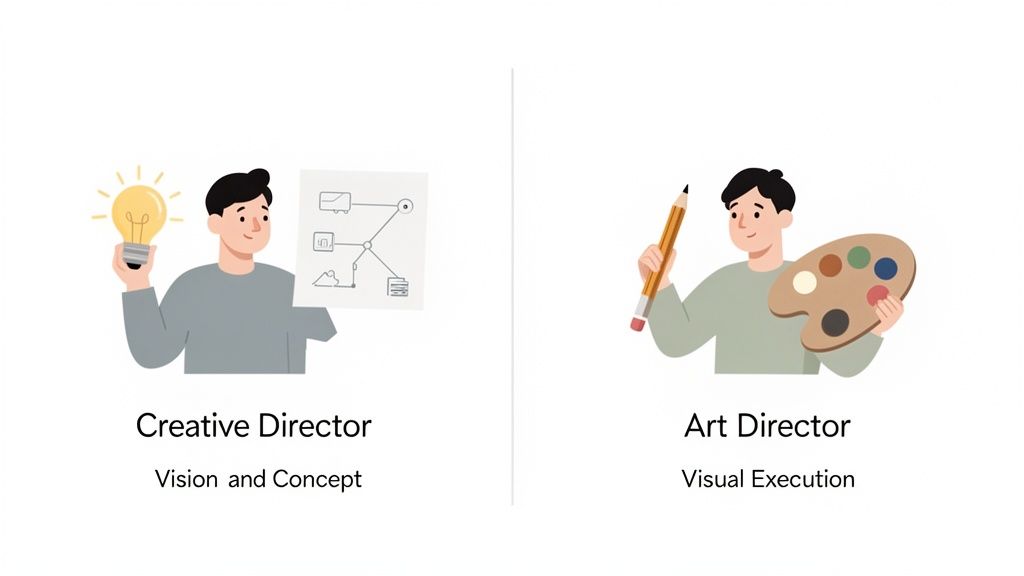
A Quick Comparison
Here’s another way to frame it: if a project were a movie, the Creative Director is the film's director, shaping the overarching story and tone. The Art Director is the director of photography, meticulously crafting the visual style that makes the story compelling. The hierarchy keeps expanding from there, and you can learn more about the Chief Creative Officer role to see how it all fits together at the top.
To quickly see how these roles stack up, this table offers a high-level snapshot. It zeroes in on their core functions and strategic contributions.
Creative Director vs Art Director At a Glance
| Attribute | Creative Director | Art Director |
|---|---|---|
| Core Function | Conceptual & Strategic Vision | Visual Execution & Aesthetics |
| Primary Focus | The 'why' and 'what' of the campaign | The 'how' of the visual presentation |
| Key Questions | "What's the big idea?" "What story are we telling?" | "What is the best font, color, and layout?" |
| Scope | Oversees entire creative output (visuals, copy, strategy) | Manages the visual design team and assets |
| Key Deliverable | The creative concept and campaign strategy | The final visual assets (layouts, photos, graphics) |
As you can see, one role is about generating the idea, while the other is about giving that idea its form and function.
The Hierarchy in Practice
This division of labor creates a natural and effective chain of command. The Creative Director sets the destination, and the Art Director charts the visual course to get the team there.
The simplest way to remember it is that a Creative Director leads the idea, while an Art Director leads the look. Both are critical—one steers the ship, and the other designs the sails.
This collaborative relationship is what translates big-picture strategic goals into pixel-perfect execution. Without a sharp Creative Director, a campaign might look stunning but feel hollow. And without a skilled Art Director, even the most brilliant idea can fall flat, failing to connect visually with the very people it’s meant to inspire.
Comparing Daily Responsibilities and Strategic Focus
While the definitions give you the lay of the land, the real difference between a Creative Director and an Art Director comes out in their day-to-day work. Think of it this way: the Creative Director is at 30,000 feet, turning business goals into a creative strategy. The Art Director, on the other hand, is on the ground, making that strategy something people can actually see and feel.
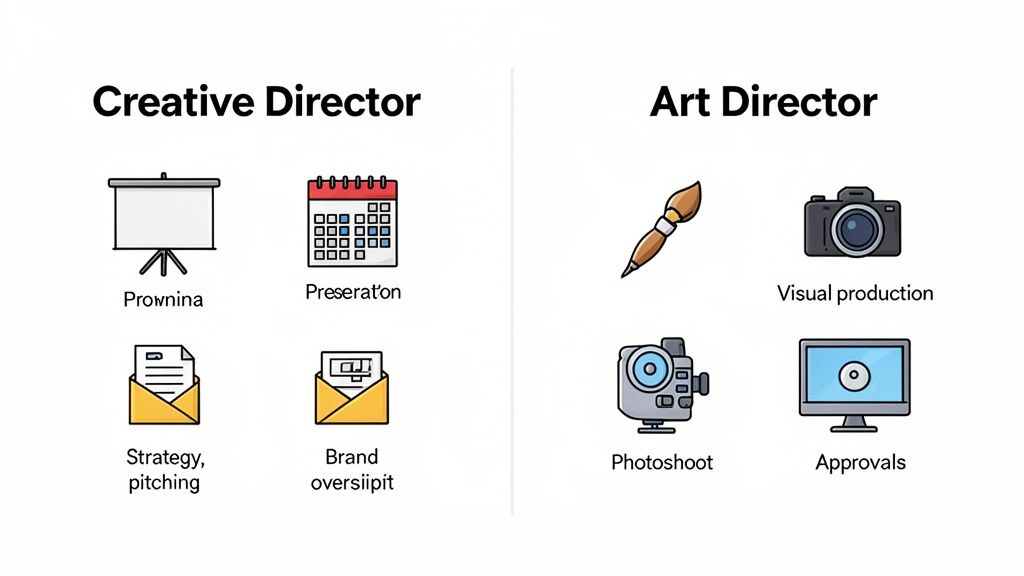
A Creative Director's calendar is usually a wall of strategic meetings. They're the ones who unpack client briefs, pore over market research, and lead the big brainstorming sessions—not just with designers, but with copywriters, strategists, and account managers, too. Their job is to find and nurture that "big idea" and make sure it perfectly aligns with the brand’s goals and actually connects with the intended audience.
This means a huge chunk of their time is spent on communication. They are the chief evangelist for the creative vision, constantly pitching concepts to stakeholders and defending the team's work. It's a mix of high-level thinking, team motivation, and client-facing diplomacy.
The Art Director's Hands-On Execution
By contrast, the Art Director's day is completely immersed in the craft of making things look great. As soon as the Creative Director gets the green light on a concept, the Art Director takes the reins on execution. Their schedule is all about design reviews, team check-ins, and production oversight.
They are directly responsible for the project's entire visual world. This typically involves:
- Leading Design Teams: Giving direct, practical feedback to graphic designers, illustrators, and photographers to keep everything looking consistent.
- Commissioning Talent: Sourcing and hiring the right freelance artists or photographers whose style is a perfect match for the project.
- Overseeing Production: Directing photoshoots, managing the visual elements of a video shoot, and making sure every asset is produced to the highest standard.
- Approving Final Assets: Giving the final sign-off on layouts, images, and designs before they're seen by the client or the public.
The Art Director is the guardian of the aesthetic. They live and breathe the details—typography, color palettes, composition, and imagery—ensuring every single pixel serves the big-picture strategy.
A Creative Director asks, "Are we telling the right story?" An Art Director asks, "Are we telling the story beautifully?" Both questions are vital, but they come from two very different places.
A Real-World Project Scenario
Let's say a tech company is launching a new app. When the project hits the creative team's desk, the two roles immediately split.
The Creative Director's Role: The Creative Director kicks things off by meeting with the client to really get under the skin of the app's value and its target user. They then lead internal workshops to hammer out the core campaign message—maybe it’s about "simplicity" or "connection." They'll present a few distinct campaign concepts back to the client, complete with mockups and storyboards, before landing on one clear strategic direction.
The Art Director's Role: Once the "connection" concept is approved, the Art Director gets down to business. They build out a complete visual style guide for the campaign, nailing down the specific color scheme, font choices, and photographic style that will communicate that feeling of connection. From there, they'll direct a photoshoot with diverse groups of people, oversee the design of all the digital ads, and approve the final app store screenshots. Every visual element has to feel cohesive and hit the right emotional note.
In this case, the Creative Director owns the conceptual framework (the "what" and the "why"), while the Art Director owns the visual execution (the "how"). Both are constantly on the hunt for powerful content generation ideas to keep their campaigns fresh and effective. This shared need for inspiration is what fuels the entire creative process and makes their collaboration so essential for a successful launch.
Understanding the Team Hierarchy and Leadership Styles
To really get the difference between a Creative Director and an Art Director, you have to look at where they sit on the org chart. It's not just about who's senior to whom; it’s about how ideas flow and who leads what part of the process. One role is casting the vision from 30,000 feet, while the other is on the ground, leading the charge.
The Creative Director is perched near the top of the creative pyramid. They’re usually reporting to an executive like the Chief Marketing Officer (CMO), a VP of Creative, or a partner at an agency. Think of them as the translator between the boardroom's business goals and the creative team's strategy. Ultimately, they're on the hook for the department's overall vision and performance.
Because of this, a Creative Director manages a pretty diverse team. Their direct reports aren't just Art Directors—they often include copywriters, content strategists, and sometimes even UX designers to make sure the message is cohesive everywhere.
The Art Director's Position and Team
The Art Director, on the other hand, operates on a much more focused, team-centric level. They report directly to the Creative Director, who hands them the big-picture concept and strategic direction. The Art Director's job is to take that vision and make it look and feel real.
They lead a specialized team that lives and breathes aesthetics. Their direct reports are the visual craftspeople who bring the ideas to life:
- Graphic Designers: Creating everything from logos and layouts to digital banners.
- Illustrators: Sourcing or creating custom artwork that fits the brand’s style.
- Photographers and Videographers: Executing shoots under the Art Director's watchful eye.
- Production Artists: Getting all the final files prepped perfectly for print or digital launch.
This setup ensures the Creative Director can steer the entire ship while the Art Director acts as the hands-on captain of the visual crew, obsessing over every aesthetic detail. If you want to see how these roles fit into the wider company, it’s worth exploring different marketing department organizational structures.
A Creative Director provides broad, conceptual guidance, focusing on the "what" and "why" of a campaign. An Art Director offers direct, hands-on mentorship, focusing on the "how" of visual execution.
Contrasting Leadership Styles
This difference in the org chart naturally leads to very different leadership styles. A Creative Director's leadership is all about strategy and motivation. They get the team fired up about a big idea, defend that idea from client feedback, and make sure the final work actually solves the business problem. Their leadership is about empowerment and conceptual alignment.
An Art Director’s style is much more tactical and hands-on. They're right there in the trenches with their team, giving pointed feedback on typography, color choices, and layout. They are mentors, sharpening the skills of their designers and pushing them to create incredible work that still fits within the brand's visual system. Their leadership is all about craftsmanship and visual consistency. This is a fundamental split in the creative director vs art director comparison.
Analyzing the Salary and Compensation Divide
When you get down to it, one of the clearest lines drawn between a Creative Director and an Art Director is the paycheck. This isn't just a random number; the pay gap reflects the fundamental difference in strategic weight, business impact, and leadership that each role carries. For any creative mapping out a career path, understanding this financial distinction is absolutely essential.
At its core, the reason for the salary difference boils down to accountability. A Creative Director is ultimately judged on campaign performance, brand growth, and whether their work moved the needle for the business. An Art Director, while completely vital to the process, is measured on the quality, consistency, and brilliant execution of the visual elements.
This chart lays out the typical pecking order. You can see how the Art Director reports up to the Creative Director, who then answers to the C-suite, like the CMO.
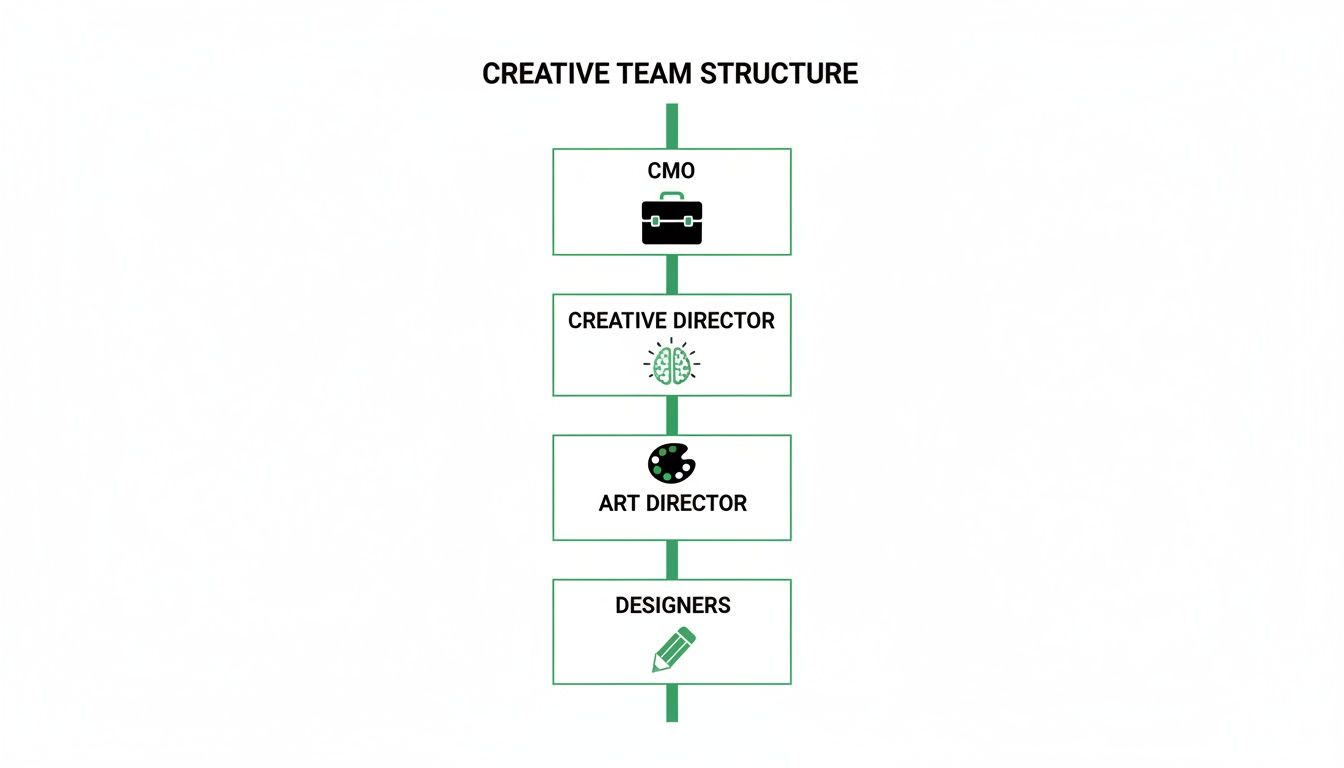
This structure makes it obvious why the Creative Director's compensation is higher—their neck is on the line for the entire creative strategy and its business results, not just one (albeit critical) piece of it.
Salary Benchmarks Creative Director vs Art Director
The numbers don't lie. Across the board, Creative Directors earn significantly more than Art Directors, a gap that reflects their broader scope of responsibility and direct impact on business outcomes. The table below breaks down typical compensation figures from various industry sources.
| Metric | Creative Director | Art Director | Data Source |
|---|---|---|---|
| Average Base Salary | $102,782 | $83,250 | Built In |
| Typical Salary Range | $120,000 - $173,000+ | $80,000 - $122,500 | Robert Half |
| Estimated Premium | 40-60% higher | - | Industry Average |
As the data shows, the leap from Art Director to Creative Director isn't just a step up in title—it's a massive jump in earning potential. For those with ambition, this financial incentive is a powerful motivator to climb the ladder. For a broader look at industry pay, our guide on how much marketers earn offers more context.
A Creative Director earns a premium because they are accountable for the business results of a creative idea. An Art Director is compensated for their mastery in bringing that idea to life visually. The former is a strategic investment, the latter is a production investment.
What Drives the Pay Differences?
Of course, not all salaries are created equal. Several factors play a big role in determining where someone falls on the pay scale for either position.
- Geographic Market: It's no surprise that salaries are highest in major hubs like New York City, San Francisco, and Los Angeles. The higher cost of living and the concentration of big-name agencies and global brands push compensation up for both roles.
- Company Size and Type: A Creative Director at a Fortune 500 company or a top-tier ad agency will naturally command a much larger salary than one at a small startup. The scale of the budget and the business impact directly correlate to pay.
- Experience Level: Years in the game matter. A seasoned Senior Art Director with a killer portfolio might out-earn a junior Creative Director at a small shop, but the long-term salary ceiling for the Creative Director role is undeniably higher.
Total Compensation: Where the Gap Really Widens
Beyond the base salary, the real difference emerges in the total compensation package. For an Art Director, pay is usually pretty straightforward: a base salary and maybe a small annual bonus if the company has a good year.
For Creative Directors, the story is completely different. Their compensation is often a much more complex and rewarding package that can include:
- Significant Performance Bonuses: These aren't just token gestures. They're often tied directly to campaign metrics, client retention, or revenue growth.
- Equity or Stock Options: This is especially common at startups and tech companies, giving the Creative Director a real stake in the company's long-term success.
- Profit-Sharing Plans: In many agencies, Creative Directors get a piece of the profits, directly rewarding them for their contribution to the firm's financial health.
This structure is by design. It aligns the Creative Director’s financial incentives with the company’s bottom-line goals. It reinforces the idea that their job isn't just to make things look good, but to create work that delivers real, measurable business results. The difference in total compensation can easily mean an extra $40,000-$50,000 a year, making the leap from Art Director a very attractive career move.
Mapping the Skills and Career Trajectories for Growth
If you're looking to climb the ladder in a creative field, you need to understand the very different paths an Art Director and a Creative Director take. While both roles are born from creativity, their careers diverge in a big way. One path is all about mastering the visual craft, while the other is about shaping high-level strategy and influence.
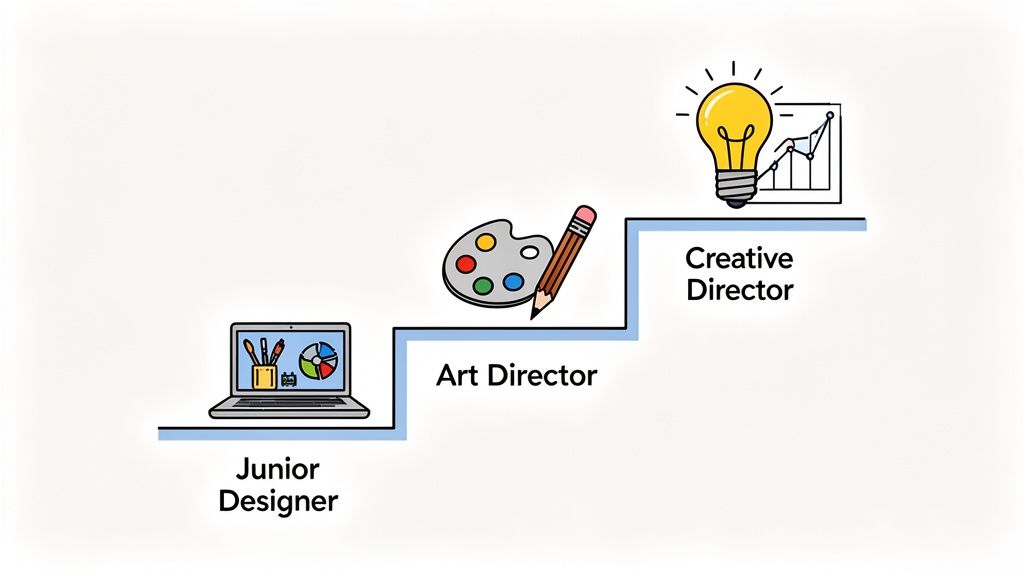
The road to becoming an Art Director almost always starts with hands-on design work. It’s a career built on a solid foundation of tangible skills that directly control how a project looks and feels.
The Art Director's Skillset
To even be considered for an Art Director role, you have to first prove you're a master of the visual craft. The job requires a mix of serious technical chops and a sharp aesthetic eye, making them the ultimate guardians of a project's visual identity.
The hard skills are non-negotiable:
- Adobe Creative Suite Mastery: You need to know Photoshop, Illustrator, and InDesign like the back of your hand. This is table stakes.
- Typography and Color Theory: A deep, intuitive grasp of how fonts and colors make people feel and how they define a brand is essential.
- Composition and Layout: It's about more than making things pretty; it's the skill of arranging elements to be both beautiful and incredibly effective.
On the softer side, Art Directors need to be direct team leaders. They excel at project management, give clear, actionable feedback to designers, and are the last line of defense for visual consistency.
An Art Director’s career is built on a portfolio that screams, "I can make this look incredible." Every single project is proof that they can turn a concept into a polished, compelling visual reality.
The Creative Director's Skillset
Moving into a Creative Director role is a whole different ballgame. It's a deliberate pivot from executing visuals to orchestrating the entire creative strategy. While most CDs come from a design background, their success depends on a completely different set of skills—ones focused on business goals and big-picture brand vision.
Here’s what a Creative Director needs in their toolkit:
- Strategic Thinking: The ability to look at business objectives and market trends and cook up a big, overarching campaign concept.
- Brand Development and Storytelling: They are masters at crafting a brand's narrative, making sure it connects with the right people across every channel.
- Client Presentation and Persuasion: A huge part of the job is selling creative ideas to senior stakeholders and getting them genuinely excited.
Leadership for a Creative Director is less about micromanaging design details and more about inspiring a whole team of creatives—copywriters, strategists, and Art Directors included—to rally behind a single, unified idea.
Charting the Career Path
In most creative departments, the career ladder is a pretty clear climb from execution to strategy. Many people start out as a Junior Designer, cutting their teeth on specific tasks. After a few years, they become a Senior Designer and start owning bigger pieces of a project.
From there, the logical next step is Art Director. This is where they start managing a small team and taking charge of the visual direction for entire campaigns. It’s a crucial turning point. To move up from here, an Art Director has to start thinking beyond the pixels and get savvy about the business side of things.
The final jump is to Creative Director, a position that requires a holistic view of marketing, business, and leadership. This career progression is also why their paychecks look so different. Data shows that Creative Directors typically out-earn Art Directors by 30-50%, a gap driven by their massive role in the entire marketing ecosystem. With an average salary of $144,518, Creative Directors are paid significantly more than the $95,891 average for Art Directors, reflecting the premium placed on strategic leadership.
Making the Leap from Art to Creative Director
For an ambitious Art Director, making the jump to Creative Director is tough but totally doable. It just takes a conscious effort to build skills that go far beyond the visual realm.
Here are a few practical steps to start preparing:
- Get into Strategic Meetings: Ask to sit in on client briefings or strategy sessions. Your goal is to absorb the "why" behind a project, not just the "how."
- Practice Presenting the 'Why': Don't just show off the final designs. Get good at explaining the strategic thinking behind them. Tell the story of how your visual choices solve the client's actual business problem.
- Lead Beyond Your Lane: Take a genuine interest in what the copywriters and strategists are doing. Figure out how their work fits into the bigger picture you're trying to create.
As you plan your next move, using one of the best online portfolio builder free tools is a great way to showcase your work—whether you're highlighting brilliant design execution or game-changing strategic concepts. At the end of the day, the move from Art Director to Creative Director is about proving you can lead the idea, not just the image.
Frequently Asked Questions
When you start digging into the differences between a creative director and an art director, a lot of practical questions pop up. Let's tackle some of the most common ones I hear about career paths, qualifications, and how these jobs change depending on the company.
Can an Art Director Become a Creative Director?
Absolutely. In fact, it's one of the most natural career paths in the creative world. But it's not just a matter of seniority; it's a real shift in focus.
To make the leap, an Art Director has to move beyond just nailing the visual execution. They need to start thinking bigger—developing a knack for high-level strategy, getting comfortable in the boardroom, and learning to lead teams that include writers, strategists, and other non-designers. The goal is to prove you can own the entire creative vision, not just the look and feel.
Do You Need a Specific Degree for These Roles?
Not necessarily. While a degree in graphic design, fine arts, or advertising is pretty standard and definitely helps, it's not a deal-breaker. In this industry, your portfolio is your passport.
A killer portfolio that shows off your conceptual thinking, a distinct creative style, and a track record of well-executed projects will almost always speak louder than a diploma. For senior roles, it's the work that really counts.
Ultimately, proven talent and hands-on experience are what hiring managers are looking for.
How Do These Roles Differ in Small vs. Large Companies?
This is where context is everything. In a smaller company, the lines between a Creative Director and an Art Director can get pretty blurry. In a large corporation, they're crystal clear.
At a startup or boutique agency, you might find an Art Director wearing many hats, stepping into strategic planning and client presentations—tasks that normally fall to a Creative Director. But in a big agency, the roles are much more defined. The Creative Director is steering the ship, focused on the overarching brand vision, while the Art Director is on the deck, managing the visual team and ensuring every detail is perfect.
