Compensation Analysis Tools to Benchmark Salaries in 2025
In today's competitive talent market, setting the right compensation for marketing roles is more critical than ever. Relying on guesswork or outdated salary surveys leads to lost candidates, frustrated employees, and costly turnover. Effective compensation analysis tools provide the data-driven insights needed to attract top talent, ensure pay equity, and build a motivated, high-performing team. These platforms move beyond simple salary averages, offering granular data on everything from geographic pay differentials to the value of equity grants.
But with a crowded market of platforms, from enterprise suites to startup-focused tools, how do you choose the right one? This guide breaks down the top 12 compensation analysis tools, with a special focus on their utility for marketing leaders, HR professionals, and hiring managers. Getting compensation right is a core component of a successful talent acquisition plan. For insights into broader efforts to attract candidates, you might explore recruitment marketing strategies.
We'll move straight into a detailed review of each platform, complete with screenshots and direct links. For each tool, we will explore key features, ideal use cases, and practical pros and cons to help you find the perfect solution for building a competitive and fair pay strategy. Our goal is to equip you with the information needed to confidently select a tool that aligns with your company size, budget, and specific compensation philosophy.
1. SalaryGuide
SalaryGuide carves out a unique and powerful niche in the crowded market of compensation analysis tools by focusing exclusively on the marketing industry. Unlike generalist platforms that aggregate data across all sectors, SalaryGuide provides hyper-relevant, real-time salary intelligence sourced directly from company career pages. This methodology ensures the data is not only current but also free from the noise of recruiter spam, duplicated listings, and irrelevant third-party posts, offering a clean, accurate snapshot of the marketing compensation landscape.
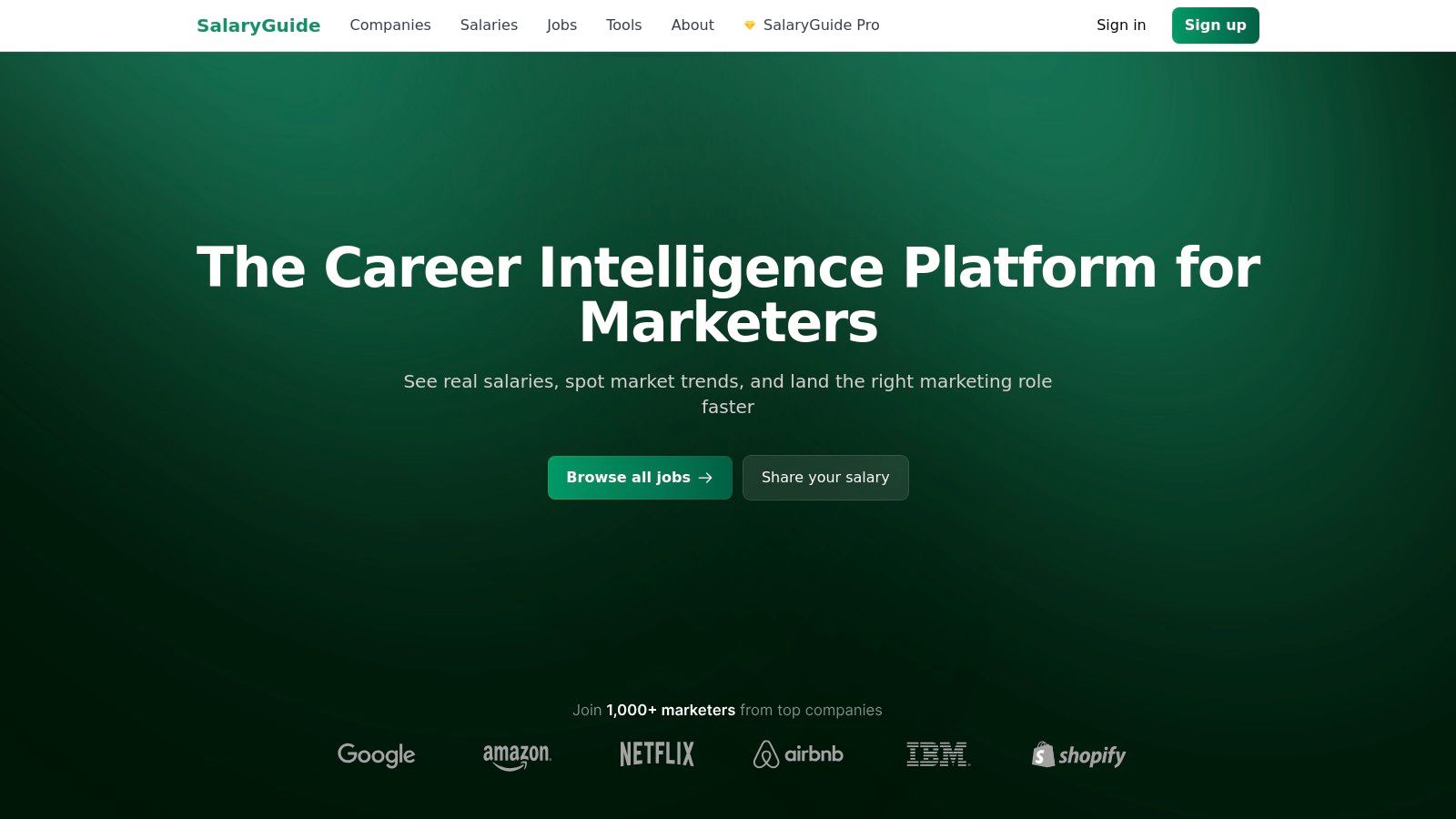
This platform is engineered to serve both individual marketing professionals and the employers seeking to hire them. Its granular focus allows users to benchmark salaries for specific marketing roles-such as paid media, SEO, content, and growth-with a high degree of confidence. For marketing leaders and HR teams, this targeted data is invaluable for structuring competitive offers and building data-driven compensation strategies that attract and retain top marketing talent.
Key Features & Use Cases
SalaryGuide's strength lies in its specialized feature set, which addresses the distinct needs of the marketing ecosystem.
- Marketing-Specific Benchmarks: The platform’s core value is its dedicated focus. A marketing manager can benchmark their salary against verified, recent postings for similar roles, rather than relying on a generic "manager" salary band that includes irrelevant industries. This feature is critical for accurate offer evaluation and negotiation.
- Real-Time Data Sourcing: By scraping data directly from company sites, SalaryGuide provides an up-to-the-minute view of compensation trends. This is especially useful in the fast-paced marketing sector, where demand for certain skills can shift salaries quickly.
- AI-Powered Career Tools: For individuals, the AI tools help map career progression and analyze potential offers by contextualizing them within current market data. For employers, the AI provides workforce analytics to understand compensation competitiveness and identify hiring trends before they become mainstream.
Ideal Use Cases
| User Group | How They Use SalaryGuide |
|---|---|
| Marketing Leaders & VPs | Benchmark entire team compensation structures and justify budget requests for salary adjustments or new hires. |
| HR & Hiring Managers | Develop competitive salary bands for marketing roles and gain intelligence to close top candidates effectively. |
| Individual Marketers | Confidently negotiate job offers, evaluate their current market value, and plan their next career move with data-backed insights. |
Pricing
While the core job search and basic salary insights are accessible, SalaryGuide mentions a "SalaryGuide Pro" offering. Details on the specific features and pricing for this premium tier are not publicly listed, suggesting that advanced analytics and employer-focused tools are part of a paid subscription.
Pros & Cons
| Pros | Cons |
|---|---|
| Highly Relevant Data: Sourcing from direct company postings ensures accuracy and relevance for marketing roles. | Niche Focus: The platform is not suitable for professionals or companies outside the marketing industry. |
| Actionable Intelligence: Provides clear, transparent compensation data tailored to specific marketing functions. | Pricing Transparency: Lack of public details on the "Pro" plan may be a hurdle for potential business users. |
| Dual-Sided Platform: Serves both individual career growth and employer hiring needs with specialized tools. |
Our Verdict
As a dedicated compensation analysis tool for the marketing world, SalaryGuide is an exceptional resource. Its specialized focus is its greatest asset, delivering a level of accuracy and relevance that broad-based platforms cannot match. For any marketing professional, leader, or hiring manager looking to make informed, data-driven compensation decisions, SalaryGuide is an indispensable platform that stands in a class of its own.
Website: https://salaryguide.com
2. Salary.com — CompAnalyst
Salary.com’s CompAnalyst suite is an enterprise-grade platform built for HR and Total Rewards teams that require a comprehensive solution for compensation management. It moves beyond simple market lookups, offering a robust set of tools for end-to-end market pricing, pay equity analysis, and creating communication-ready reports. Its strength lies in its employer-reported datasets and a highly detailed job taxonomy.
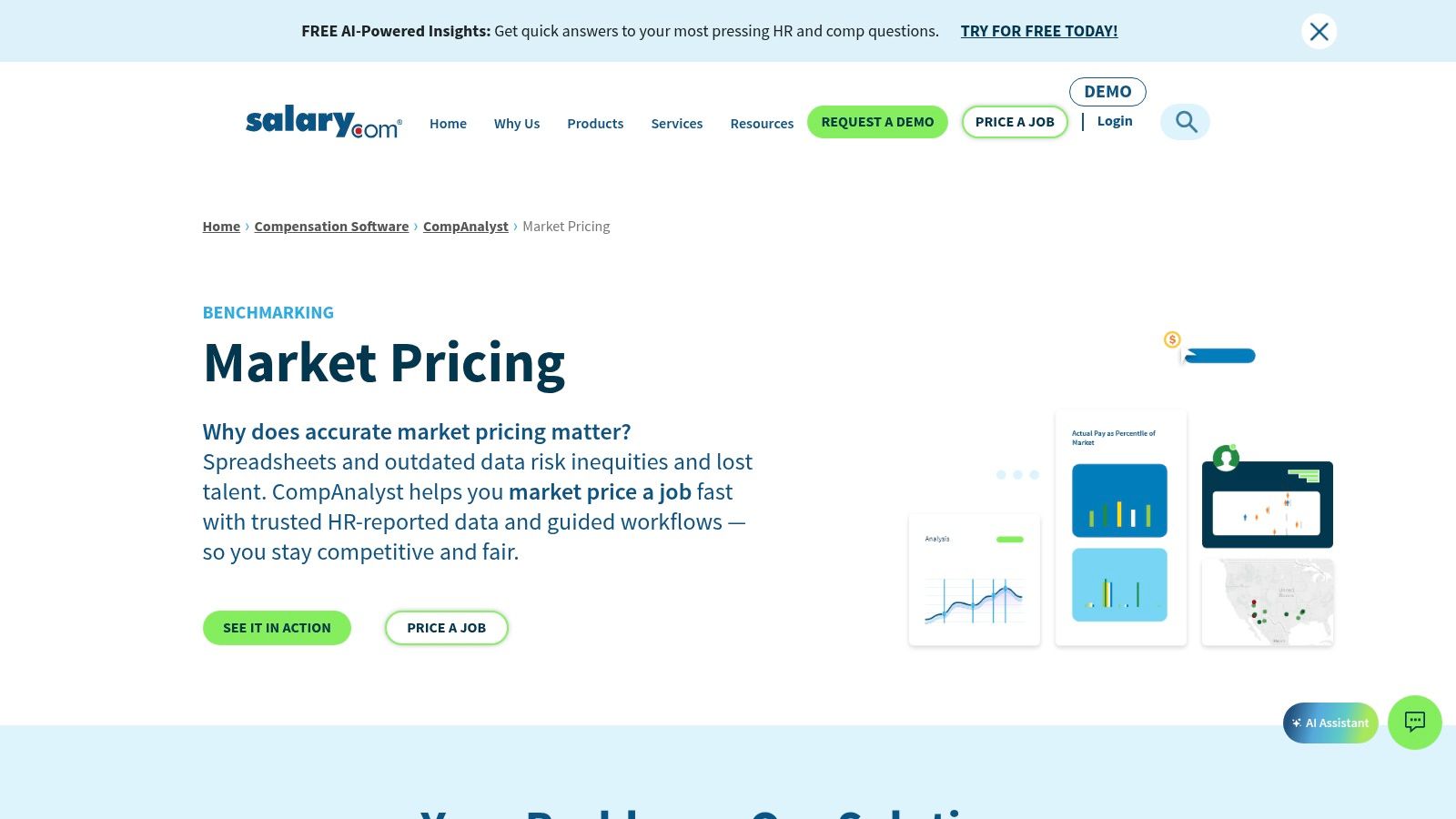
This platform is ideal for organizations that need to build and maintain structured compensation strategies, especially in complex or large-scale environments. Marketing leaders can partner with their HR teams to use CompAnalyst for defining competitive pay bands for their entire department, from a junior content coordinator to a VP of Growth Marketing. Its AI-assisted role grouping is particularly useful for conducting internal equity audits to ensure fairness across similar marketing roles.
Key Features and Use Cases
- Market Pricing Engine: Generate configurable reports that blend job responsibilities with real-time market data to accurately price roles.
- Pay Equity & Compliance Workflows: Use AI-powered tools to group similar jobs, identify pay gaps, and ensure compliance with pay transparency laws.
- Presentation-Ready Reports: Easily export detailed analyses and visualizations for executive presentations and employee communications. This is a core component for anyone getting started with this kind of work, and you can learn more about the fundamentals of compensation analysis to see why reporting is so critical.
- Ideal For: HR departments, compensation specialists, and senior leadership teams.
Platform Breakdown
| Feature | CompAnalyst |
|---|---|
| Primary Data Source | Employer-Reported |
| Best Use Case | Building structured pay scales, pay equity audits |
| Pricing Model | Enterprise (Quote-based) |
| Implementation | Requires setup and potential training |
Website: https://www.salary.com/companalyst/market-pricing/
3. Payscale — MarketPay & Payfactors (Insight Lab)
Payscale offers a comprehensive compensation intelligence platform that integrates its MarketPay and Payfactors products. This dual-pronged approach is designed for organizations that need both powerful real-time analytics and scalable, structured compensation workflows. The platform leverages a proprietary data model, combining multiple crowd-sourced and employer-reported sources with AI to provide a holistic market view.
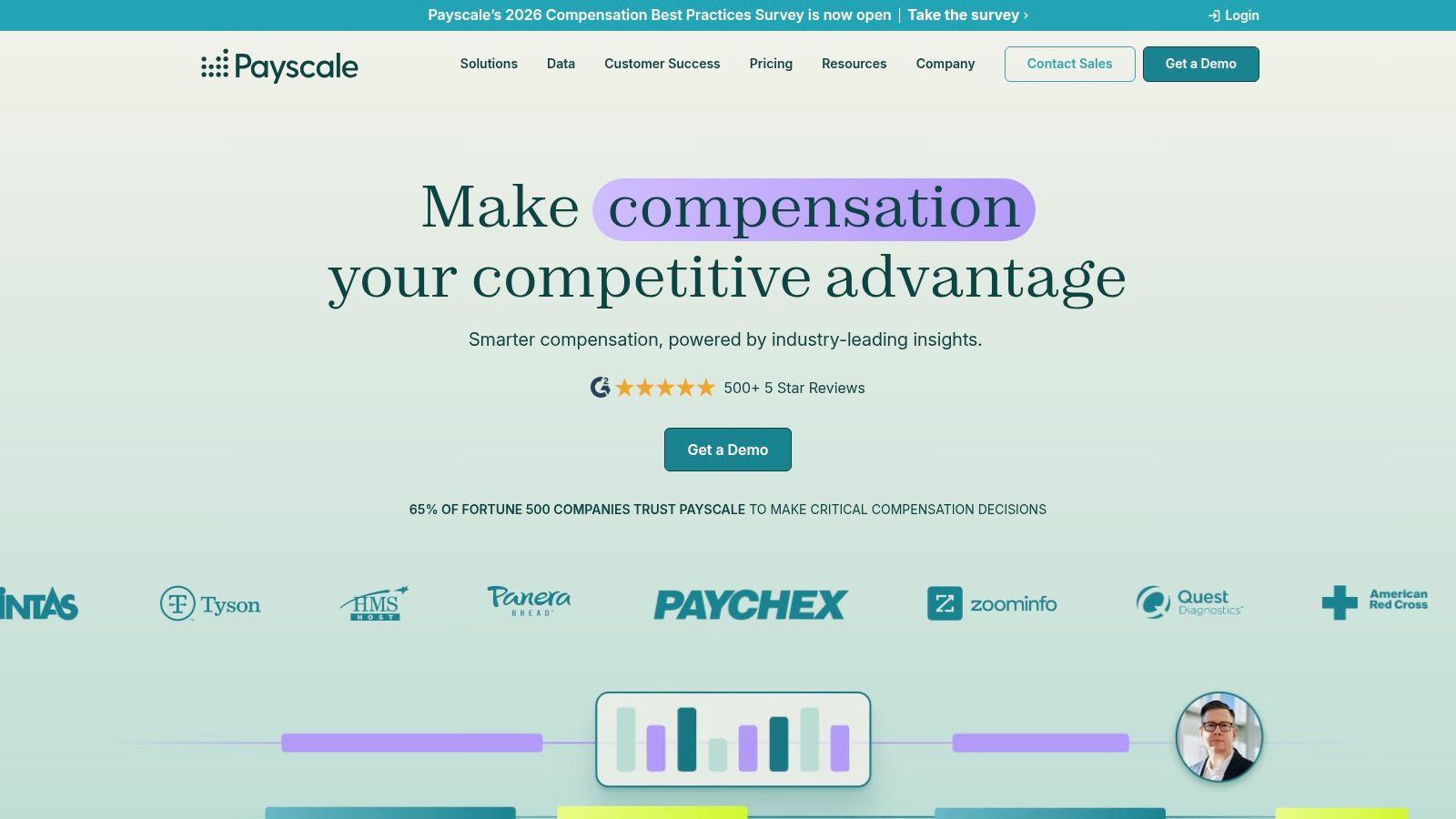
This solution is best suited for mature organizations aiming to manage the entire compensation cycle, from initial market pricing to ongoing administration and communication. A marketing department could use MarketPay for deep-dive analytics on niche roles like "MarTech Operations Specialist," while leveraging Payfactors to automate the annual salary review process for the entire team. This makes it one of the more robust compensation analysis tools for enterprises with complex needs.
Key Features and Use Cases
- Proprietary Blended Data: Combines multiple data sources with AI for a nuanced view of the market, helping to price unique or hybrid marketing roles.
- MarketPay Analytics: Provides real-time analytics and modeling capabilities to understand market shifts and their impact on your compensation strategy.
- Payfactors Workflow Automation: Automates key compensation processes like job description management, salary surveys, and pay structure creation.
- Managed Services and Support: Offers hands-on implementation and support, which is critical for a platform of this scale. You can learn more about the fundamentals of salary benchmarking to understand why accurate data and implementation are so vital.
- Ideal For: Large enterprises, mature HR/Total Rewards teams, and companies scaling their compensation functions.
Platform Breakdown
| Feature | MarketPay & Payfactors |
|---|---|
| Primary Data Source | Hybrid (Employer-Reported & Crowd-Sourced) |
| Best Use Case | End-to-end compensation cycle management, complex analytics |
| Pricing Model | Enterprise (Quote-based) |
| Implementation | Significant; often requires managed services |
Website: https://www.payscale.com/
4. Mercer (IMercer)
Mercer is a global consulting leader, and its IMercer platform serves as a portal to one of the most extensive collections of employer-reported compensation survey data in the world. This resource is a staple for multinational corporations and large enterprises that need highly reliable, industry-specific, and geographically diverse data to inform their pay strategies. Unlike platforms focused solely on software, Mercer's primary strength is the quality and breadth of its underlying survey data, which is trusted for its rigorous validation process.
This platform is indispensable for organizations that operate across multiple countries or within highly specialized industries like technology, finance, or energy. A VP of Global Marketing, for instance, could use Mercer's industry-specific surveys and geographic differential tools to set appropriate pay bands for a new marketing team in Singapore, ensuring the compensation package is competitive locally while remaining equitable with their London and New York counterparts. The self-serve portal allows teams to purchase specific surveys as needed, offering flexibility in how they access these premium data sets.
Key Features and Use Cases
- Mercer Benchmark Database (MBD): Access an enormous catalog of job data covering countless roles, industries, and countries for precise market pricing.
- Geographic Differential Tools: Analyze and apply cost-of-living and market pay differences when establishing salaries for a distributed or global workforce.
- Compensation Planning Surveys: Gain insights into planned salary increases, budget trends, and variable pay practices to inform annual compensation cycles.
- Ideal For: Large enterprises, multinational corporations, and compensation professionals in specialized industries.
Platform Breakdown
| Feature | Mercer (IMercer) |
|---|---|
| Primary Data Source | Employer-Reported Surveys |
| Best Use Case | Global market pricing and industry-specific benchmarking |
| Pricing Model | Survey participation, per-survey purchase, or quote-based |
| Implementation | Access is often tied to survey participation or direct purchase |
Website: https://www.imercer.com/
5. Aon — Radford McLagan Compensation Database
Aon’s Radford McLagan Compensation Database is a premier survey platform designed for organizations that need highly specific industry data. It stands out by providing deep compensation analytics for specialized sectors like technology, life sciences, and financial services. This tool is built on a foundation of rigorous data collection from thousands of participating organizations, ensuring unparalleled granularity and accuracy for competitive talent markets.

This platform is not a self-service lookup tool; it's a comprehensive analytics environment supported by dedicated consultants. For a marketing leader at a fast-growing fintech or biotech firm, Aon provides the precise data needed to benchmark niche roles like "Martech Operations Specialist" or "Scientific Communications Manager" against direct competitors. The consultant support is a key differentiator, helping teams interpret complex global data and apply it to their specific compensation strategy.
Key Features and Use Cases
- Industry-Specific Modules: Access detailed compensation data tailored to technology, life sciences, financial services, consulting, and other competitive sectors.
- Human Capital Analytics: Go beyond salary to analyze long-term incentives, equity, and total rewards packages with a global scope.
- Consultant Support: Work with Aon experts to ensure data quality, proper job matching, and effective application of survey insights.
- Ideal For: Mid-market to enterprise companies in competitive, high-growth industries.
Platform Breakdown
| Feature | Radford McLagan Database |
|---|---|
| Primary Data Source | Employer-Reported (Survey Participation) |
| Best Use Case | Niche industry benchmarking, global compensation analysis |
| Pricing Model | Enterprise (Requires participation/contract) |
| Implementation | Consultant-led setup and data submission |
Website: https://www.aon.com/en/capabilities/human-capital-analytics/radford-mclagan-compensation-database
6. WTW (Willis Towers Watson) — Compensation Software
Willis Towers Watson (WTW) offers enterprise-level compensation software tightly integrated with its renowned global survey data. This platform is designed for multinational corporations and large organizations that need sophisticated tools to manage complex compensation strategies. It excels at linking robust market data directly to program design, allowing HR and compensation teams to model salary structures, analyze merit matrices, and manage global pay programs from a single, secure environment.
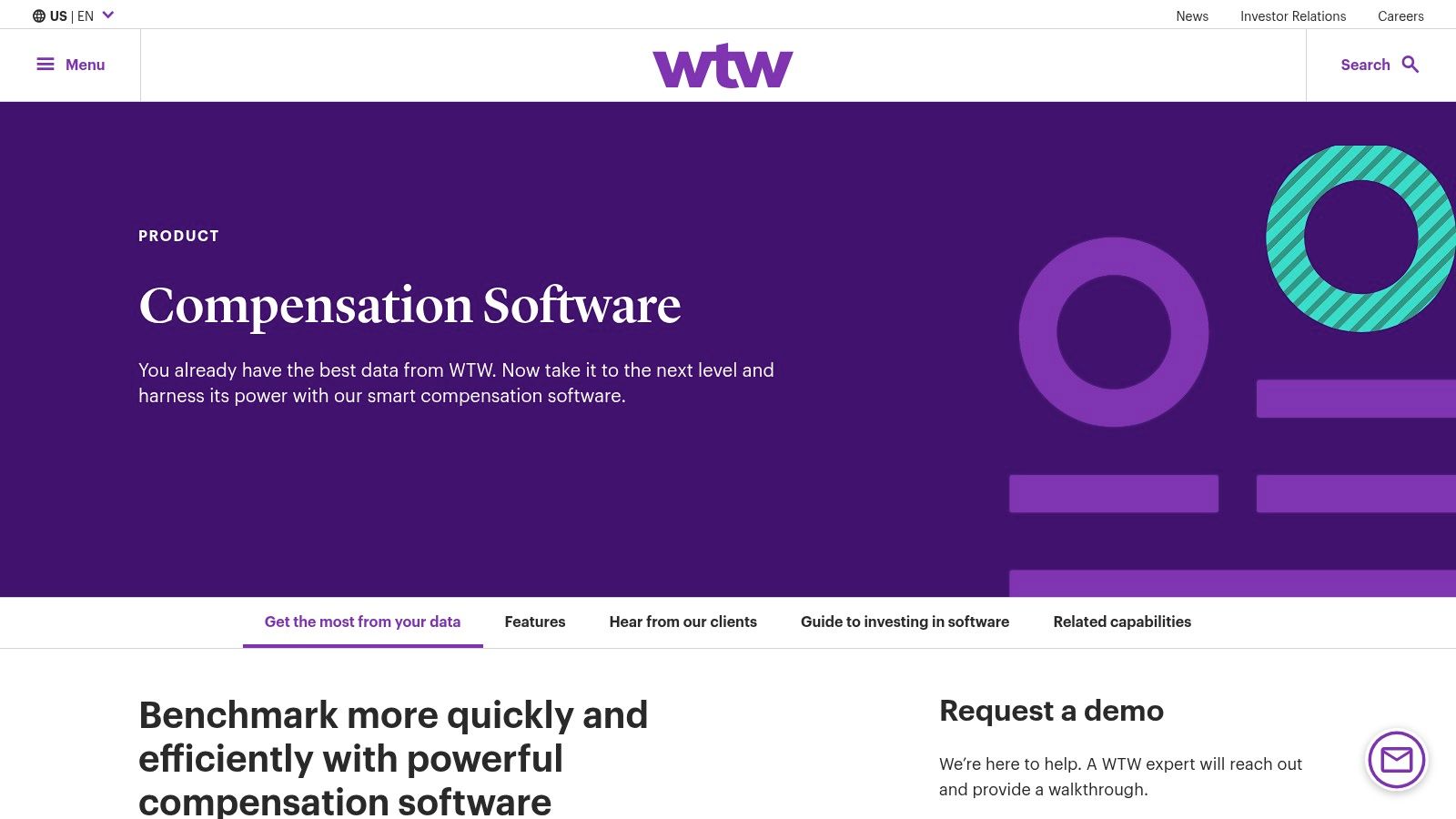
The platform's key differentiator is its seamless integration between survey participation and analytics. Marketing VPs at global firms can leverage WTW to benchmark their entire team, from a Digital Marketing Manager in London to a Brand Director in Singapore, using consistent, reliable data. The system automates much of the survey matching process, reducing manual workload and allowing leaders to focus on strategic decisions, like analyzing bring-to-target costs or designing new incentive plans for high-performing marketing roles.
Key Features and Use Cases
- Automated Survey Matching: Reduces the manual effort required to participate in and utilize compensation surveys from multiple vendors.
- Salary Structure Modeling: Build, test, and analyze salary structures with advanced analytics for bring-to-target costs and merit matrix impacts.
- Integrated Data and Design: Directly links WTW survey data with compensation design modules for a cohesive workflow.
- Presentation-Quality Reporting: Generate and export detailed reports and visualizations suitable for executive and board-level discussions.
- Ideal For: Large enterprises, multinational corporations, and dedicated total rewards teams.
Platform Breakdown
| Feature | WTW Compensation Software |
|---|---|
| Primary Data Source | WTW Global Survey Data |
| Best Use Case | Global pay structuring, enterprise modeling |
| Pricing Model | Enterprise (Quote-based) |
| Implementation | Requires setup, best with WTW survey participation |
Website: https://www.wtwco.com/en-us/solutions/products/compensation-software
7. ERI (Economic Research Institute)
ERI (Economic Research Institute) offers a suite of compensation analysis tools highly regarded by consultants, auditors, and compensation professionals who need precise geographic pay data. Its core strength is its granular analysis of cost-of-labor and cost-of-living differentials across thousands of U.S. and international locations, making it an essential resource for organizations with a distributed workforce or those setting location-based pay strategies.
While ERI's platform serves a broad range of industries, its geographic tools are particularly valuable for marketing leaders. For instance, a CMO can use ERI’s data to justify different salary bands for a "Marketing Manager" role in San Francisco versus one in Austin, ensuring competitive and fair pay based on local market conditions. This level of detail is critical for creating equitable remote or hybrid work policies and for board-level reporting on executive compensation.
Key Features and Use Cases
- Salary Assessor: Provides compensation data for thousands of job titles across a vast number of geographic areas.
- Geographic Differentials: Offers deep analytics on both cost of labor and cost of living, allowing for highly accurate location-based pay adjustments.
- Benefits & PTO Data: Includes data on non-cash compensation elements, providing a more holistic view of total rewards in different markets.
- Ideal For: Companies with geographically diverse teams, auditors, and compensation consultants.
Platform Breakdown
| Feature | ERI (Economic Research Institute) |
|---|---|
| Primary Data Source | Public & Private Surveys, proprietary research |
| Best Use Case | Geographic pay analysis, executive compensation |
| Pricing Model | By module (Quote-based) |
| Implementation | Online access; may require onboarding for taxonomy |
Website: https://online.erieri.com/
8. Culpepper and Associates
Culpepper and Associates is a survey publisher renowned for its global compensation survey data, offering detailed insights into pay practices across various industries and geographic locations. Rather than a full-fledged software platform, Culpepper provides access to high-quality, direct-source datasets that companies purchase to benchmark their compensation strategies. Its standout offering is the annual Salary Budget & Compensation Planning Survey, a critical resource for HR and leadership teams planning merit increases and salary adjustments.
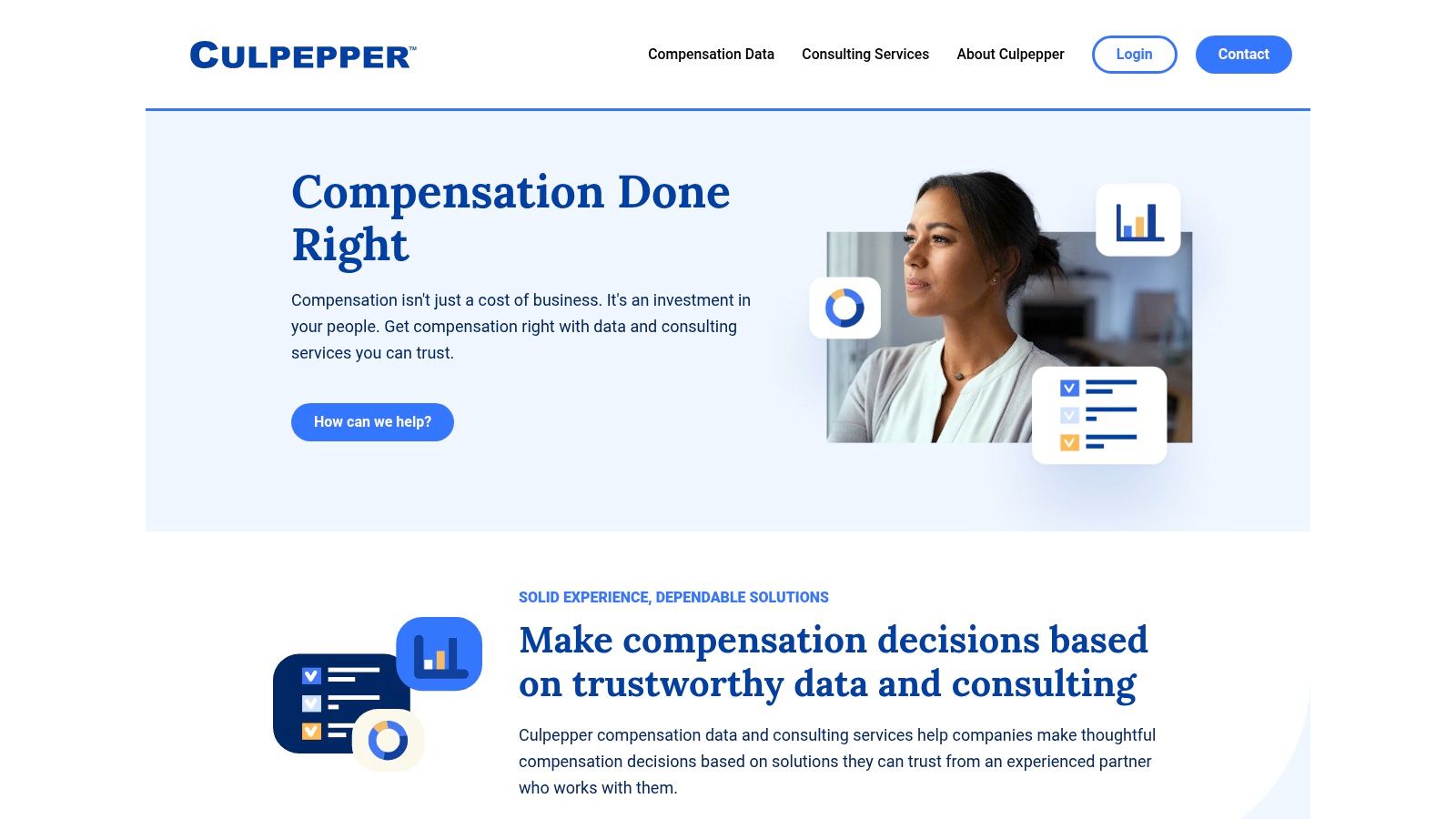
This resource is perfect for organizations that prefer to integrate raw, reliable data into their existing compensation analysis tools or internal systems. A marketing director could use Culpepper’s data to validate their proposed budget for annual salary increases, ensuring their plan for the marketing team is competitive against industry-specific trends. The straightforward data-purchase model makes it an accessible option for companies that need targeted information without committing to a complex software subscription.
Key Features and Use Cases
- Global Compensation Surveys: Access detailed salary data with specific cuts for different countries, regions, and local pay zones.
- Salary Budget & Compensation Planning Survey: Use this annual report to guide decisions on merit pay, salary structure adjustments, and overall compensation budgets.
- Year-Round Data Collection: Data is collected continuously to align with corporate compensation planning cycles, ensuring timeliness and relevance.
- Ideal For: Companies needing specific, reliable datasets for annual budgeting and international benchmarking.
Platform Breakdown
| Feature | Culpepper and Associates |
|---|---|
| Primary Data Source | Employer-Reported Surveys |
| Best Use Case | Annual salary budget planning, global pay benchmarking |
| Pricing Model | Per-Survey Purchase / Subscription |
| Implementation | Data-only; requires integration with other tools |
Website: https://www.culpepper.com/
9. Pave
Pave has quickly become a go-to compensation platform for venture-backed and high-growth technology companies. It offers a modern approach to compensation analysis by providing real-time benchmarks sourced directly from its network of participating companies. Its key differentiator is a powerful blend of live data, integrated planning workflows, and an accessible entry point for startups.
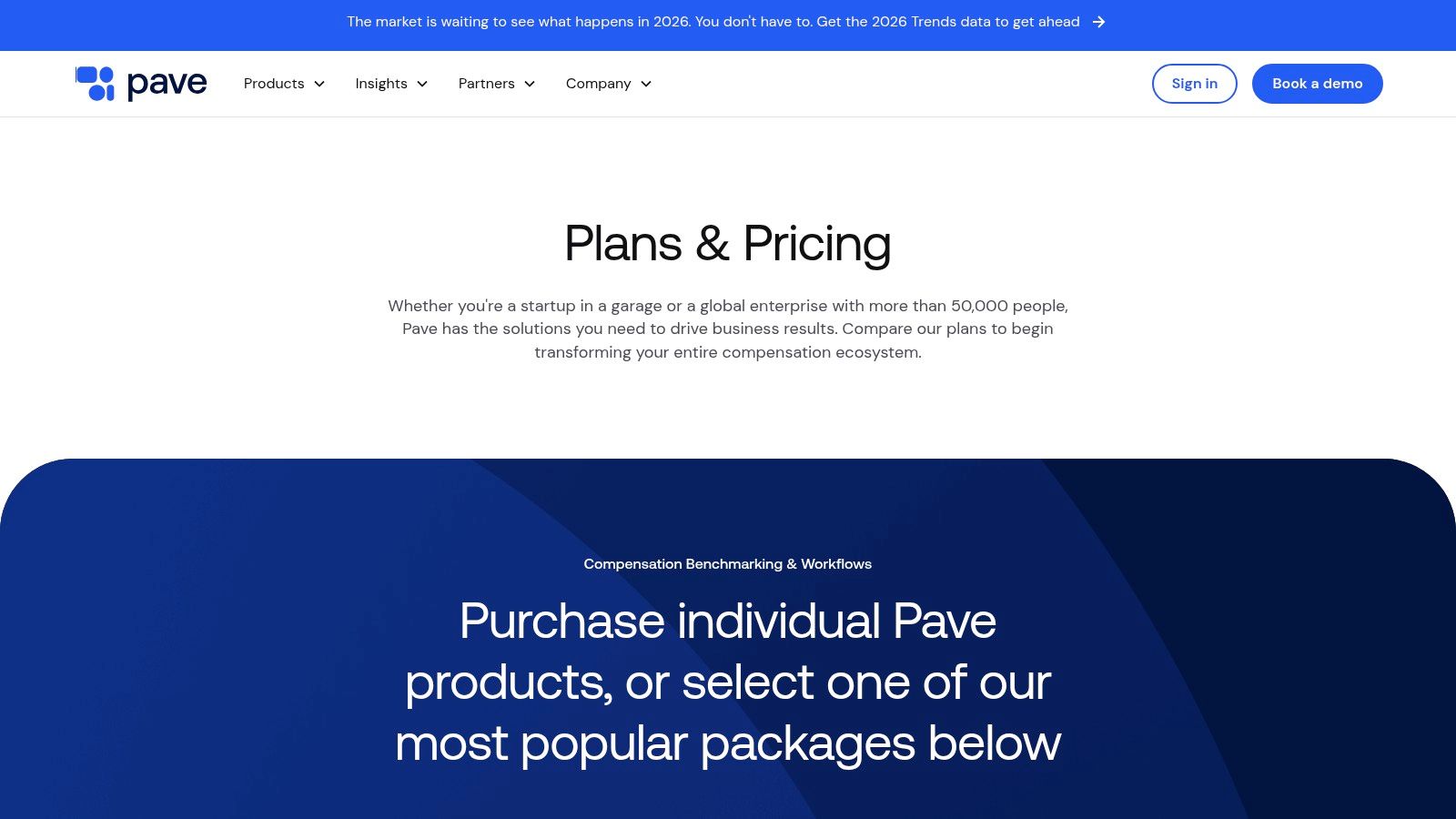
This platform is particularly valuable for fast-scaling marketing teams that need to compete for talent against other tech startups. A Head of Marketing can leverage Pave to benchmark salaries and equity for roles like "Product Marketing Manager" or "Head of Demand Generation" against similarly staged companies. The platform's integrations with HRIS and ATS systems streamline the process of ensuring offers are competitive without manual data entry.
Key Features and Use Cases
- Real-Time Benchmarking: Access live salary and equity data from thousands of companies, filterable by location, company size, and funding stage.
- AI-Assisted Workflows: Use AI-powered job matching to accurately price new and existing roles based on real-world market data.
- Integrated Merit Cycles: Connect compensation planning directly to performance management and HRIS data to run merit cycles within the platform.
- Ideal For: Startups, scale-ups, and mid-market tech companies.
Platform Breakdown
| Feature | Pave |
|---|---|
| Primary Data Source | Company-Contributed (Real-time) |
| Best Use Case | Benchmarking for tech/startup roles, merit cycle planning |
| Pricing Model | Freemium (Launch tier) & Enterprise Plans |
| Implementation | Self-serve for free tier; guided setup for paid plans |
Website: https://www.pave.com/pricing
10. Carta — Total Compensation
Carta Total Compensation is a benchmarking and planning platform built on Carta’s extensive private-market equity dataset. This makes it an invaluable resource for startups, scale-ups, and venture-backed companies where equity is a significant component of total rewards. It goes beyond salary data, providing deep intelligence into equity grants, vesting schedules, and ownership dilution.
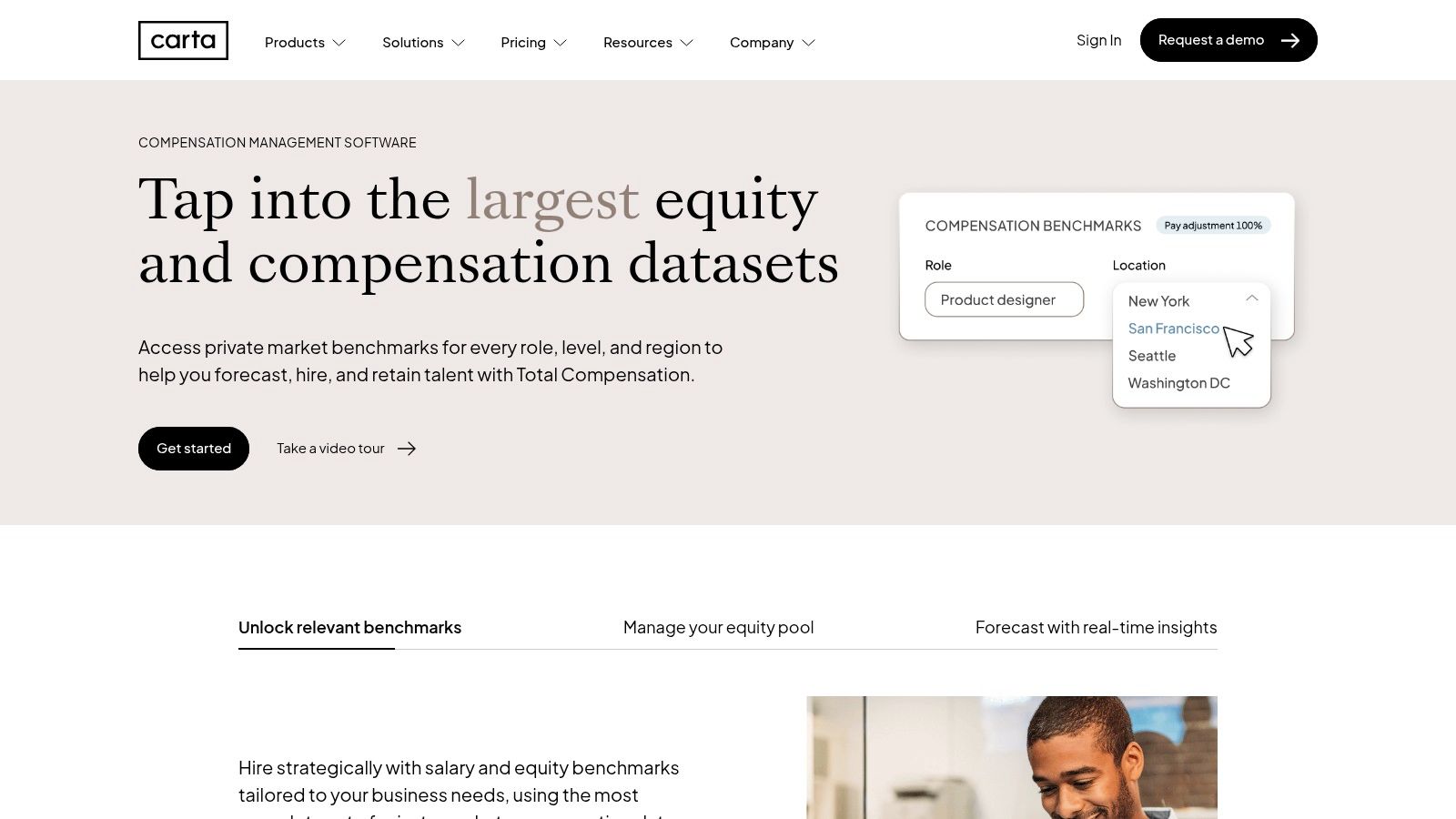
The platform is purpose-built for leaders at high-growth companies who need to create competitive offers that balance cash and equity. A marketing VP at a Series B startup, for instance, can use Carta to benchmark not just the salary for a new Head of Demand Generation, but also the appropriate number of stock options relative to the market. This ensures offers are attractive enough to land top talent while being fiscally responsible.
Key Features and Use Cases
- Salary and Equity Benchmarking: Access benchmarks segmented by role, level, and location, with a strong focus on private company data.
- Total Rewards Statements: Generate comprehensive offer letters and total rewards statements that clearly communicate the full value of cash and equity.
- Quarterly Data Updates: The dataset is refreshed quarterly to reflect the fast-moving compensation landscape in the startup world.
- Ideal For: Startups, venture-backed companies, and organizations where equity is a core part of compensation.
Platform Breakdown
| Feature | Carta — Total Compensation |
|---|---|
| Primary Data Source | Private Company Equity & Salary Data |
| Best Use Case | Benchmarking salary and equity for startups |
| Pricing Model | Quote-based (access is sales-led) |
| Implementation | Can be used standalone or integrated with Carta |
Website: https://carta.com/equity-management/compensation/
11. OpenComp
OpenComp is compensation decision software built to bring clarity and speed to high-growth startups and mid-market companies. It leverages real-time, crowd-sourced data from its customers' HRIS systems, providing a continuously updated view of the market. The platform offers end-to-end workflows for benchmarking, creating pay ranges, conducting equity analysis, and planning compensation cycles, all within an intuitive interface.
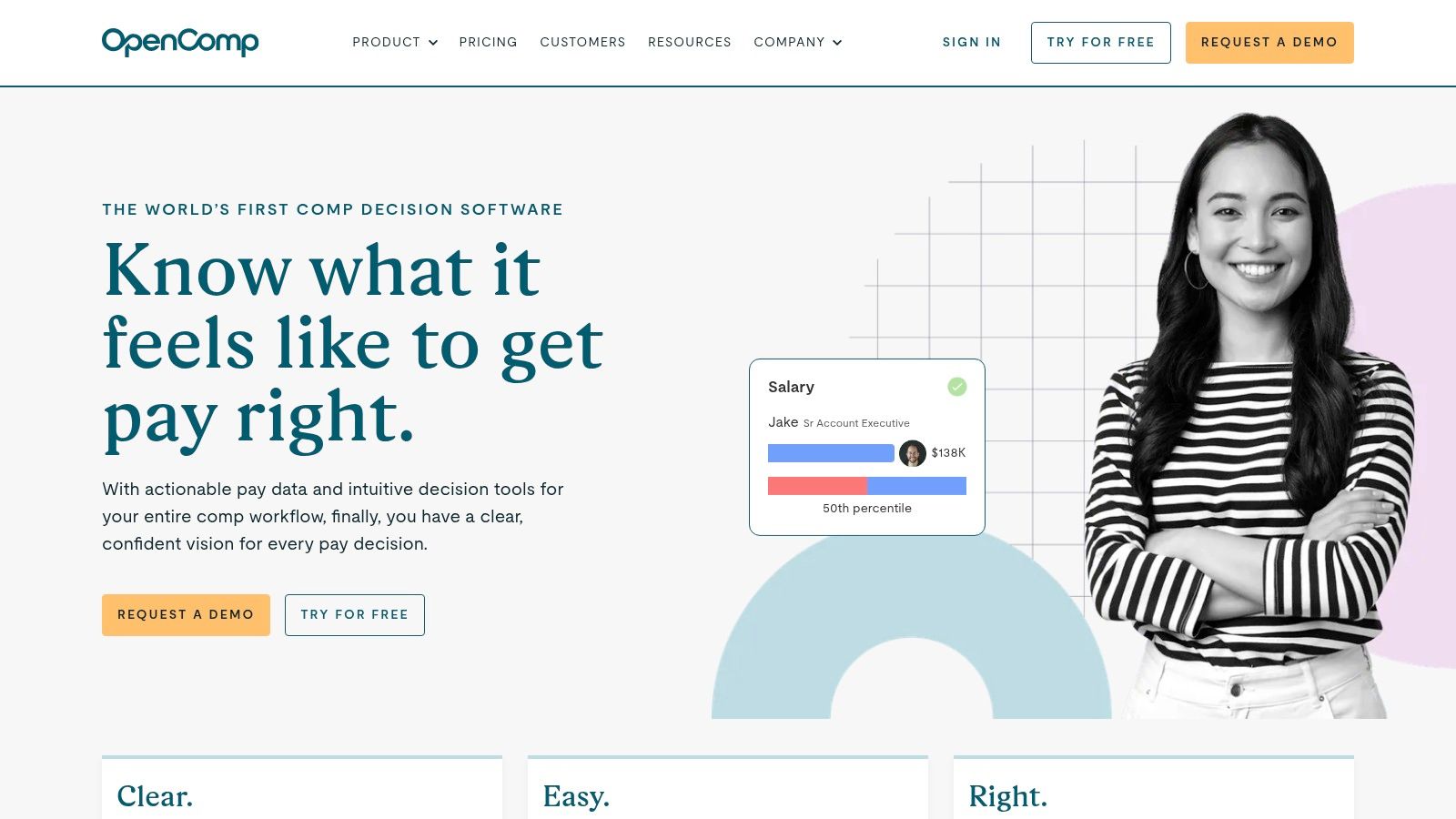
This tool is exceptionally well-suited for agile organizations that need to move quickly without a dedicated compensation team. For a rapidly scaling marketing department, OpenComp allows a hiring manager to benchmark a new "Product Marketing Manager" role against peers in the same industry and funding stage, build a competitive salary band, and generate a total rewards statement in minutes. Its emphasis on a single, dynamic data source makes it a powerful asset for companies prioritizing fresh market intelligence.
Key Features and Use Cases
- Real-Time Benchmarking: Access a global compensation dataset that is continuously updated from participating companies' HR systems.
- Pay Strategy & Range Creation: Utilize guided workflows to define a compensation philosophy and build consistent, data-backed pay ranges.
- Pay Equity & Total Rewards: Analyze internal pay gaps and create compelling total rewards statements to improve employee communication and retention.
- Ideal For: Startups, high-growth tech companies, and lean HR or finance teams.
Platform Breakdown
| Feature | OpenComp |
|---|---|
| Primary Data Source | Crowd-Sourced (HRIS) |
| Best Use Case | Agile benchmarking and pay range creation |
| Pricing Model | Tiered (Quote-based) |
| Implementation | Fast, often self-serve with HRIS integration |
Website: https://www.opencomp.com/
12. Workday — Compensation Management (HCM module)
For organizations deeply integrated into the Workday ecosystem, the Compensation Management module is a natural extension of their core HRIS. Rather than being a standalone tool, it leverages the unified data within Workday's Human Capital Management (HCM) platform to provide native analytics, pay equity dashboards, and total rewards statements. Its primary strength is its seamless connection to employee records, performance data, and organizational structures, eliminating the need for data reconciliation across separate systems.
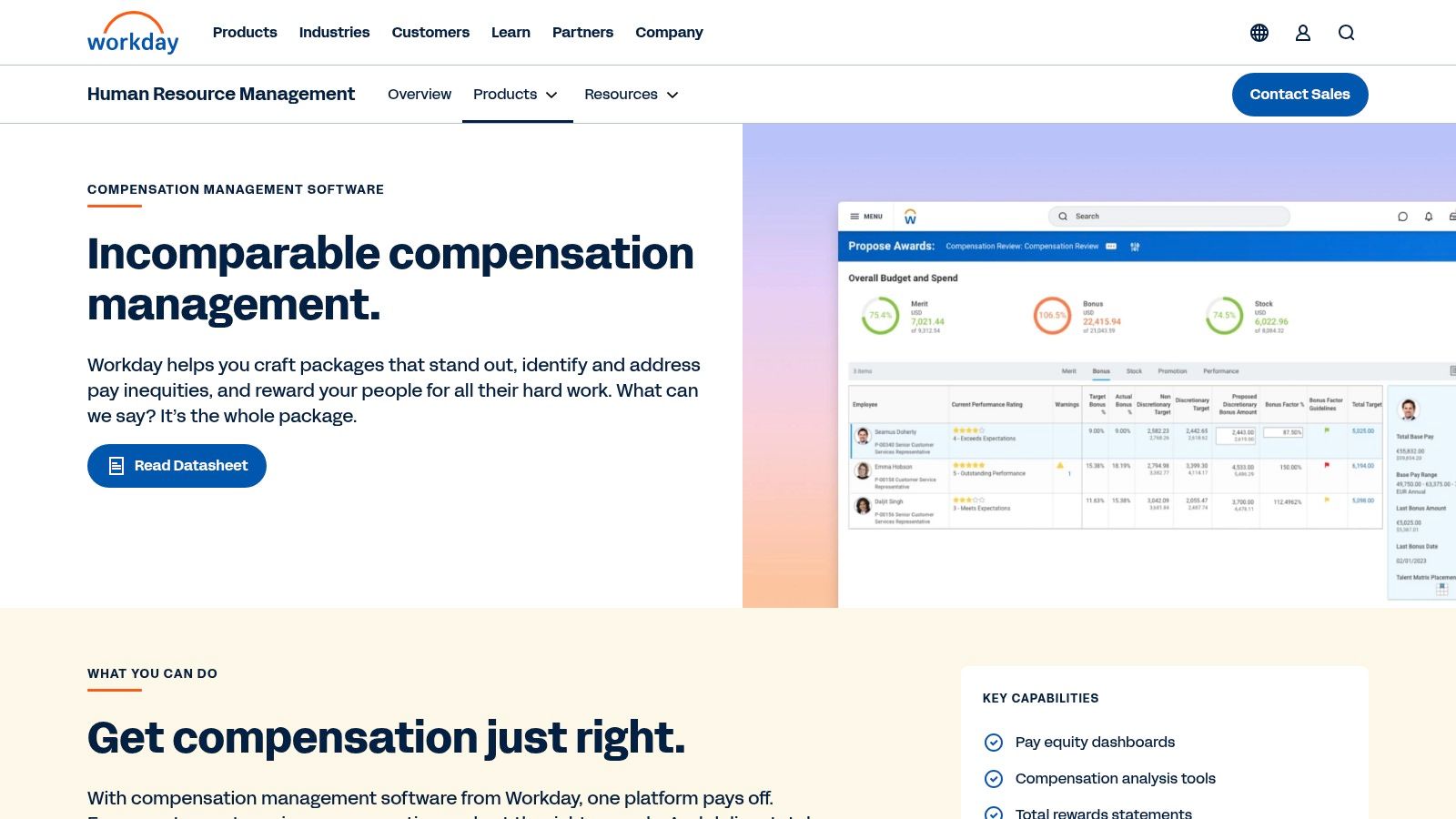
This platform is not a market data source but a powerful orchestration engine. Marketing leaders within a Workday-powered company can use it to manage salary review cycles, model bonus and equity plans, and generate comprehensive total rewards statements for their teams. Because it pulls directly from the central HR system, the compensation analysis tools offer real-time insights based on the company's own secure data, ensuring governance and consistency.
Key Features and Use Cases
- Integrated Compensation Analysis: Use built-in dashboards to analyze compensation metrics, review pay equity, and model changes directly within the core HR system.
- Total Rewards Statements: Create and deliver personalized, dynamic statements that communicate the full value of an employee's compensation package, including salary, bonuses, and benefits.
- AI-Enabled Assistance: Leverage Workday Illuminate to get intelligent recommendations and insights during compensation review cycles, helping managers make more informed decisions.
- Ideal For: Medium to large enterprises already using or planning to implement Workday HCM.
Platform Breakdown
| Feature | Workday Compensation Management |
|---|---|
| Primary Data Source | Internal Company Data (from HCM) |
| Best Use Case | Managing internal compensation cycles, total rewards |
| Pricing Model | Enterprise (Part of Workday HCM suite) |
| Implementation | Requires Workday HCM implementation |
Top 12 Compensation Analysis Tools — Comparison
| Product | Core features | Quality ★ | Price & value 💰 | Target & USP 👥 ✨ |
|---|---|---|---|---|
| SalaryGuide 🏆 | Marketing-only job feed; compensation insights; AI career tools; employer benchmarks | ★★★★☆ accuracy-first, clean feed | 💰 Pro tier (not listed) — high value for marketers | 👥 Marketers (all levels) • ✨ Marketing-specific sourcing & transparent pay data |
| Salary.com — CompAnalyst | Market pricing; pay-equity workflows; exportable reports | ★★★★☆ enterprise-grade reporting | 💰 Enterprise pricing; implementation likely | 👥 HR / Total Rewards • ✨ End-to-end market pricing & communication-ready reports |
| Payscale — MarketPay & Payfactors | Real-time analytics; workflow automation; managed services | ★★★★☆ broad analytics + modules | 💰 Sales-led; scalable with modules | 👥 Large orgs • ✨ Combined real-time analytics + scalable workflows |
| Mercer (IMercer) | Benchmark DB; geographic differentials; industry surveys | ★★★★☆ trusted, survey-driven | 💰 Quote-based; varies by product | 👥 Large employers • ✨ Extensive global surveys & industry curation |
| Aon — Radford McLagan | Industry modules; huge records; consultant support | ★★★★☆ deep industry granularity | 💰 Contract/participation pricing | 👥 Mid-market & enterprise • ✨ Industry-specific depth with data consultants |
| WTW (Willis Towers Watson) | Automated matching; salary-structure design; reporting | ★★★★☆ strong design & automation | 💰 Demo/quote required; best with survey participation | 👥 Enterprise • ✨ Integration of data + design analytics |
| ERI (Economic Research Institute) | Salary Assessor; geo pay & COL analytics; benefits data | ★★★☆☆ focused geo analytics | 💰 Module pricing; varies by users | 👥 Comp professionals & auditors • ✨ Location-based pay & executive compensation |
| Culpepper & Associates | Global surveys; salary budget & planning survey | ★★★☆☆ practical budgeting data | 💰 Survey-priced; straightforward purchase | 👥 HR planners • ✨ Clear budgeting insights for annual planning |
| Pave | Real-time benchmarks; AI job matching; integrations; free tier | ★★★★☆ modern UX, fast setup | 💰 Launch free tier; paid plans for advanced | 👥 Startups & growth firms • ✨ Free entry + strong integrations |
| Carta — Total Compensation | Salary + equity benchmarks; scorecards & reports | ★★★★☆ strong private-market data | 💰 Sales-led pricing | 👥 Startups / private companies • ✨ Deep equity benchmarking |
| OpenComp | Crowd-sourced HRIS data; benchmarking; pay equity tools | ★★★★☆ intuitive, quick time-to-value | 💰 Quote-based; try-for-free/demo | 👥 Startups & mid-market • ✨ Continuous crowd-sourced datasets & UX |
| Workday — Compensation Management | Native comp mgmt in HCM; pay equity dashboards; AI assist | ★★★★☆ enterprise HCM integration | 💰 Custom quotes; best for Workday customers | 👥 Workday customers / large enterprises • ✨ Tight HR integration & governance |
Making the Right Choice for Your Compensation Strategy
Navigating the landscape of compensation analysis tools can feel overwhelming, but making an informed choice is a critical step toward building a data-driven talent strategy. We've explored a dozen powerful platforms, from enterprise-grade databases like Mercer and Aon to agile, real-time solutions like Pave and Carta. The key takeaway is clear: the "best" tool doesn't exist in a vacuum. The right platform is the one that aligns perfectly with your company's size, industry focus, growth stage, and specific strategic goals.
Choosing a tool is not merely a software procurement decision; it is a commitment to a compensation philosophy. Your selection will directly influence your ability to attract top-tier marketing talent, retain high-performers, and ensure internal pay equity. It's the foundation upon which fair, competitive, and motivating reward systems are built.
How to Select the Right Tool for Your Needs
To move from analysis to action, consider these critical factors as you narrow down your options. This framework will help you filter the comprehensive list above and identify the solutions that best fit your unique context.
- Define Your Primary Use Case: Are you a startup leader primarily focused on benchmarking a few key roles and modeling equity? A tool like OpenComp might be your ideal starting point. Conversely, are you an HR director at a global enterprise needing to manage complex salary structures across multiple countries? A robust system like WTW's Compensation Software or Salary.com's CompAnalyst would be more appropriate. Be brutally honest about your most pressing pain point.
- Evaluate Data Relevance and Freshness: The value of any compensation analysis tool lies in its data. For companies heavily invested in marketing, generic, all-industry data can be misleading. A specialized platform like SalaryGuide offers granular insights specific to marketing roles, which is invaluable for hiring a Head of Growth or a Paid Media Specialist. For broader needs, ask vendors about their data sources, refresh rates, and how they validate their information.
- Implementation and Integration are Key: A powerful tool that doesn't integrate with your existing HRIS (like Workday or BambooHR) can create more work than it saves. Before committing, map out your current tech stack. Ask for a list of native integrations and API capabilities. A seamless workflow between your compensation platform and HR systems is non-negotiable for efficiency and data accuracy.
- Consider Scalability and Future Growth: The tool you choose today should support your company's vision for tomorrow. If you plan to expand internationally, hire for highly specialized technical roles, or introduce complex new bonus structures, ensure your chosen platform can scale with you. Don't just solve for today’s problems; anticipate the challenges of the next 18-24 months.
Beyond the Platform: Building a Holistic Strategy
While these tools provide the necessary data and infrastructure, they are most effective when part of a broader, transparent compensation strategy. Before implementation, it's wise to gather as much market intelligence as possible. When making an informed choice for your compensation strategy, gaining direct access to relevant salary benchmarks is paramount; exploring tools like a Glassdoor Salaries Scraper can facilitate this data collection, offering another layer of insight to complement the official data from your chosen platform.
Ultimately, investing in the right compensation analysis tool empowers you to shift from reactive, ad-hoc salary decisions to a proactive, strategic approach to talent management. It transforms compensation from a mysterious, behind-the-scenes process into a powerful lever for organizational growth, giving your marketing team and your entire company a decisive competitive edge in the war for talent.
Ready to get hyper-focused on marketing compensation? SalaryGuide provides the specialized data and insights you need to attract and retain top marketing talent with confidence. See how our platform can clarify your compensation strategy by visiting SalaryGuide today.
