Brand Manager Salary: Brand manager salary insights
If you're eyeing a career as a brand manager, you're likely wondering about the bottom line: what's the pay like? In the United States, a typical brand manager salary lands somewhere between $95,000 and $145,000 a year. The national average usually settles in right around $120,000.
But that's just the starting point. Think of that number as the base of a mountain. Your actual earnings depend on the path you take—factoring in your experience, the industry you're in, and where you're located.
Demystifying the Brand Manager Salary Range
Trying to nail down an "average" brand manager salary is tricky because it's not one single number. It’s more of a moving target that shifts based on a few key variables. Your specific skills, the size and type of company you work for, and even the city you call home will all impact your paycheck.
To get the full picture, it helps to see how this role stacks up against others in the field. For a wider view, check out our guide on how much marketers earn to see how brand management fits into the broader marketing career landscape.
Salary Expectations by Experience Level
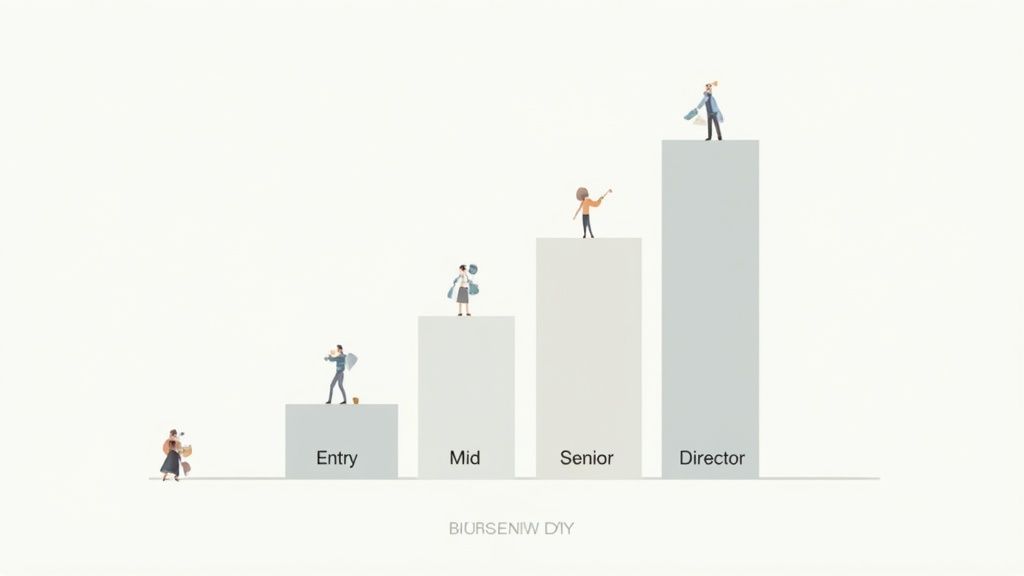
It’s no surprise that as you gain more experience and take on bigger responsibilities, your salary grows with you. An early-career brand manager might focus on executing campaigns, while a senior leader is busy crafting the brand's entire future. That difference in strategic impact is reflected directly in their compensation.
According to a detailed data analysis from PayScale, the average salary for a Global Brand Manager in the United States is $104,814. Keep in mind, this figure is just the base pay. As we'll get into later, things like bonuses and profit-sharing can really add to that total.
A brand manager's salary is a direct reflection of the value and responsibility they hold. As they gain the experience to shape consumer perception and drive market share, their compensation scales accordingly to match their strategic impact on the business.
To give you a clearer idea of what to expect, here’s a look at how base salaries typically progress as you move up the ladder.
This table provides a snapshot of typical base salary ranges you can expect at different points in your brand management career.
Brand Manager Salary by Experience Level
| Experience Level | Typical Annual Salary Range |
|---|---|
| Associate Brand Manager (1-3 years) | $75,000 – $95,000 |
| Brand Manager (3-5 years) | $95,000 – $125,000 |
| Senior Brand Manager (5-8 years) | $125,000 – $155,000 |
| Group/Director of Branding (8+ years) | $160,000+ |
These figures give you a solid baseline for what your base pay might look like. But remember, this is just one piece of the puzzle. Next, we’ll break down the other parts of a total compensation package—like bonuses and benefits—that can significantly boost your overall earnings.
Understanding Your Total Compensation Package
That number you see on the job offer? That’s just the starting point. A brand manager's salary isn’t one single figure; it's a collection of different parts that make up your total compensation package. Getting your head around the full picture is absolutely essential if you want to gauge what a job is truly worth.
Think of your base salary as the foundation of a house. It’s solid, reliable, and it’s the income you can count on, no matter what. But the best opportunities build on top of that foundation, adding extra levels that can seriously increase the total value. It’s these additions that turn a good offer into a great one.
Beyond the Base Salary
While your base pay is the most straightforward part of your earnings, the real magic often happens in the variable components. This is where your performance and the company's success can give your income a major boost. These elements are designed to reward you directly for your impact on the brand's growth.
Here are the most common additions you'll see:
- Performance Bonuses: Usually paid out once a year, these are tied to hitting specific targets—things like growing market share, launching a killer campaign, or hitting revenue goals. A typical bonus can easily add 10% to 25% on top of your base salary.
- Profit Sharing: Some companies share a slice of their yearly profits with their employees. This is a powerful motivator because it directly connects your paycheck to the company's bottom line, making you feel like a true owner in the business.
- Stock Options or RSUs: This is huge, especially at publicly traded companies or fast-growing startups. Equity, in the form of Restricted Stock Units (RSUs) or stock options, gives you a piece of the company. As the business succeeds, your stock can become incredibly valuable.
These variable pieces are what separate a standard compensation plan from a truly competitive one. For a closer look at how all these elements work together, check out our guide on what a total compensation package includes.
Evaluating the Complete Offer
When a job offer lands in your inbox, resist the urge to just zero in on the base salary. You need to do the math on the potential total value. A role with a slightly lower base might actually be far more lucrative in the long run if it comes with a hefty bonus structure and equity.
For instance, an offer of $115,000 with a 20% target bonus and $10,000 in yearly stock grants has a potential first-year value of $148,000. That's a whole lot better than a flat $130,000 salary with no other perks.
Your total compensation reflects your total value. Base salary gives you security, but variable pay like bonuses and equity is where you share in the upside of your strategic wins.
Always dig into the details. Ask how bonuses are calculated and what the vesting schedule is for any stock. This complete financial picture is what you need to make a smart career move and compare offers like a pro. Knowing these details gives you the power to negotiate not just for a higher salary, but for a better overall package.
How Industry and Location Shape Your Salary
It’s a common misconception that two brand managers with the same title and years of experience should earn about the same. The reality? Their paychecks can be worlds apart. This isn't just random luck; it's the direct result of two powerful forces: the industry you’re in and the city you work in.
Think of your salary potential like a high-performance car. Your skills and experience are the engine, but the industry is the racetrack and your location is the weather on race day. A powerful engine can't hit top speed on a muddy track in a torrential downpour. In the same way, your earning potential is either turbocharged or held back by the economic environment you operate in.
The Industry Effect on Your Paycheck
More than anything else, the industry you choose will often set the ceiling for your earning potential. Some sectors are simply more profitable, have fatter margins, or are riding a wave of massive growth—and that cash trickles down directly into more competitive pay for their brand managers.
Technology: Tech consistently leads the pack. Fueled by venture capital and a relentless drive for innovation, these companies see branding as a critical weapon in the fight for market dominance. They’re more than willing to pay a premium for brand managers who can craft a compelling story around complex products.
Pharmaceuticals & Biotech: This is another high-paying arena. The ability to navigate a labyrinth of healthcare regulations while building deep trust with both doctors and patients is an incredibly valuable skill. The massive profits from successful drugs allow for some seriously generous compensation packages.
Consumer Packaged Goods (CPG): While CPG is the traditional heartland of brand management—think of the classic brand managers at companies like P&G or Unilever—salaries here tend to be more moderate. These roles offer phenomenal training and foundational experience, but the tighter profit margins often mean the pay scales don't reach the heights of tech or pharma.
Beyond base pay, the type of compensation also shifts. Tech roles are famous for their lucrative stock options, which can dramatically multiply your total earnings over time. That’s a perk you’re far less likely to see in more traditional CPG companies.
The chart below shows how these different components—base salary, bonus, and equity—come together to create a brand manager's total compensation package.
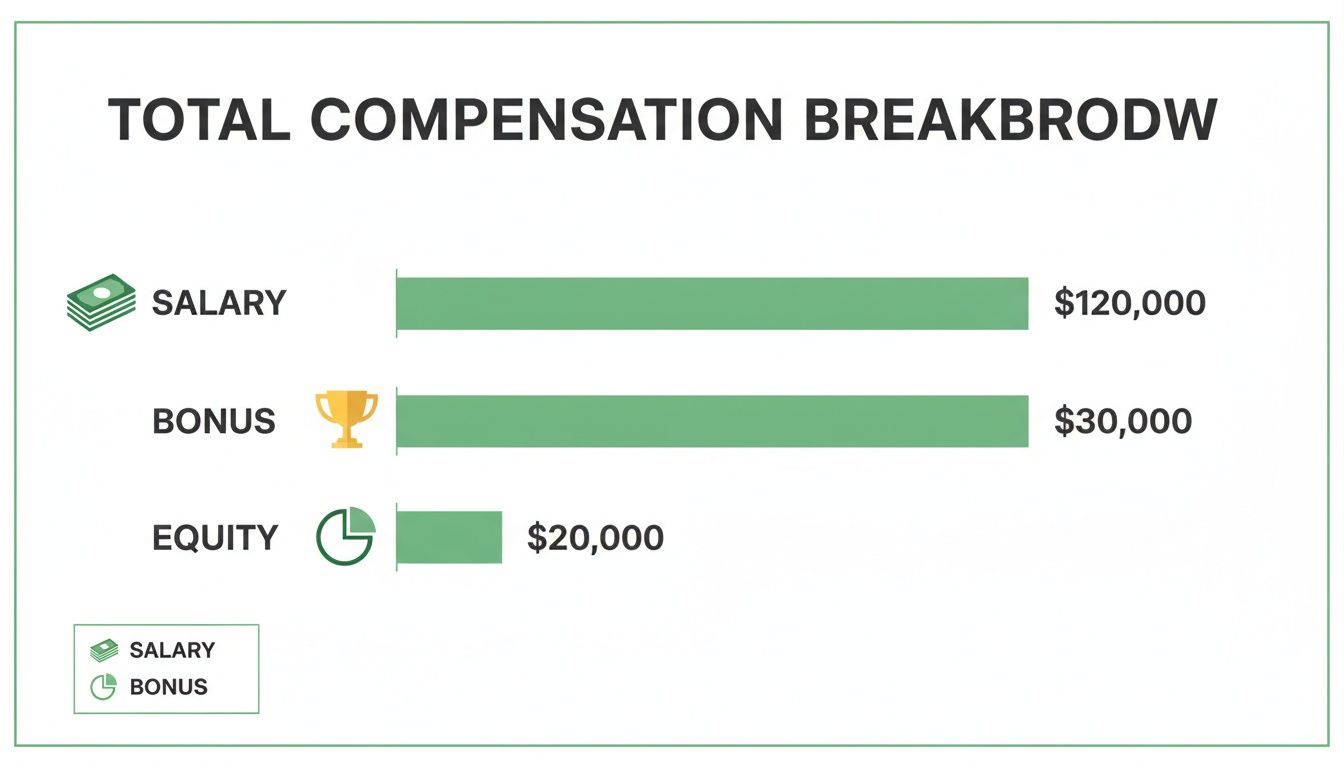
As you can see, while your base salary is the biggest slice of the pie, performance bonuses and equity can add up to a significant chunk of your earnings, and these two components are what vary most wildly between industries.
How Geography Influences Your Earnings
Where you live and work matters just as much as the industry you're in. It's a simple fact: major metropolitan areas with a high concentration of corporate headquarters and a higher cost of living will naturally offer bigger paychecks. A brand manager salary in New York City or San Francisco will almost always dwarf one in a smaller city in the Midwest.
This isn't just about covering your rent; it's pure supply and demand. Cities that are hubs for certain industries become battlegrounds for top talent. For example, data from Comparably shows just how dramatic this can be. While the national average for a Global Brand Manager hovers around $175,071, that same role in San Jose, CA, skyrockets to an eye-watering $345,657. That’s a staggering 97% higher than the average, driven by tech giants who need branding experts to match their world-changing innovation. You can explore more about these location-based salary trends to see how compensation stacks up in different cities.
Your geographic location sets the baseline for your salary negotiation. A top-tier salary in one city might be considered an entry-level offer in a major tech or finance hub. Understanding the local market is key to knowing your worth.
This "geographic premium" is most obvious in tech, finance, and biotech hubs where companies are in a constant, fierce competition for a limited pool of highly skilled professionals.
Company Size and Structure
Finally, the type of company you work for plays a huge role in your paycheck. A scrappy startup and a global multinational corporation are two different worlds, and their compensation philosophies reflect that.
Let’s take a look at how these factors can create different salary outcomes.
Salary Impact by Key Factors
| Factor | Example | Potential Salary Impact |
|---|---|---|
| Industry | Tech/Pharma vs. CPG/Retail | High-margin industries can offer 20-50%+ higher total compensation. |
| Company Size | Startup vs. Fortune 500 | Large corporations offer higher base pay; startups offer high-potential equity. |
| Location | San Francisco vs. Kansas City | Major tech/finance hubs can have salaries 50-100% above the national average. |
As the table shows, the same job title can lead to vastly different financial realities depending on these key variables.
Startups: An early-stage company might not have the cash for a huge base salary. To make up for it, they often offer significant equity grants. It's a high-risk, high-reward bet on the company’s future success—if it takes off, your stock options could be worth a fortune.
Established Corporations: Big, stable companies like Johnson & Johnson or Procter & Gamble offer something else: predictability and structure. You’ll get a competitive base salary, a well-defined bonus program, and a rock-solid benefits package. The career ladder is clearer, even if the chance of a massive equity payday is much lower than at a unicorn startup.
Choosing between them really comes down to your personal risk tolerance and career goals. Do you crave the stability and resources of a corporate giant, or are you energized by the potential upside and breakneck pace of a startup? Each path offers a completely different financial journey for a brand manager.
Your Career Path and Salary Growth
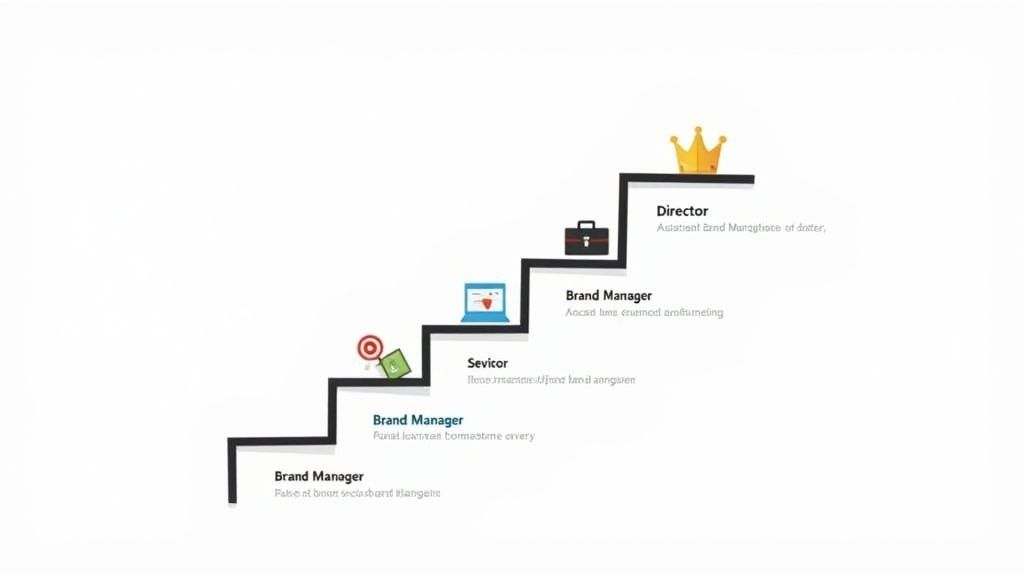
A brand manager's salary isn't a static number. Think of it as a moving target that grows right alongside your skills, responsibilities, and strategic influence. The path from an entry-level associate to a senior director is a pretty well-trodden one, and each step up brings more ownership, leadership duties, and—you guessed it—a nice bump in compensation.
But this climb is about more than just putting in the time. To really fast-track your career and paycheck, it’s smart to be intentional about your growth by crafting a personal development plan. This helps you focus on building the specific skills you'll need to jump to the next rung of the ladder.
From Assistant to Brand Manager
Most people start their journey as an Associate or Assistant Brand Manager. This is where you learn the ropes and become the engine of the brand team. The day-to-day is all about execution—coordinating with agencies, digging into market data, tracking campaign metrics, and generally supporting the senior managers. Your pay at this stage reflects that supporting role, but it's a solid start.
After you've got the fundamentals down, the next stop is the Brand Manager role. This is a big leap because you shift from doing to owning. You're now the one directly responsible for a brand or product line's performance, which means you're creating the marketing plans, managing the budget, and making important strategic calls. That added responsibility is rewarded with a significant jump in both your base salary and bonus potential.
Ascending to Senior and Director Roles
Once you have a solid track record of success, the path naturally leads to Senior Brand Manager. Your world gets a lot bigger here. You might be responsible for a portfolio of brands, managing a small team of your own, or leading major projects like a new product launch. The job becomes less about the daily grind and more about shaping long-term brand strategy. This is where your compensation can really start to take off.
Each step up the brand management ladder is a trade-off. You exchange tactical, hands-on work for broader strategic oversight, and your compensation package grows to reflect the increasing scope of your decisions and their impact on the company's bottom line.
The peak of this career track is a leadership position like Group Brand Manager or Director of Branding. At this stage, you're not just managing brands; you're building the entire brand portfolio and mentoring the next wave of talent. Your focus shifts to high-level strategy, P&L responsibility, and making sure the company’s brand vision aligns with its business goals.
For those who thrive here, the next move is often into the C-suite as a VP of Marketing or even a CMO. You can learn more about that executive journey in our guide on how to become a marketing director.
This progression is clearly reflected in the salary data. For example, Global Brand Marketing Managers see a huge range based on experience. While the average annual salary is $89,427, that figure can start around $55,000 for junior professionals and climb to $112,000 for those with deep expertise. The top earners in the field can even pull in $150,000 or more.
Actionable Strategies to Increase Your Salary
Knowing the numbers is one thing, but actually getting paid what you're worth? That takes a real strategy. It's about turning your track record into a rock-solid case for higher pay, whether you're staring down a new job offer or gearing up for your annual review.
Let's get one thing straight: companies don't pay for job descriptions. They pay for results. Your job is to stop talking about what you do and start talking about the value you create. When you can clearly connect your work to the bottom line, the salary conversation changes completely.
Quantify Your Achievements on Your Resume
Your resume isn't just a historical document; it's your #1 sales tool. To make it compelling, you have to swap out vague responsibilities for hard-hitting, metric-driven achievements. "Managed marketing campaigns" is a guaranteed way to get overlooked. You need to show undeniable proof of your impact.
Before you even think about your next job hunt or performance review, do an audit of your work. Dig for the numbers that tell a powerful story.
- Revenue Growth: Did your brand strategy lead to a 15% spike in year-over-year sales for a key product? Put it down.
- Market Share Expansion: Can you prove your work helped steal an extra 5% of the market from a major competitor? That’s gold.
- Campaign ROI: Get specific. For every dollar the company invested in that big campaign you ran, how many dollars did you bring back in revenue?
- Efficiency Gains: Maybe you found a smarter way to work with an agency that ended up saving the company $50,000 a year. That’s a huge win.
Quantifying your wins like this transforms your resume from a passive list of duties into an active pitch for why you deserve a top-tier salary.
Master the Art of Salary Negotiation
I get it, negotiation can be nerve-wracking. But walking into that conversation armed with confidence and data makes all the difference. Always remember that the first offer is just that—a starting point. Your goal is to anchor the conversation around the value you’ve proven you can deliver, not just some generic industry average.
Here's a pro tip: Never accept the first offer. Companies expect you to negotiate. When you confidently and respectfully ask for more, you're not being difficult. You're signaling that you understand your worth and know how to advocate for value—a trait every great brand manager should have.
Keep your language simple and direct. Try something like this: "Thank you so much for the offer. I'm incredibly excited about this role. Based on my track record of driving X% market share growth and the market data for this position, I was targeting a salary closer to [Your Target Number]."
This approach isn't a personal plea; it's a business discussion. It's professional, assertive, and firmly rooted in the results you know you can deliver.
Build Your Professional Brand Beyond Your Job Title
Your long-term earning potential is about more than just your current job. It’s about your reputation in the industry. Beyond the immediate salary talks, actively cultivating a strong online presence can dramatically increase your visibility and attract higher-paying roles. You are a brand, so manage yourself like one.
This isn't as complicated as it sounds. It could be as simple as:
- Engaging on Professional Networks: Don't just be a lurker on LinkedIn. Share your thoughts on industry trends, comment on articles, and connect with other leaders in the space.
- Speaking at Industry Events: You don't have to keynote a massive conference. Starting with small, local meetups can quickly establish you as an expert.
- Publishing Your Thoughts: Start a blog or write a guest post for an industry publication. Sharing your expertise shows you're a leader, not just an employee.
When you build a visible professional brand, you shift the dynamic. Instead of you chasing jobs, recruiters and high-value opportunities start coming to you. That gives you incredible leverage when it's time to talk money, ensuring your salary continues to climb throughout your career.
Got Questions? We've Got Answers
Let's tackle a few of the most common questions that pop up when people are trying to figure out brand manager compensation. Think of this as the final piece of the puzzle to help you see the whole picture.
Do I Really Need an MBA to Make Top Dollar?
An MBA isn't a golden ticket, but it can definitely be a powerful shortcut, especially if you're aiming for top-tier companies in competitive fields like CPG or tech. It often fast-tracks you into more senior roles right out of the gate and can give your starting salary a nice bump.
That said, nothing speaks louder than results. If you have a proven track record—say, you spearheaded a product launch that blew its targets out of the water or you can show exactly how you grew market share—that experience can be just as valuable as a degree. These days, sharp skills in digital marketing and data analytics can really even the odds.
Where’s the Big Money? Which Industries Pay the Best?
If you're chasing the highest numbers, look to the tech and pharmaceutical industries. They consistently lead the pack. Tech companies are all about rapid growth and fat profit margins, so they often sweeten the deal with generous stock options on top of an already high base salary.
Pharma is a similar story. It's a complex, high-stakes world, and they'll pay a premium for brand managers who know how to navigate it successfully. CPG might be the classic training ground for brand managers, and the pay is certainly respectable, but it generally can't keep up with the compensation offered in tech and pharma.
The highest brand manager salary is often found where brand strategy has the most direct and significant impact on high-margin products. This is why tech and pharma consistently lead, as strong branding can create billion-dollar franchises in these spaces.
Does Working Remotely Change My Paycheck?
It's a mixed bag, but the trend is definitely in your favor. When remote work first exploded, many companies tried to adjust salaries based on where you lived. Now, more and more are realizing that to get the best talent, they need to offer competitive, location-agnostic pay.
This is a huge opportunity. It means you could be living somewhere with a low cost of living while earning a salary pegged to an expensive hub like San Francisco or New York. That's a game-changer for your actual take-home pay and financial freedom.
Brand Manager vs. Product Marketing Manager: Who Earns More?
These two roles are incredibly close, and their salaries often are, too. The real difference is their focus.
Think of the Brand Manager as the guardian of the entire brand's story and reputation. The Product Marketing Manager (PMM), on the other hand, is zeroed in on the go-to-market plan for one specific product. In the tech world, you might see PMMs inching ahead in salary because their work is so tightly tied to product sales. But in classic brand-led industries like CPG, the Brand Manager is often the more senior, strategic role. It really boils down to which function the company sees as its primary growth engine.
Ready to find what you're worth? The job market moves fast, but SalaryGuide provides the real-time data and tools you need to stay ahead. Explore thousands of verified marketing roles and get the salary transparency you deserve. Start your confident career search on SalaryGuide today.
