8 Crucial 2nd Interview Questions for Marketers in 2026
You’ve passed the first hurdle and impressed them with your resume and initial screening. Now comes the real test: the second interview. This stage moves beyond general qualifications, diving deep into your strategic thinking, problem-solving abilities, and how you would fit within the team culture. Hiring managers use these deeper conversations to validate your real-world skills and assess your potential to contribute directly to their goals. It's your opportunity to prove you can not only do the job but excel in it.
This guide breaks down eight of the most common and impactful 2nd interview questions you'll face for demanding marketing roles. For each question, you'll find expert advice, structured sample answers using the STAR method, and common red flags to avoid. We will equip you to articulate your value, demonstrate tangible expertise, and show you're the right candidate to drive growth. This preparation is essential for not just landing the job, but also securing the compensation and role you deserve. Let's move beyond the basics and get you ready for that offer.
1. Tell me about a time you had to defend a marketing budget or campaign to leadership
This behavioral question is a staple in many 2nd interview questions for a reason. It’s designed to test your ability to connect marketing activities directly to business objectives, handle scrutiny from leadership, and use data to build a persuasive argument. Interviewers want to see if you can think like a business owner, not just a marketer.
They are assessing your strategic thinking, financial acumen, and stakeholder management skills. Your response reveals how you navigate internal challenges, justify investments, and ultimately, prove your value and the value of your team's work.

Why This Question Matters
In a second interview, the focus shifts from what you’ve done to how and why you did it. Defending a budget isn't just about getting a "yes"; it's about demonstrating confidence, strategic alignment, and the ability to translate marketing metrics into financial impact. This is where you showcase your executive presence.
A strong answer here proves you can:
- Articulate ROI: Connect campaign spend to concrete business outcomes like revenue, customer lifetime value (CLV), or market share.
- Handle Pushback: Respond to skepticism with data and a clear, logical rationale.
- Think Strategically: Align your proposed initiatives with broader company goals, such as expansion into a new market or reducing customer acquisition costs (CAC).
How to Structure Your Answer
Use a clear framework like STAR (Situation, Task, Action, Result) to keep your answer concise and impactful.
- Situation: Briefly describe the campaign or budget you proposed and the business context. Mention any challenges, like tight finances or a skeptical leadership team.
- Task: Explain your objective. What were you trying to achieve by securing this budget?
- Action: Detail the specific steps you took to build your case. This is where you highlight your data-driven approach. Did you use historical performance data, competitor benchmarks, or market trend analysis?
- Result: Quantify the outcome. Share the specific metrics that prove your decision was correct, such as a 40% improvement in CAC or exceeding a sales-qualified lead (SQL) target by 25%.
2. How do you stay current with marketing trends and algorithm changes?
This question assesses professional development, industry engagement, and adaptability in the fast-evolving marketing landscape, where SEO algorithms, paid platform updates, and consumer behavior shift constantly. It reveals whether candidates are self-directed learners and actively engage with the broader marketing community. For SalaryGuide users, this indicates career growth potential and long-term value.
Why This Question Matters
In a second interview, hiring managers want proof you can anticipate industry shifts before they disrupt campaigns. Demonstrating continuous learning shows you optimize strategies proactively rather than reactively. It also signals you can innovate ahead of competitors and bring fresh ideas to the team.
A strong answer here proves you can:
- Demonstrate Strategic Adaptability: Cite how you adjust tactics when search or social algorithms change.
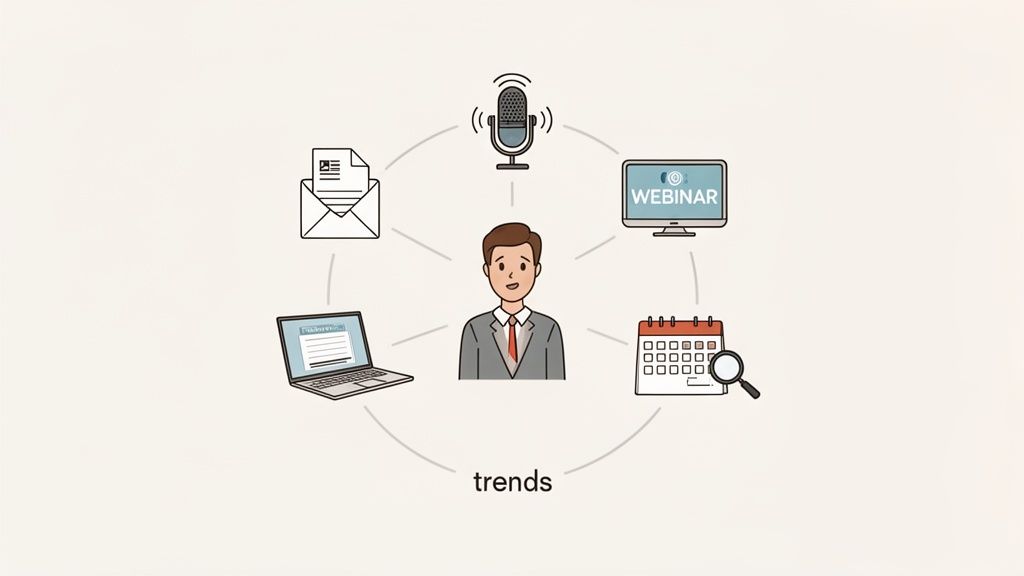
- Embrace Proactive Learning: Highlight regular routines like newsletters, webinars, podcasts, and beta testing new ad features.
- Foster Community Engagement: Explain how you share insights with peers via Slack channels, lunch-and-learn sessions, or internal knowledge repositories.
How to Structure Your Answer
Use a clear framework like RII (Resource, Implementation, Impact) to keep your response concise and persuasive. This method ensures you cover both the sources you rely on and the tangible results you drive.
- Resource: Name specific channels—daily Google Search Central newsletter, monthly industry webinars, SEO-focused Slack groups, or early testing in Meta Ads Manager.
- Implementation: Describe a recent test or project where you applied a new trend—like tweaking keyword strategy after an algorithm shift or launching a pilot influencer campaign.
- Impact: Quantify the outcome—such as a 20% lift in organic traffic, a 15% reduction in cost per lead, or faster campaign iterations.
Learn more about staying current with marketing trends and algorithm changes on SalaryGuide.com
3. Describe your experience with marketing analytics, data interpretation, and reporting
This technical competency question evaluates how you collect, analyze, and communicate marketing data to drive strategy. Interviewers use it to gauge your quantitative skills, critical thinking, and ability to translate numbers into clear business recommendations.

Why This Question Matters
In a second interview, you must prove you can turn raw metrics into strategic insights. Understanding how to interpret complex data is crucial; our guide on data analytics for marketing can help you turn raw numbers into actionable insights.
Interviewers are assessing:
- KPI alignment: Do you prioritize business goals over vanity metrics?
- Analytical rigor: Can you handle sampling issues and statistical significance?
- Insight generation: Have you uncovered findings that shifted budget or tactics?
- Tool fluency: Are you comfortable with GA4, Tableau, or custom dashboards?
- Attribution modeling: Can you compare first-click, last-click, and multi-touch approaches?
- Stakeholder communication: Can you simplify technical results for non-technical teams?
How to Structure Your Answer
Use the STAR framework to keep your response concise and evidence-driven:
- Situation: Briefly describe the campaign or channel and the analytics tools you used.
- Task: Define your goal, such as improving ROAS by 20% or reducing churn.
- Action: Detail your process—data collection, segmentation, A/B tests, dashboard creation. For example, a paid media specialist built a custom ROAS dashboard by audience segment, an SEO expert mapped GA4 conversion funnels, and a growth marketer tested attribution models.
- Result: Quantify the impact, such as a 15% lift in conversion rate or a new model that optimized spend by 10%.
Learn more about marketing analyst job requirements on salaryguide.com:
Learn more about marketing analyst job requirements on salaryguide.com
4. Walk me through a project where you managed cross-functional collaboration
This is one of the most critical 2nd interview questions for any modern marketing role. It directly assesses your ability to navigate complex organizational structures and lead projects that require buy-in from multiple departments, such as sales, product, and engineering. No marketing initiative succeeds in a vacuum, and interviewers want to see proof that you can be the glue that holds a project together.
They are evaluating your communication style, your project management skills, and your ability to influence colleagues without direct authority. Your answer reveals whether you can break down departmental silos and drive a project forward by fostering a shared sense of ownership and purpose.
Why This Question Matters
In a second interview, the hiring manager is looking beyond your individual contributions to see how you elevate the performance of the entire team. Managing cross-functional collaboration is less about giving orders and more about building consensus and navigating competing priorities. This skill is a hallmark of a senior, strategic marketer.
A strong answer demonstrates you can:
- Facilitate Communication: Establish clear channels and processes to keep diverse teams like product, sales, and design aligned.
- Resolve Conflict: Mediate disagreements over timelines, resources, or priorities with diplomacy and a focus on the overarching business goal.
- Build Alliances: Earn trust and influence stakeholders from other departments, ensuring their objectives are understood and integrated into the project plan.
How to Structure Your Answer
A project-based story is perfect for the STAR (Situation, Task, Action, Result) method. It provides a clear narrative that is easy for the interviewer to follow.
- Situation: Briefly set the stage. Describe the project and the different teams involved (e.g., a product launch involving marketing, engineering, and customer support).
- Task: State your specific role and objective. Were you tasked with ensuring a smooth go-to-market launch by a specific deadline?
- Action: Detail the concrete steps you took to manage collaboration. Mention specific tactics like establishing weekly sync meetings, creating a shared project dashboard, or facilitating a workshop to align on messaging. Explain how you handled a specific point of friction.
- Result: Quantify the project's success. Did the collaboration lead to a launch that was on time and 15% under budget? Did it result in a 20% increase in qualified leads because sales and marketing were perfectly aligned?
5. How have you managed a marketing campaign or initiative that underperformed?
This is one of the most revealing 2nd interview questions you can face. It's designed to test your resilience, accountability, and problem-solving skills when things don't go according to plan. The interviewer wants to see if you blame external factors or if you take ownership, analyze the failure, and learn from it.
They are assessing your emotional intelligence and maturity. Your response demonstrates how you handle pressure, your commitment to continuous improvement, and your ability to turn a negative situation into a valuable learning opportunity for yourself and your team.
Why This Question Matters
In a second interview, proving you can navigate setbacks is as important as highlighting your wins. Answering this question well shows you possess the high-level perspective needed for senior roles. Failure is inevitable in marketing; what matters is how you respond.
A strong answer here proves you can:
- Demonstrate Accountability: Authentically acknowledge the underperformance without making excuses.
- Apply Analytical Skills: Conduct a thorough post-mortem to identify the root cause of the issue.
- Showcase Resilience: Frame the failure as a learning experience that led to specific, positive changes in future strategies.
How to Structure Your Answer
Use the STAR framework (Situation, Task, Action, Result) to provide a clear, compelling narrative of professional growth.
- Situation: Briefly describe the underperforming campaign and its initial goals. For example, a new product launch campaign that missed its lead generation target by 50%.
- Task: State your responsibility. Your goal was to understand why the campaign failed and to develop a plan to correct the course or apply learnings to the next initiative.
- Action: Detail your analytical process. Explain how you conducted a post-mortem, analyzed the data (e.g., audience targeting, creative performance, keyword research), and identified the core problem.
- Result: Quantify the outcome of your actions. Explain the specific process improvements you implemented. For instance, "This led us to develop a stricter creative A/B testing protocol, which improved our ROI by 35% in the following quarter's campaign."
6. What is your experience with marketing automation, CRM, and martech stack management?
This technical question is a crucial part of many 2nd interview questions because modern marketing relies heavily on an integrated technology ecosystem. Interviewers use this question to gauge your hands-on proficiency with the platforms that drive lead nurturing, personalization, segmentation, and analytics.
They are assessing not only your technical capability but also your strategic thinking. Your answer reveals how you leverage technology to create efficient, scalable marketing programs and how you make informed decisions about building and managing a company’s martech stack.
Why This Question Matters
In a second interview, proving your technical competence is non-negotiable. The focus shifts from general marketing knowledge to specific, tool-based execution. Answering this question well demonstrates that you can translate marketing strategy into automated workflows that produce measurable results.
A strong answer here proves you can:
- Think Strategically: Explain how you select and integrate tools to support specific business goals, not just list the platforms you know.
- Drive Efficiency: Articulate how you use automation to nurture leads, improve customer journeys, and free up team resources.
- Manage Data: Show your understanding of data hygiene, segmentation, and using CRM data to create personalized, effective campaigns.
How to Structure Your Answer
Use a project-based approach to showcase your expertise. Instead of just listing software, describe a specific challenge and how you used the martech stack to solve it.
- Situation: Briefly describe a marketing goal, such as improving lead quality or increasing customer engagement. Mention the key platforms you were working with, like HubSpot and Salesforce.
- Task: Explain your objective. Were you tasked with building a lead nurturing sequence, improving lead-to-customer attribution, or implementing a new tool?
- Action: Detail the specific steps you took. Describe the workflows you designed, the audience segments you created, or the integration process you managed. For example, explain how you used lead scoring to trigger different email sequences.
- Result: Quantify the outcome. Share metrics like a 30% increase in marketing-qualified leads (MQLs), a 15% improvement in email open rates, or a 20% reduction in sales cycle length.
7. Describe your experience with A/B testing, experimentation, and optimization frameworks
This question moves beyond campaign results to probe the scientific process behind them. It's a critical technical question in many 2nd interview questions for marketing roles because it tests your commitment to data-driven decision-making. Interviewers want to see if you have a rigorous, systematic approach to improving performance, not just relying on intuition.
They are assessing your analytical skills, your understanding of statistical concepts, and your ability to build a culture of continuous improvement. Your answer reveals whether you can design controlled experiments, interpret data correctly, and use insights to generate real business growth.
Why This Question Matters
In a second interview, hiring managers need to confirm you have the hard skills to execute effectively. A/B testing is fundamental to modern marketing, from optimizing ad creative to increasing landing page conversion rates. A strong answer proves you are methodical and results-oriented.
Showcasing a solid experimentation framework proves you can:
- Formulate Strong Hypotheses: Demonstrate that you start with a clear, testable idea rooted in user data or research, not just random guesses.
- Maintain Methodological Rigor: Explain your process for determining sample size, statistical significance, and test duration to avoid common pitfalls.
- Drive Incremental Gains: Show that you understand how small, consistent improvements compound over time to create a significant competitive advantage.
- Share and Scale Learnings: Articulate how you document test results and share them with the broader team to inform future strategies.
How to Structure Your Answer
The STAR method is perfect for framing your experience with a specific, high-impact test. For a broader overview of your process, a step-by-step framework works well.
- Situation: Briefly describe a marketing asset or funnel that was underperforming. For example, a key landing page had a high bounce rate.
- Task: State your objective. The goal was to increase form submissions by 15% without increasing ad spend.
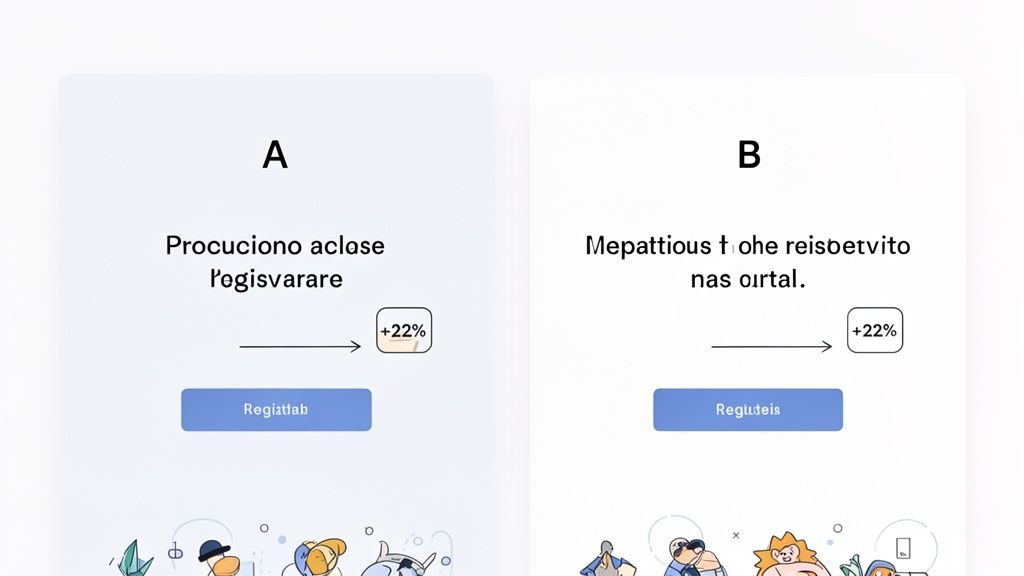
- Action: Detail your experimentation process. Explain your hypothesis (e.g., "Changing the CTA button color to orange will increase clicks because it stands out more"). Mention the tools used, the variants tested, and how you ensured the test's validity. To showcase expertise in optimizing campaigns, consider referencing an ultimate A/B testing guide to demonstrate a structured approach to experimentation.
- Result: Quantify the outcome with specific numbers. For instance, "Variant B, with the orange button, achieved a 22% uplift in conversions at 95% statistical significance, leading us to roll it out permanently."
8. How have you approached building or scaling a marketing team, or developed other marketers?
This is one of the most critical 2nd interview questions for management and executive roles. It moves beyond your individual contributions to assess your ability to be a force multiplier. Interviewers want to understand your leadership philosophy, strategic hiring process, and commitment to nurturing talent.
They are evaluating your capacity to build a high-performing function that can scale with the business. Your answer reveals whether you can identify skill gaps, recruit top talent, and create an environment where marketers can do their best work and grow their careers.
Why This Question Matters
In a second interview for a leadership position, your ability to build and lead a team is just as important as your marketing expertise. This question probes your management acumen and gauges your potential to be a strong, effective leader. It separates a senior doer from a strategic builder.
A compelling answer demonstrates that you can:
- Hire Strategically: Identify the specific skills and roles needed to meet business objectives, not just fill seats.
- Develop Talent: Invest in your team's growth through mentorship, training, and providing challenging opportunities.
- Build a Cohesive Culture: Foster a collaborative, high-performance environment aligned with company values. Your approach to this reveals core leadership principles.
How to Structure Your Answer
Use a clear, narrative approach, focusing on a specific instance of team building or talent development. The STAR method is an excellent framework.
- Situation: Describe the team's state when you took over or the business need that required you to scale it. Was it a team of two that needed to become eight? Was there a critical skill gap, like a lack of analytics expertise?
- Task: What was your goal? Was it to build a demand generation engine from scratch, restructure the team for better efficiency, or mentor a junior marketer into a specialist role?
- Action: Detail your process. Explain how you defined roles, what criteria you used for hiring, and how you onboarded new members. If you developed an individual, describe the specific coaching, projects, and feedback you provided.
- Result: Quantify the impact of your actions. Did your newly structured team increase MQLs by 50%? Did the person you mentored get promoted and take on a critical new function? Tie your team-building efforts back to concrete business outcomes.
2nd Interview: 8-Point Question Comparison
| Title | 🔄 Implementation complexity | ⚡ Resource requirements | ⭐ Expected outcomes | 📊 Ideal use cases | 💡 Key advantages |
|---|---|---|---|---|---|
| Tell me about a time you had to defend a marketing budget or campaign to leadership | 🔄 Moderate–High: needs prep, financial framing, stakeholder alignment | ⚡ Moderate: analytics, ROI models, presentation time | ⭐ High: demonstrates ROI articulation and executive influence | 📊 Mid–senior roles that control budget (paid media, growth) | 💡 Reveals business acumen, persuasion, and P&L thinking |
| How do you stay current with marketing trends and algorithm changes? | 🔄 Low: ongoing habits and continual learning | ⚡ Low: subscriptions, communities, conference time | ⭐ Medium–High: shows adaptability and proactive learning | 📊 Roles sensitive to platform changes (SEO, paid, growth) | 💡 Signals growth potential and knowledge-sharing behavior |
| Describe your experience with marketing analytics, data interpretation, and reporting | 🔄 High: technical setup, modeling, and interpretation | ⚡ High: analytics tools, data access, SQL/Python skills | ⭐ Very High: links data to strategy and measurable impact | 📊 Analytics-heavy roles (marketing analyst, paid, growth) | 💡 Differentiates candidates by measurement rigor and insight quality |
| Walk me through a project where you managed cross-functional collaboration | 🔄 Moderate: coordination, conflict resolution, influence | ⚡ Moderate: stakeholder time, communication channels | ⭐ High: indicates ability to deliver complex, cross-team work | 📊 Manager/product marketing/growth roles requiring influence | 💡 Shows interpersonal leadership and ability to align priorities |
| How have you managed a marketing campaign or initiative that underperformed? | 🔄 Low–Moderate: requires honest post-mortem and corrective plan | ⚡ Low: documentation and analysis time | ⭐ Medium: demonstrates accountability and learning orientation | 📊 Senior hires expected to handle failures at scale | 💡 Reveals resilience, root-cause thinking, and process improvement |
| What is your experience with marketing automation, CRM, and martech stack management? | 🔄 High: integration design, data flow, and governance | ⚡ High: multiple platforms, integrations, technical resources | ⭐ Very High: improves efficiency, personalization, attribution | 📊 Marketing ops, demand gen, email, and growth teams | 💡 Shows practical tool knowledge and ability to architect stacks |
| Describe your experience with A/B testing, experimentation, and optimization frameworks | 🔄 Moderate–High: experimental design and statistical rigor | ⚡ Moderate: testing tools, traffic, measurement capabilities | ⭐ Very High: drives evidence-based optimization and ROI gains | 📊 Conversion, CRO, growth, and paid teams needing scaleable tests | 💡 Demonstrates systematic learning, prioritization, and risk control |
| How have you approached building or scaling a marketing team, or developed other marketers? | 🔄 High: hiring strategy, org design, career frameworks | ⚡ High: recruiting budget, training, mentorship time | ⭐ Very High: indicates leadership readiness and scalable growth | 📊 Director/VP hires and organizations scaling marketing function | 💡 Reveals talent evaluation, development philosophy, and succession planning |
Turning Questions Into Conversations: Your Final Steps to Success
Navigating a second interview successfully is less about passing a test and more about confirming a partnership. You have moved beyond the initial screening; now, the company is looking for a strategic thinker, a problem-solver, and a cultural fit. The behavioral and situational 2nd interview questions we've explored are designed to peel back the layers of your resume and reveal the marketer behind the metrics.
Your goal is to transform this high-stakes Q&A into a collaborative conversation. By preparing detailed, evidence-based stories using frameworks like the STAR method, you demonstrate not just what you did, but how you think and the tangible impact you deliver. Remember, every answer is an opportunity to showcase your expertise in areas like data interpretation, cross-functional leadership, and campaign optimization.
Key Takeaways for Your Second Interview
To make a lasting impression, focus on these core principles:
- Go Beyond the "What": Instead of just stating you ran an A/B test, explain the hypothesis behind it, the control and variant, the statistical significance you aimed for, and how the results informed your next marketing action. This depth is what separates a good candidate from a great one.
- Demonstrate Future Value: Frame your past achievements as a preview of what you can bring to this specific role. Connect your experience managing underperforming campaigns or defending a budget directly to the challenges and opportunities you've identified at their company.
- Interview Them Back: The questions you ask are as telling as the answers you give. Inquiring about team structure, success metrics for the first 90 days, or the biggest challenge the marketing team is currently facing shows you are an engaged, strategic partner, not just a prospective employee.
Your Actionable Next Steps
Mastering these 2nd interview questions requires a proactive approach. Don't just read the questions; actively practice your responses. Write them out, say them aloud, and refine them until they sound natural and confident. Prepare a "portfolio" of your key projects and be ready to discuss the specific metrics, challenges, and outcomes associated with each.
Ultimately, this final stage is your chance to solidify their belief that you are the solution to their problems. It’s an opportunity to have a substantive discussion about mutual growth, shared goals, and how your unique marketing skills will drive their business forward. By preparing with intention and engaging with authenticity, you can turn this final hurdle into a confident stride toward your next career milestone. You are not just answering questions; you are building a compelling case for your candidacy and proving you are ready to make a significant impact from day one.
Ready to ensure the offer you receive matches your skills and market value? Use the SalaryGuide to benchmark compensation for your specific marketing role, location, and experience level. Go into your final negotiations with the data you need by exploring the SalaryGuide today.
