Marketing Coordinator Job Description Writing Guide

A marketing coordinator job description lays out the blueprint for a role that is, in many ways, the glue holding a marketing team together. This person is the master organizer, the one who juggles campaigns, wrangles schedules, and keeps the lines of communication open between all the different players. They are the organizational engine that makes sure marketing strategies actually get off the ground and become a reality.
What a Marketing Coordinator Actually Does

Think of the marketing coordinator as the "air traffic controller" for the entire department. While the strategists are charting the flight path and the specialists are building the plane, the coordinator is in the tower making sure everything takes off smoothly, flies in formation, and lands right on schedule.
Their real job is to take a high-level marketing strategy and break it down into concrete, coordinated tasks. This means they're constantly managing schedules, keeping an eye on project progress, and making sure everyone—from graphic designers to copywriters—has what they need to hit their deadlines. They are the ultimate facilitators.
The Central Hub of Marketing Execution
Ever seen a marketing department that feels chaotic? Where deadlines are constantly missed, messages get crossed, and campaigns feel like they were built by a committee that never met? That’s what happens when you don't have a good coordinator. This role steps in to create a single source of truth, bringing order to the chaos.
This is a hands-on job. It's less about dreaming up the big ideas and more about flawlessly executing them. For example, during a new product launch, the marketing coordinator is the person who's actually:
- Scheduling the social media posts to go live at the perfect moment.
- Following up with printers and other vendors to get promotional materials delivered on time.
- Jumping into the content management system (CMS) to upload and format blog posts.
- Pulling performance data from different platforms and putting it into a report that leadership can actually understand.
They are the ones connecting the dots between all the different marketing functions. Their work frees up the specialists to do what they do best, without getting bogged down in logistics. Seeing how this role fits into the bigger picture is crucial for understanding the entire marketing department organizational structure.
A Role Fueled by Growth and Data
The marketing coordinator role has become more critical as marketing has gotten more complex. With so many channels and so much data to manage, the need for someone to keep it all organized has exploded.
The numbers back this up. Employment for market research analysts and marketing specialists (a category that includes coordinators) is projected to grow 8% from 2022 to 2032. That's much faster than the average for all other jobs, and it's largely because companies are leaning so heavily on data and digital strategies. You can dig deeper into this career outlook with insights from experts at Florida Tech Online.
A great marketing coordinator doesn’t just manage tasks; they create momentum. By keeping projects on track and teams aligned, they empower the entire department to execute campaigns more effectively and efficiently, directly impacting business growth.
Ultimately, a strong marketing coordinator job description needs to sell this role for what it is: a critical engine for the team. It’s not just an admin job; it's a launchpad for a career in marketing and a non-negotiable part of any high-performing department.
Core Responsibilities and Daily Tasks

So, what does a marketing coordinator actually do all day? To really get a feel for the role, we have to look past the job title and break down the real-world duties. Think of this position as a dynamic blend of administrative support, creative coordination, and data-focused tasks that keep the entire marketing machine humming.
While no two days are exactly the same, their work almost always falls into a few key buckets. Nailing these down in your job post is crucial—it helps you attract people with the right skills and gives candidates a clear picture of what they’re signing up for.
Digital Marketing Support
A huge chunk of a marketing coordinator's time is spent in the digital trenches. They’re the ones turning strategy into action across all sorts of online channels, handling the hands-on tasks that maintain a consistent and engaging digital presence.
Here’s what that often looks like:
- Scheduling and Publishing: They get friendly with tools like Buffer or Sprout Social to schedule social media posts for platforms like LinkedIn, X, and Instagram.
- Email Campaign Assistance: They help build and send email newsletters, working inside platforms like Mailchimp or HubSpot to format content, manage contact lists, and get campaigns out the door.
- Website Content Updates: A coordinator is often responsible for uploading new blog posts, updating event pages, or making small copy edits using a Content Management System (CMS) like WordPress.
Since social media is such a common piece of the puzzle, it’s worth digging into a complete guide to social media marketing responsibilities to get a deeper understanding. This helps set clear expectations for everyone involved.
Content and Campaign Coordination
Beyond just hitting "publish," the coordinator is the central hub for all things content and campaign logistics. They make sure all the moving parts of a marketing initiative—from the first draft to the final launch—come together without a hitch. This is where top-notch organizational skills and an eye for detail really shine.
The Marketing Coordinator is the guardian of the marketing calendar. They ensure that content is created, approved, and published on time, preventing bottlenecks and keeping the entire team aligned on campaign timelines.
Imagine a new ebook launch. The coordinator is the one managing the entire workflow. They’ll chase down the copywriter for the final draft, work with the graphic designer on visuals, and make sure the finished PDF is uploaded and linked correctly on the website and in all the promo emails. They are, quite simply, the operational backbone of content production.
Administrative and Team Collaboration
Another core function is providing the administrative support that frees up the rest of the team to focus on their specialized work. This means managing schedules, keeping communication flowing, and handling all the logistical details that are vital for the department to run smoothly.
These collaborative duties often include:
- Vendor Communication: Acting as the point person for printers, freelance writers, or agencies to get quotes, send over assets, and ensure everything is delivered on time.
- Meeting and Event Logistics: Scheduling team meetings, prepping agendas, and helping plan everything from webinars to trade shows.
- Reporting and Data Compilation: A key weekly task is pulling performance data from places like Google Analytics, social media insights, and email platforms, then compiling it into a report the Marketing Manager can actually understand.
To help visualize this, here’s a sample breakdown of how a coordinator's tasks might be split between daily and weekly priorities.
Marketing Coordinator Daily and Weekly Task Breakdown
| Task Category | Daily Responsibilities | Weekly Responsibilities |
|---|---|---|
| Social Media | Monitor social channels for comments/mentions. Schedule and publish approved posts for the day. | Pull social media performance metrics. Plan content for the upcoming week with the team. |
| Email Marketing | Check on automated email campaign performance. Assist with building or formatting daily/weekly newsletters. | Segment email lists for upcoming campaigns. Compile performance reports for recently sent emails. |
| Content & Website | Upload new blog posts or make minor website text updates. Check for and fix any broken links. | Coordinate with writers/designers on content deadlines. Perform a content audit on a specific site section. |
| Admin & Collaboration | Respond to internal team requests via Slack/email. Update the project management board (e.g., Trello). | Compile and distribute the weekly marketing report. Prepare the agenda for the weekly team meeting. |
By taking on these essential operational tasks, the marketing coordinator becomes the glue that holds the department together. They are the indispensable organizer connecting big-picture strategy to day-to-day execution.
The Skills That Make a Marketing Coordinator Truly Great

What's the real difference between a good marketing coordinator and a great one? While the daily to-do list might look similar, it's the skills they bring to the table that set them apart. The best coordinators have a perfect blend of practical, tool-based abilities (the hard skills) and the crucial interpersonal traits that make everything run smoothly (the soft skills).
Think of it this way: the hard skills are the power tools. They're the drills, saws, and software needed to build the actual marketing campaigns. The soft skills? That's the blueprint—the plan that makes sure everything is built correctly, on schedule, and fits together perfectly. You absolutely need both to succeed.
When you write a marketing coordinator job description, it's critical to spell out both sets of skills. This helps you find candidates who can not only do the work but who will also be a fantastic, collaborative fit for your team.
Must-Have Hard Skills
Hard skills are the concrete, teachable abilities you can easily see on a resume. For a marketing coordinator, this is all about knowing their way around the digital tools that modern marketing teams rely on every single day.
Here are a few of the non-negotiables:
- Marketing & CRM Platforms: Experience with tools like HubSpot or Marketo is a must. Coordinators live in these systems, managing email lists, building out campaigns, and tracking how leads are moving through the funnel.
- Social Media Management: A strong candidate needs to be comfortable with schedulers like Sprout Social or Buffer. They'll use these to plan and publish content, keeping the brand's social presence consistent and active.
- Basic Data Analysis: You don't need a data scientist, but they have to be able to navigate Google Analytics. They’ll be the ones pulling reports on website traffic and campaign results to help the team figure out what's working.
- Project Management Software: To keep all the plates spinning, they need to know their way around tools like Asana, Trello, or Monday.com. This is how they'll manage projects and keep everyone on track.
These technical skills are the price of entry. They prove a candidate can jump in and start making a real contribution from day one without a ton of hand-holding.
Essential Soft Skills
If hard skills get the job done, soft skills determine how it gets done. These are the personal attributes that are tougher to measure but are arguably even more important for a role that's all about communication and organization.
Soft skills are the engine of collaboration and efficiency. A coordinator with exceptional organizational and communication abilities can amplify the impact of the entire marketing department, turning chaotic projects into streamlined successes.
A top-tier candidate will shine in these three areas.
Unshakeable Organization and Time Management
At its heart, the marketing coordinator role is about creating order out of chaos. They're constantly juggling multiple campaigns, tight deadlines, and requests from different people. Incredible organizational skills are their superpower. This means they can prioritize what’s important, manage a complex calendar without missing a beat, and see what the team needs before anyone even has to ask.
Crystal-Clear Communication
The coordinator is the team's central hub for information. They have to pass messages clearly between writers, designers, digital specialists, and even outside vendors. Whether they're writing a project brief or giving a quick update in a meeting, their communication has to be on point. If it isn't, wires get crossed, and projects go off the rails fast.
Proactive Problem-Solving
Let's be real—things go wrong in marketing all the time. A deadline gets missed, a social post flops, or a tech glitch pops up at the worst possible moment. A good coordinator reports the problem. A great coordinator sees it coming and shows up with a few potential solutions already in mind. This proactive, can-do attitude is what elevates them from a task-doer to a genuine strategic partner for the entire team.
How to Set a Competitive Salary
Trying to hire a top-notch marketing coordinator? The conversation really starts before you even post the job. It begins with the salary.
Putting together a compensation package that's both competitive and fair is one of the most important steps. Nailing the salary in your marketing coordinator job description sends a clear signal to candidates: you value this role and you're serious about finding the right person.
Setting the right number isn't a guessing game. It's a strategic move that balances your company's budget with what the market is actually paying. Get it right, and you’ll find that negotiations are smoother, your hiring timeline shrinks, and you end up with the best person for the job.
Research and Benchmark Your Offer
Before you can float a number, you have to do your homework. What’s the going rate for a good marketing coordinator right now? National averages are a decent starting point, but the truth is, compensation for this role can swing quite a bit based on a few key factors.
For instance, the salary range for marketing coordinators can vary pretty widely depending on their experience, the industry they're in, and where they're located. According to ZipRecruiter, as of March 2025, you'll see most marketing coordinators in the U.S. earning between $42,500 and $58,500 per year.
But other sources tell a slightly different story. The team at 4Corner Resources reports the average national salary is $63,251, while Glassdoor’s 2025 data shows a median total pay of $67,000 annually. To really understand what you should be offering, you have to look closer at the details.
Key Factors Influencing Salary
Let's be real: not all marketing coordinator roles are the same, and their paychecks shouldn't be either. You’ll want to fine-tune your offer based on these three game-changers:
Geographic Location: A coordinator working in San Francisco or New York City is going to need a much higher salary than someone in a town with a lower cost of living. It's just a reality of market demand and living expenses.
Experience Level: You wouldn't offer the same salary to a recent grad with a single internship as you would to a coordinator who has spent the last five years managing complex campaigns. Experience has to count for something.
Company Size and Industry: The budget at a small nonprofit is going to look a lot different than the one at a massive, publicly-traded tech firm. Industries with bigger profit margins can simply afford to pay more.
A well-researched salary range does more than just attract people; it builds trust from the get-go. When a candidate sees a salary that lines up with market data and their own experience, it shows them you’re a transparent and fair employer.
When you take the time to weigh these factors, you can put together a compensation package that great candidates will find attractive and your business can sustain. For a deeper dive into this process, our guide on how to determine salary ranges can walk you through creating a data-backed offer that will make you stand out.
A Marketing Coordinator Job Description That Actually Works
Writing a great job description is more than just listing tasks; it's your first sales pitch to a potential new team member. You need to hook them, clearly explain the role, and make them feel like your company is the right place for them.
Think of this template as your starting point. I've broken down the key pieces of a job description that attracts top talent. Grab what you need, tweak the details, and make it your own.
Start with the Big Picture: Job Summary & Company Intro
This is your hook. Lead with a punchy overview that grabs a candidate's attention right away. Briefly introduce your company and its mission, then explain why this marketing coordinator role exists and how it makes a real impact on the team.
Example for a B2B Tech Startup:
[Your Company Name] is changing the game in the SaaS world, and we need a highly organized Marketing Coordinator to be the engine of our marketing team. You'll be the one who keeps all the moving parts of our campaigns running smoothly and our team perfectly in sync. If you love a fast-paced environment and get a thrill from seeing marketing strategies come to life, we should talk.
Example for a B2C Retail Brand:
At [Your Company Name], we’re all about [Your Mission]. We're looking for a creative and ridiculously detail-oriented Marketing Coordinator to help us tell our story. You'll have your hands in everything from social media and email campaigns to in-store events, playing a huge part in how our customers connect with the brand.
What They’ll Actually Be Doing: Key Responsibilities
This is the heart of the job description. Be specific and use active, energetic language. Don't just list a wall of text; group similar tasks together so candidates can quickly scan and understand the scope of the work.
Here are some common responsibilities you can adapt:
Campaign & Content Coordination
- Own the master marketing calendar, making sure every deadline is hit and every launch goes off without a hitch.
- Quarterback the creation and rollout of content—think blogs, social media posts, and email newsletters.
- Act as the main point of contact between our internal teams (like design and content) and outside partners (freelancers, printers) to get assets delivered on time.
Digital Marketing Support
- Schedule and publish content across our social media channels using tools like Buffer or Sprout Social.
- Help build and send out email campaigns on platforms like Mailchimp or HubSpot.
- Handle basic website updates, like uploading new blog posts or refreshing page content in our CMS (e.g., WordPress).
Team & Administrative Glue
- Pull data from tools like Google Analytics to build and share our weekly and monthly marketing reports.
- Organize team meetings, set the agenda, and capture the key takeaways.
- Jump in to help plan and execute marketing events, whether they’re online webinars or in-person trade shows.
What You're Looking For: Required Skills and Qualifications
Be crystal clear about your deal-breakers versus your nice-to-haves. This saves everyone time by helping candidates figure out if they're a good fit from the start. And be realistic—you’re hiring a coordinator, not a CMO.
Hard Skills (The Must-Haves)
- You know your way around Microsoft Office Suite and Google Workspace like the back of your hand.
- You have some real-world experience with a major marketing platform (e.g., HubSpot, Marketo, Salesforce).
- You’re comfortable using project management software to keep things on track, like Asana, Trello, or Monday.com.
- You have a basic grasp of social media schedulers and email marketing tools.
Soft Skills (The Must-Haves)
- Organization isn't just a skill for you; it's a lifestyle. You have a sharp eye for detail.
- You're an excellent communicator, both in writing and in person.
- You can juggle multiple projects at once without breaking a sweat and always hit your deadlines.
- You’re a natural collaborator with a proactive, "let's figure it out" attitude.
Education & Experience
- A bachelor’s degree in Marketing, Communications, Business, or a related field.
- We're looking for someone with 1-2 years of experience in a marketing or administrative support role.
The Icing on the Cake: Preferred Qualifications
This is where you list the skills that would make a candidate really shine but aren't absolutely necessary. It's a great way to spot those high-potential applicants who might bring a little something extra to the table.
- You've worked in our world before ([Your Industry], e.g., B2B, SaaS, e-commerce).
- You have some basic knowledge of Google Analytics and SEO principles.
- Bonus points for certifications like HubSpot Marketing Software or Google Analytics.
- You’ve dabbled in basic design with tools like Canva.
Career Paths and Future Growth Opportunities
https://www.youtube.com/embed/JjRdVZjf0_g
A strong marketing coordinator job description does more than just fill a seat—it paints a picture of a future. Top-tier candidates aren't looking for a dead-end job; they want a launchpad. If you can show them a clear path for growth, you’ll attract the kind of driven people who want to build a career with you, not just punch a clock.
Think of the marketing coordinator role as the ultimate entry point into the marketing world. It’s a fantastic training ground. You get a 360-degree view of everything that makes a marketing department tick—from content creation and digital campaigns to event planning and data analytics. This wide-ranging exposure is the perfect foundation for future specialization and leadership roles.
The Marketing Coordinator Career Ladder
The coordinator role is the first rung on a well-defined career ladder. Once someone gets their footing and hones their skills, they're perfectly positioned to climb toward more specialized or senior positions. The journey often follows a logical progression.
- Marketing Specialist: After getting the hang of coordination, many find a niche they love and move into a specialist role. This could be anything from SEO and social media to email marketing or content strategy.
- Marketing Manager: Once they've proven they can execute successful campaigns and start thinking more strategically, the next logical step is management. In this role, they might lead a small team or take ownership of a major marketing function.
- Senior Marketing Manager/Director: With enough time and experience, the path leads to senior leadership. Here, they'll be in charge of the entire marketing strategy, managing budgets and guiding the department's vision.
This flowchart shows the basic building blocks of any job description, and it's by mastering these areas that a coordinator can start their upward climb.
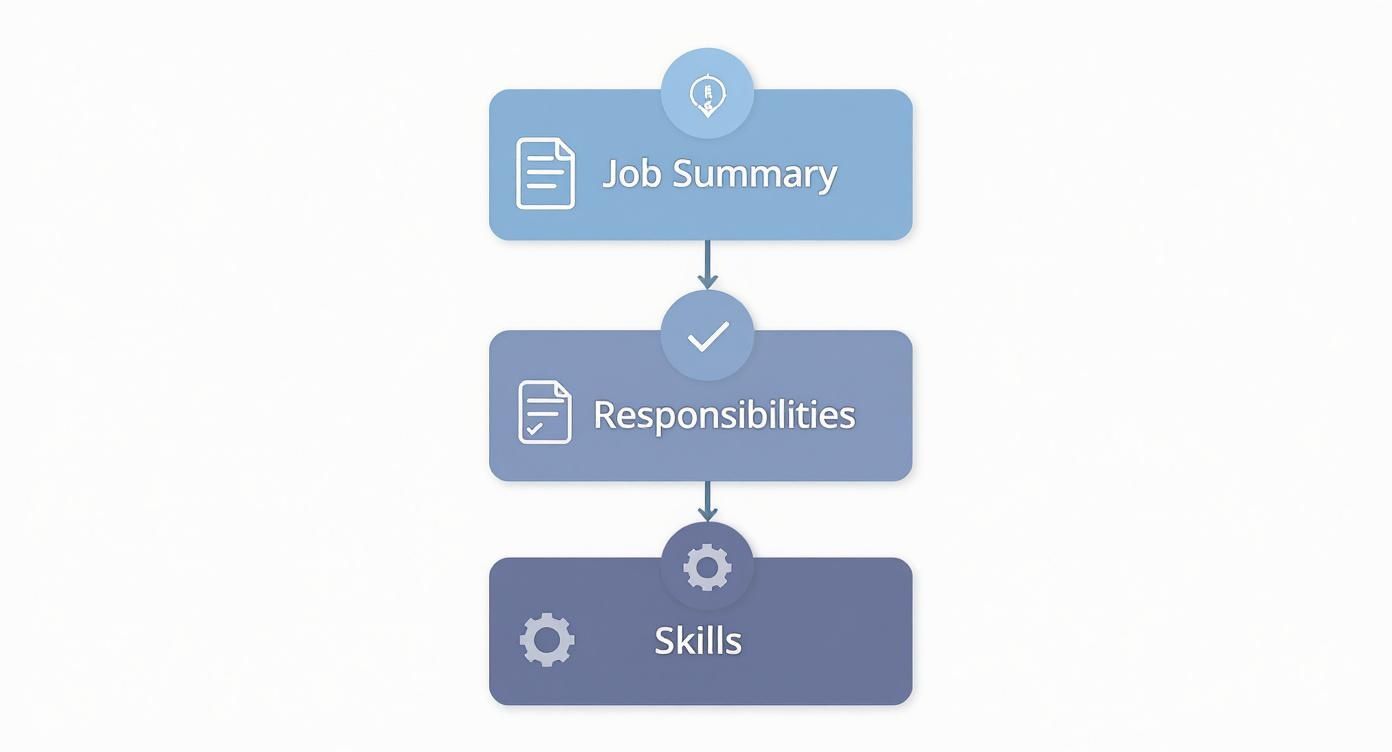
It’s crucial to understand where this role fits into the bigger picture. For a great breakdown, take a look at this guide on how to structure a marketing team effectively.
Skills That Fuel Advancement
Making the leap from coordinator to the next level requires building on that solid foundation. While impeccable organization gets you in the door, strategic thinking is what propels you forward.
The real shift from coordinator to manager happens when you stop asking "What's next on the checklist?" and start asking "What's the 'why' behind this campaign, and how can we make it better?"
The key skills to develop are strategic planning—going from just executing tasks to actually contributing to campaign ideas—and data analysis. This means moving beyond simply reporting the numbers to interpreting what they mean and turning them into actionable insights.
For a comprehensive look at what this journey looks like, exploring a complete https://salaryguide.com/blog/digital-marketing-career-path offers valuable perspective for both hiring managers and aspiring marketers.
Frequently Asked Questions
Even with a crystal-clear job description, there are always a few lingering questions about what a Marketing Coordinator really does. Let's clear up some of the most common points for hiring managers and candidates alike.
What's the Real Difference Between a Marketing Coordinator and a Marketing Assistant?
This is a big one, and it comes down to project ownership versus task support.
Think of it this way: a Marketing Assistant is often focused on helping the team function. They’re the ones scheduling meetings, doing data entry, ordering supplies, and handling administrative tasks that keep the department running smoothly. They're task-oriented.
A Marketing Coordinator, on the other hand, is all about helping a campaign happen. They're in the trenches, managing project timelines, liaising between the content writer and the graphic designer, and making sure all the moving pieces of a marketing launch click into place. They're project-oriented.
The core distinction is ownership. An assistant supports the team's administrative needs, while a coordinator takes ownership of the logistical success of specific marketing projects and campaigns.
When you're writing a job description, knowing this difference is key. You want to attract someone excited about executing campaigns, not just managing a calendar.
What Experience Actually Matters for an Entry-Level Candidate?
No one expects an entry-level candidate to walk in with years of high-level strategic experience. What they are looking for is proof of potential, a solid foundation, and the right attitude.
Here’s what truly stands out on a resume for a junior role:
- Relevant Internships: Having one or two internships under their belt shows they've seen a real marketing department in action and understand the basics.
- Familiarity with Core Tools: They don't need to be an expert, but having hands-on experience with tools like Mailchimp for email, a scheduler like Buffer for social media, or a CMS like WordPress is a huge advantage.
- Demonstrated Organizational Skills: This is non-negotiable. Look for evidence they can juggle deadlines and details, whether it's from managing a university club project, a volunteer event, or even a part-time job.
At the end of the day, you're hiring for potential. A candidate who is organized, eager to learn, and genuinely excited to help campaigns succeed is often a better bet than someone with a slightly longer but less relevant work history.
Ready to understand your market value or find your next great hire? At SalaryGuide, we provide the real-time data and career intelligence marketing professionals need to grow faster. Explore our platform to benchmark salaries, discover job opportunities, and build a winning team. Visit us at SalaryGuide to get started.
