email marketing specialist job description: Hire top talent
A solid email marketing specialist job description lays out the what, why, and how for a professional who lives and breathes email campaigns. It’s a role that’s equal parts creativity, technical skill, and data analysis, all aimed at building customer relationships and driving real business growth through one of the most direct channels you have.
What Is the Modern Email Marketing Role

Forget the old "email blaster" stereotype. Today’s email marketing specialist is more like a digital relationship architect. Their core job is to manage the company's most direct and personal line to its audience: the inbox. This isn't about sending mass newsletters anymore; it's a sophisticated mix of data, personalization, and automation.
The modern specialist is a true hybrid. One day they’re a copywriter, the next a data analyst, and sometimes a designer and strategist all before lunch. They don’t just send emails. They build entire customer journeys from the ground up.
A Blend of Art and Science
To really succeed here, you need a unique balance of creative flair and analytical thinking. A specialist has to write a subject line that genuinely piques interest, but they also need to dive into the deliverability metrics to make sure that email even lands in the right inbox.
An effective email marketing specialist ensures campaigns reach the right audience with personalized, compelling content that nurtures customer relationships and drives measurable business growth.
Their work directly impacts customer engagement and, ultimately, revenue. Think about it: a thoughtful welcome series can dramatically increase customer lifetime value, and a sharp re-engagement campaign can bring lapsed users back from the brink. It's powerful stuff.
The Evolving Workplace
The workplace has changed, and so has this role. Many email marketing specialist positions are now remote, which opens up a global talent pool and offers incredible flexibility. For anyone looking to hire or get hired, it's worth exploring the nuances of this setup. There are great resources for understanding remote email marketing roles that dig into what makes these arrangements tick.
The job itself keeps getting bigger, too. An email specialist today is expected to handle a lot, including:
- Campaign Strategy: Planning out promotional calendars and mapping out entire customer lifecycle flows.
- Content Creation: Writing copy that converts and working with designers on visuals that pop.
- Technical Execution: Building emails in an ESP, segmenting lists like a pro, and setting up complex automation workflows.
- Analysis and Optimization: Obsessing over metrics like open rates, click-through rates, and conversions to make every single campaign better than the last.
At the end of the day, this role is a cornerstone of any strong marketing team. It demands someone who can master the tech, read the data, and write with empathy to create inbox experiences that connect with people and hit business goals.
Core Responsibilities and Daily Impact
So, what does an email marketing specialist really do all day? It's easy to think they just write a few emails and hit "send," but the reality is a whole lot more strategic. The role is a dynamic cycle of planning, creating, launching, and analyzing that has a direct line to a company's bottom line.
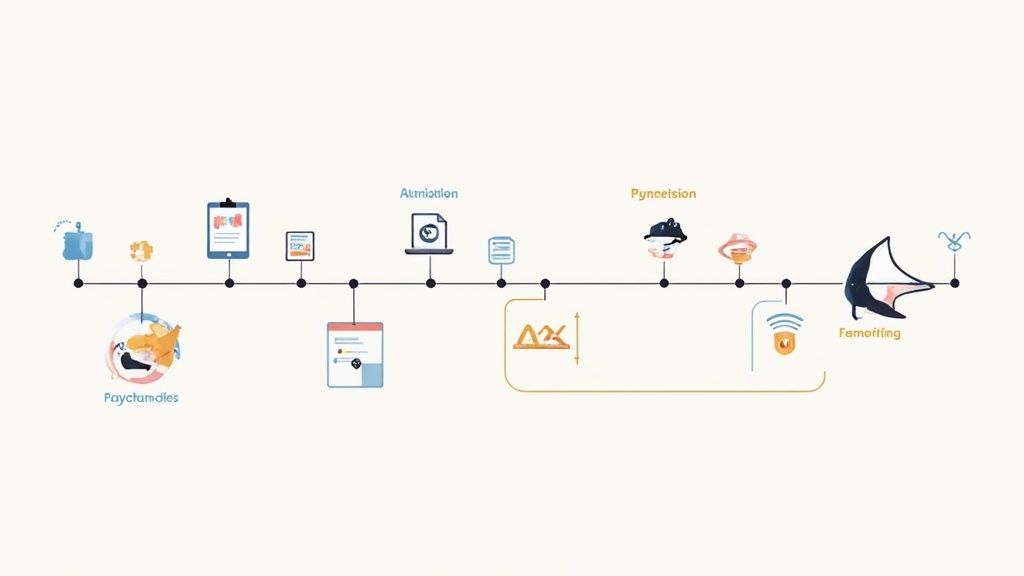
Think of them as the director of a play. Each email is a scene, every campaign is an act, and the entire customer journey is the full production. Their job is to make sure every scene is compelling, moves the story forward, and leaves both the audience (the customer) and the business feeling like it was a hit.
Campaign Strategy and Content Development
Everything starts with a plan. Before a single word is written, the specialist is mapping out the communication strategy. They aren't just sending a random "Tuesday promo." They're building a thoughtful calendar that weaves together product launches, seasonal trends, and the company's bigger marketing goals.
With the strategy in place, it's time to bring the messages to life. This is where the art of communication meets the science of persuasion. Their day-to-day work involves:
- Writing killer subject lines that are good enough to stop someone mid-scroll and earn that open.
- Crafting clear, engaging email copy that guides the reader toward a single, specific action.
- Working with designers to make sure the emails look great and stay true to the brand's visual identity.
- Maintaining a consistent brand voice across every single email, from a simple password reset to a major promotional blast.
Every piece of creative work is tied directly to an objective, whether that’s getting new users excited, driving sales, or winning back people who haven't engaged in a while.
List Segmentation and Automation Workflows
One of the most critical parts of the email marketing specialist job description is managing the audience. Blasting the same message to everyone is a surefire way to get a ton of unsubscribes. Instead, great specialists live by list segmentation—it’s like sorting mail to make sure the right letter gets to the right person.
They slice the main subscriber list into smaller, more relevant groups based on things like:
- Demographics (age, location)
- Purchase history (first-time buyers vs. VIP customers)
- Engagement level (who opens everything vs. who's gone cold)
- Website behavior (people who looked at a specific product or left something in their cart)
Once the audience is segmented, the real magic begins: building automation workflows. These are automated email sequences triggered by what a user does (or doesn't do). For instance, they might build a welcome series to onboard new subscribers or create an abandoned cart reminder to recover potentially lost sales.
The global email marketing market is set to hit $17.9 billion by 2027. This explosive growth is all thanks to the power of targeted, automated communication—the very systems that specialists are paid to build and perfect.
Testing and Performance Analysis
An email marketer's job isn't over when they click "send." In fact, some of the most important work happens next. They dive into the data, constantly tracking key metrics to figure out what worked, what flopped, and why.
This means running a lot of A/B tests. They'll test one element at a time—the subject line, the call-to-action button, or even the time of day an email is sent—to see which version gets better results. It's this commitment to data that separates the pros from the amateurs, taking the guesswork out of the equation.
They keep a close eye on metrics like:
- Open Rate: The percentage of people who actually opened the email.
- Click-Through Rate (CTR): The percentage who clicked on a link inside.
- Conversion Rate: The percentage who took the desired action (like making a purchase).
- Unsubscribe Rate: The percentage of people who opted out.
By analyzing these numbers, the specialist uncovers real insights that make every future campaign smarter and more effective than the last. Their daily impact isn't just about sending emails; it's about building stronger customer relationships and driving real, measurable growth.
What It Takes: Essential Skills and Tools of the Trade
A truly great email marketing specialist is a rare breed—part artist, part scientist, and part strategist. Their real value isn't just knowing how to use a tool; it's the fusion of that technical skill with the creative flair and analytical mind needed to get results. If you're putting together an email marketing specialist job description, spelling out these skills clearly is the single best way to attract the right people.
You can really slice these skills into two buckets: the technical, hands-on abilities we call hard skills, and the people-focused, strategic traits known as soft skills. You absolutely need a healthy dose of both to succeed in this role.
The Hard Skills: Technical Must-Haves
Hard skills are the bedrock of the job. They're the measurable, practical abilities that let a specialist actually build, send, and analyze their campaigns. Without these, nothing else matters.
First and foremost, they have to be a wizard with email marketing platforms. This is non-negotiable. A top candidate should be able to jump right into the back end of tools like:
- Email Service Providers (ESPs): We're talking deep, practical experience with platforms like Mailchimp, Klaviyo, HubSpot, or Constant Contact. This means more than just sending a newsletter; it’s about building intricate automation flows and expertly managing subscriber lists.
- Basic HTML/CSS: They don't need to be a front-end developer, but a solid grasp of basic code is a game-changer. It’s what allows them to customize templates beyond the drag-and-drop editor and fix those frustrating rendering issues that make emails look broken in Outlook or Gmail.
- Data Analysis Tools: The ability to make sense of the numbers is what separates the average from the excellent. They need to be comfortable digging into their ESP’s built-in analytics, connecting the dots with Google Analytics, and turning raw data into smart, actionable decisions.
The best email marketers I've ever worked with don't just send emails—they build communication engines. They use their mastery of ESPs, automation, and data to create systems that nurture leads and drive sales, almost on autopilot.
The Soft Skills: The Secret Sauce
If hard skills get the email sent, soft skills get it opened, read, and clicked. These are the creative and interpersonal abilities that allow a specialist to actually connect with an audience, work well with their team, and see the big picture.
At the top of the list is compelling copywriting. An email specialist has to be a master of persuasion in a very small space. They need to write subject lines that cut through the noise and body copy that gets people to act, all while sounding like a human and staying true to the brand's voice.
Beyond writing, a few other soft skills are absolutely critical:
- Meticulous Attention to Detail: In email, there are no take-backs. One typo, one broken link, or the dreaded "[FNAME]" personalization error can kill a campaign’s credibility. A great specialist is obsessive about proofreading and double-checking everything.
- A Strategic Mindset: They have to understand how their work plugs into the entire marketing machine. This means seeing the customer journey from a 30,000-foot view and making sure every email campaign supports bigger business goals. Want to know more about what makes a well-rounded marketer? Check out our guide on the top marketing skills to learn for career growth.
- Adaptability and Curiosity: Email marketing is anything but static. New tools, tactics, and privacy rules like GDPR pop up all the time. The best candidates are genuinely curious and always learning, staying on top of what’s new and what’s next.
This blend of skills is about so much more than just pushing "send." It’s about being a problem-solver, an innovator, and a direct contributor to the company's bottom line. When you draft that email marketing specialist job description, highlighting this mix of art and science will bring in candidates who truly get it.
What to Expect: Salary and Career Path
Let's talk about one of the most important aspects of any role: the money and the future. A job as an email marketing specialist isn't just a job—it's a stepping stone into a career with serious growth potential. The pay is solid, and for those who really get good at it, the path upward is clear and rewarding.
Of course, what you'll make depends on a few things. Your years in the trenches, where you're located, the size of the company, and the industry all play a part. A specialist for a big e-commerce company in a major city is naturally going to see a different number than someone at a small nonprofit in a more rural area.
Typical Salary Ranges
The good news is that the role pays well, and your salary will grow as you get better. In the United States, email marketing specialists can expect an average annual salary between $58,414 and $76,780.
Those just starting out might see salaries around $45,738 per year. With 10-19 years of experience, that figure often climbs to about $64,265. The top pros in the field? They can pull in upwards of $111,000 annually. For more detailed salary data, ZipRecruiter is a great resource.
To move up that ladder, you need a balanced skill set. It’s not just about knowing the tech; it's also about knowing how to communicate.
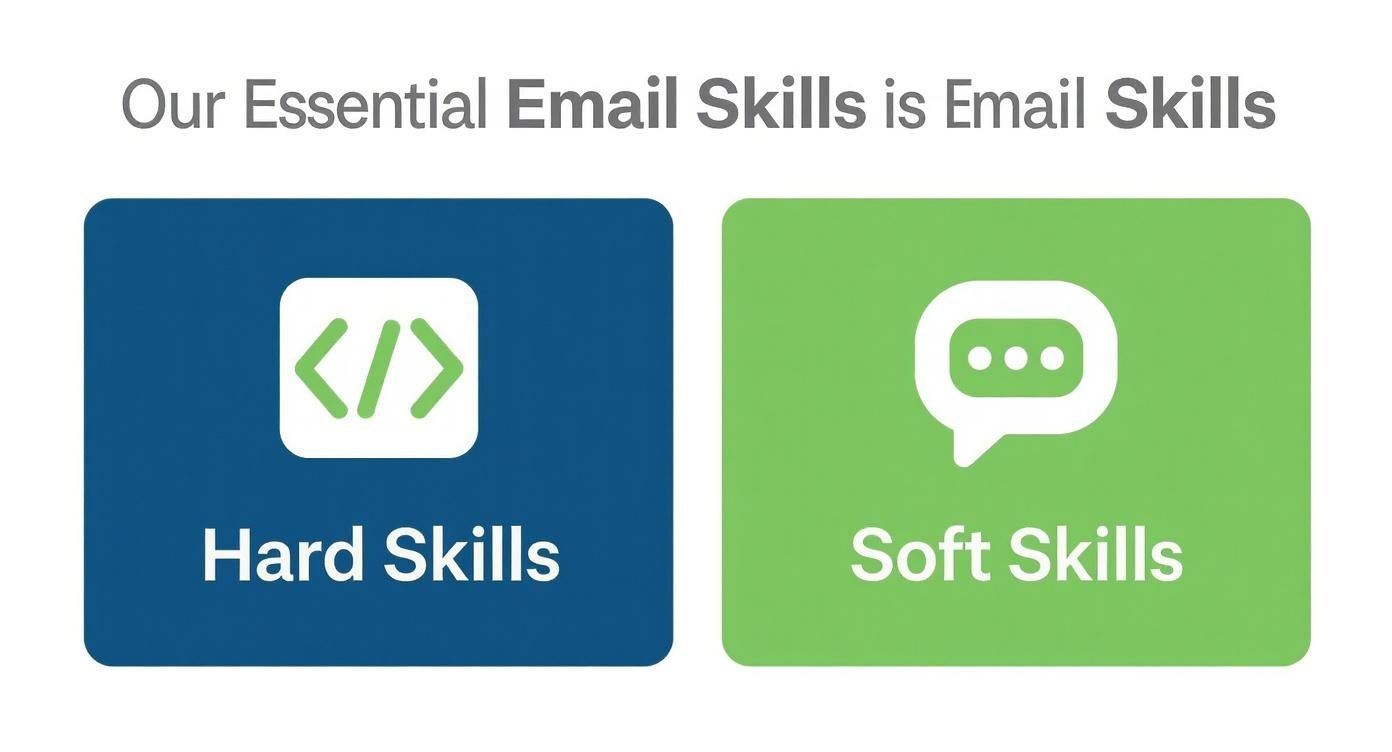
As you can see, mastering both the technical side (hard skills) and the people side (soft skills) is what really fuels career growth and opens up bigger opportunities.
Charting Your Career Growth
Think of the email marketing specialist role as your launchpad. You'll build a core foundation in automation, data analysis, and customer messaging—skills that are gold in almost any other marketing role you might want down the line. After a couple of years of getting results, a clear career path starts to take shape.
Here’s what that progression typically looks like:
- Email Marketing Specialist: This is where you roll up your sleeves and learn the craft. You're writing copy, building campaigns, pulling reports, and running A/B tests. Your main job is to execute and show you can get results.
- Senior Email Marketing Specialist: With experience comes bigger responsibility. You start handling more complex campaigns, maybe mentoring newer team members, and weighing in on strategy. You might be the one who owns a critical automation, like the entire customer welcome series.
- Email Marketing Manager: At this point, you shift from doing to directing. You're setting the high-level strategy, managing the email calendar and budget, and you're the one accountable for the channel's performance.
- Director of Lifecycle Marketing or Marketing Automation Lead: This is the big picture. Your focus expands way beyond just email to cover the entire customer journey—think SMS, push notifications, and in-app messages. You become an expert in using powerful automation platforms to create a unified, personalized experience for every single customer.
To give you a clearer idea of how salary grows with responsibility, here's a look at the average compensation for these roles in the U.S.
Email Marketing Role Salary Progression by Job Title
| Job Title | Average Annual Salary (USD) |
|---|---|
| Email Marketing Specialist | $67,597 |
| Senior Email Marketing Specialist | $85,000 |
| Email Marketing Manager | $96,935 |
| Director of Lifecycle Marketing | $160,500 |
Salary data sourced from Payscale, Zippia, and Comparably.
As you can see, the financial rewards increase significantly as you move from tactical execution to strategic leadership. For a wider perspective on industry pay scales, check out this guide on how much marketers earn.
The best specialists don't just become managers—they become architects. They go from building individual campaigns to designing the entire communication engine that keeps customers coming back and drives revenue for the business.
This path shows a clear climb from hands-on work to high-level strategy, with your responsibilities and paycheck growing at every step. If you're an employer, keeping this trajectory in mind is crucial. It helps you write a job description that not only attracts great people today but also shows them they have a real future with your company.
How to Write an Effective Job Description Template
Think of your job description as more than just a list of tasks—it's your first sales pitch to a top-tier candidate. A great description acts like a magnet. It pulls in professionals who have the exact skills and attitude you need while gently signaling to others that it might not be the right fit. The whole point is to be clear, compelling, and honest about the role and what it's like to work at your company.
It's essentially the blueprint for your ideal hire. You need enough detail to paint a vivid picture of the day-to-day realities, but it also needs to be inspiring enough to make someone genuinely excited about joining your team. Nailing this first step is crucial, and there are some fantastic guides on how to write a good job description that can help you master the basics.
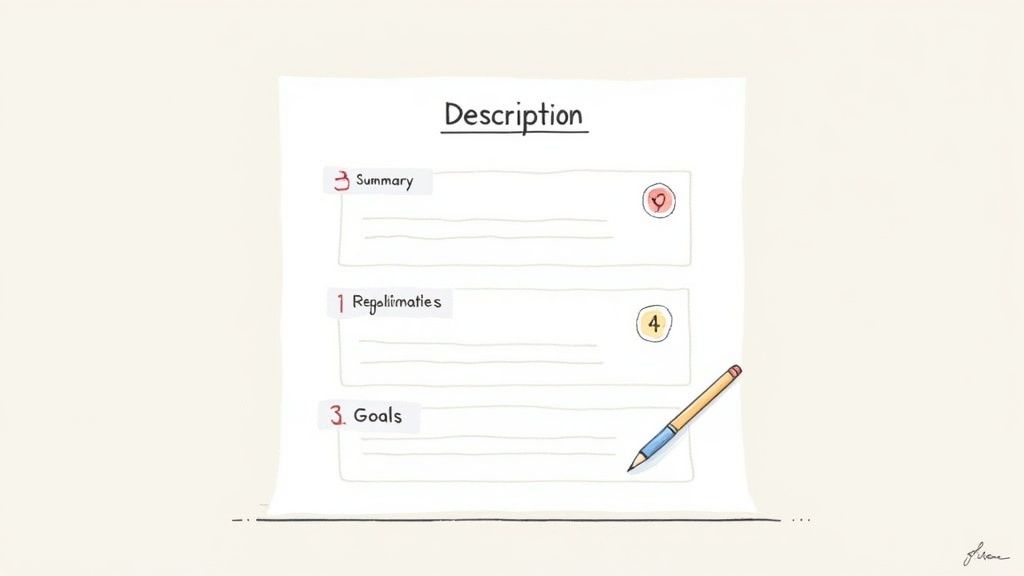
Let's break down the essential pieces of a powerful template that you can copy, tweak, and start using right away.
Start with a Compelling Job Summary
This is your elevator pitch. In just two or three sentences, you have to capture the soul of the role and its impact on the business. Ditch the generic descriptions and get straight to what makes this position at your company stand out.
So instead of, "We are looking for an Email Marketing Specialist," try something with more personality: "We're hunting for a creative, data-driven Email Marketing Specialist to own our most direct communication channel and forge lasting relationships with our customers." See the difference? That small tweak shifts the focus from your needs to the candidate's potential to make a real impact.
Detail the Core Responsibilities
Now we get to the heart of it. Use a bulleted list to clearly lay out the primary duties. The key here is to be specific and use action-oriented language that communicates ownership and results.
A vague point like "Manage email campaigns" is pretty meaningless. Let's reframe it with a specific goal in mind:
- Design, build, and execute end-to-end email marketing campaigns that drive user engagement and revenue.
- Grow our subscriber list by 20% year-over-year through smart lead-generation initiatives.
- Develop and manage our marketing automation workflows, including our welcome series, re-engagement campaigns, and abandoned cart sequences.
- Conduct rigorous A/B testing on everything from subject lines to CTAs and content to constantly fine-tune campaign performance.
- Analyze campaign results and deliver weekly performance reports to the marketing team, translating data into actionable insights.
This level of detail doesn't just list tasks; it helps candidates see themselves in the role and understand what success actually looks like.
Outline Qualifications and Skills
This is where you draw the line between the absolute must-haves and the nice-to-haves. It’s important to be realistic here. If your list is too long or demanding, you might scare off fantastic candidates who don't happen to check every single box.
Create two separate lists: "Required Qualifications" and "Preferred Qualifications." This simple trick helps candidates self-assess more accurately and opens your talent pool to high-potential people who might be missing just one or two "nice-to-have" skills.
Here’s an example of how you could break it down:
Required Qualifications:
- 2+ years of direct, hands-on experience in an email marketing role.
- Proven expertise with at least one major Email Service Provider (like Klaviyo, Mailchimp, or HubSpot).
- A strong grasp of email marketing best practices, including list segmentation, automation, and deliverability.
- Exceptional copywriting and proofreading skills with an obsessive attention to detail.
Preferred Qualifications:
- Basic knowledge of HTML/CSS for customizing email templates.
- Experience with Google Analytics and using data to shape campaign strategy.
- Familiarity with CRM systems and data integration.
Finish with Your Company Pitch
So, why should a top specialist choose to work for you? This is your final chance to sell your company culture, values, and the unique perks of joining the team. Talk about your mission, opportunities for growth, or the collaborative environment you've built.
This finishing touch transforms your job description from a dry list of requirements into a compelling invitation. Follow this template, and you’ll create a comprehensive and clear email marketing specialist job description that attracts the exact kind of talent you need to push your marketing forward.
Key Interview Questions to Find a Great Email Marketing Specialist
A resume shows you what a candidate has done, but the right interview questions reveal how they think. If you really want to vet an email marketing specialist, you have to go beyond the surface and dig into how they strategize, execute, and solve problems.
A great interview should feel less like an interrogation and more like a collaborative problem-solving session. Your goal is to see their mind at work. Ask open-ended questions that force them to walk you through their process, defend their choices, and reflect on what worked—and what didn't. This is how you spot someone who can truly own the email channel, not just follow a checklist.
Assessing Strategic Thinking
Strategic questions are all about seeing the bigger picture. Does the candidate understand how their work connects to the company's bottom line? You’re looking for someone who can draw a straight line from a subject line to customer retention and growth.
- Walk me through how you’d build a re-engagement campaign for a list of subscribers who have gone quiet.
- What a good answer sounds like: A strong candidate will immediately start asking clarifying questions. "How do you define inactive?" "What do we know about this audience?" Then, they'll lay out a multi-step plan: segmenting the inactive list, creating a thoughtful series of emails with escalating offers or high-value content, and setting clear success metrics, like a target reactivation rate.
- What a weak answer sounds like: "I'd probably send a 'we miss you' email with a discount." This response is all tactic, no strategy. It shows a lack of depth and a reliance on one-off ideas instead of a repeatable system.
Evaluating Technical and Tactical Skills
This is where the rubber meets the road. These questions confirm that a candidate can do more than just talk a good game; they can get their hands dirty and execute flawlessly. The email marketing specialist job description sets these expectations, and the interview is where you confirm them.
- Tell me about a time you used list segmentation to improve campaign results. What was your theory, and what happened?
- What a good answer sounds like: They’ll get specific. For instance, they might describe separating first-time buyers from loyal customers to send hyper-relevant product recommendations. Crucially, they’ll back it up with numbers: "My hypothesis was that personalized suggestions would boost engagement. We saw a 15% lift in CTR and a 5% increase in conversion in the segmented group compared to our control."
- What a weak answer sounds like: A vague answer like, "We segmented by location," is a red flag. It’s missing the critical details—the why, the how, and the measurable impact.
An interview is your chance to see how a candidate tackles real-world challenges. Go beyond their resume and ask them to break down a problem, explain their reasoning, and show you how they turn data into decisions.
Probing Problem-Solving Abilities
Sooner or later, things will go wrong. Deliverability will tank, a campaign will flop, or a technical bug will pop up. You need to hire someone who can stay cool under pressure, methodically figure out what's broken, and fix it.
- Imagine our open rates suddenly dropped by 30% this week. What’s your step-by-step process for figuring out why?
- What a good answer sounds like: A top-tier candidate will outline a logical troubleshooting sequence. They'd start by checking for deliverability issues (spam traps, blocklists), then look at recent list sources for quality, analyze subject line performance, and compare the audience to previous campaigns.
- What a weak answer sounds like: "I'd test new subject lines." This is a classic example of jumping to a solution without first diagnosing the problem.
For more ideas on how to frame these conversations, check out our guide on common interview questions and answers.
A Few Common Questions About the Email Marketing Role
When you're trying to pin down the specifics of an email marketing specialist job, a lot of questions pop up. It’s a role that sits at the crossroads of creativity, tech, and analytics, so it's understandable that both hiring managers and candidates want to get the details right. Here are some quick answers to the questions we hear most often.
What's the One Metric That Matters Most?
While you'll always hear about open rates and click-throughs, the single most important metric is almost always the conversion rate. Why? Because it’s the number that connects your email efforts directly to real business results—things like sales, new sign-ups, or demo requests.
Think about it: an email can be opened a million times, but if it doesn't actually convince anyone to take that next step, it hasn't done its job. Focusing on conversions makes sure the specialist’s work is driving revenue and growth. That's the whole point.
How Is a Specialist Different From a Manager?
The biggest difference between an Email Marketing Specialist and an Email Marketing Manager really boils down to strategy versus execution.
- Email Marketing Specialist: This is the hands-on person. They're the one in the weeds every day—writing copy, building out campaigns in the email platform, segmenting lists, setting up A/B tests, and pulling the reports. Their world is all about executing the email strategy flawlessly.
- Email Marketing Manager: This person is focused on the bigger picture. The manager is responsible for setting the high-level email strategy, owning the budget and calendar, guiding the specialist(s), and making sure the email channel hits its contribution targets for the entire marketing department.
A good analogy is a film crew. The specialist is like the camera operator, obsessed with getting the perfect shot. The manager is the director, making sure every single shot moves the larger story forward.
What Are the Biggest Trends on the Horizon?
The email marketing role never sits still. Two huge trends are shaping its future, and any forward-thinking job description or candidate should have them on their radar.
First up is the massive impact of AI and hyper-personalization. Artificial intelligence is finally making it practical to customize email content for every single user, even at a huge scale. Specialists will need to get comfortable with AI tools that can deliver unique experiences, from dynamic product recommendations to content that changes on the fly. The goal is to make every email feel like a personal, one-to-one conversation.
The second trend is a laser focus on data privacy and first-party data. As third-party cookies fade away, a company's own email list becomes more valuable than ever. The specialists of tomorrow will need a solid grasp of data privacy laws like GDPR and a clear strategy for ethically collecting and using customer data. It’s all about building trust and keeping that direct line of communication with your audience open.
Here at SalaryGuide, we know that understanding the fine print of a role is the key to building a great career or a world-class team. Our platform gives marketing pros the data and insights they need to move forward with confidence. Explore career intelligence tools on SalaryGuide.com and see how you can hit your next professional milestone.
