What is Performance Based Compensation: Key Models
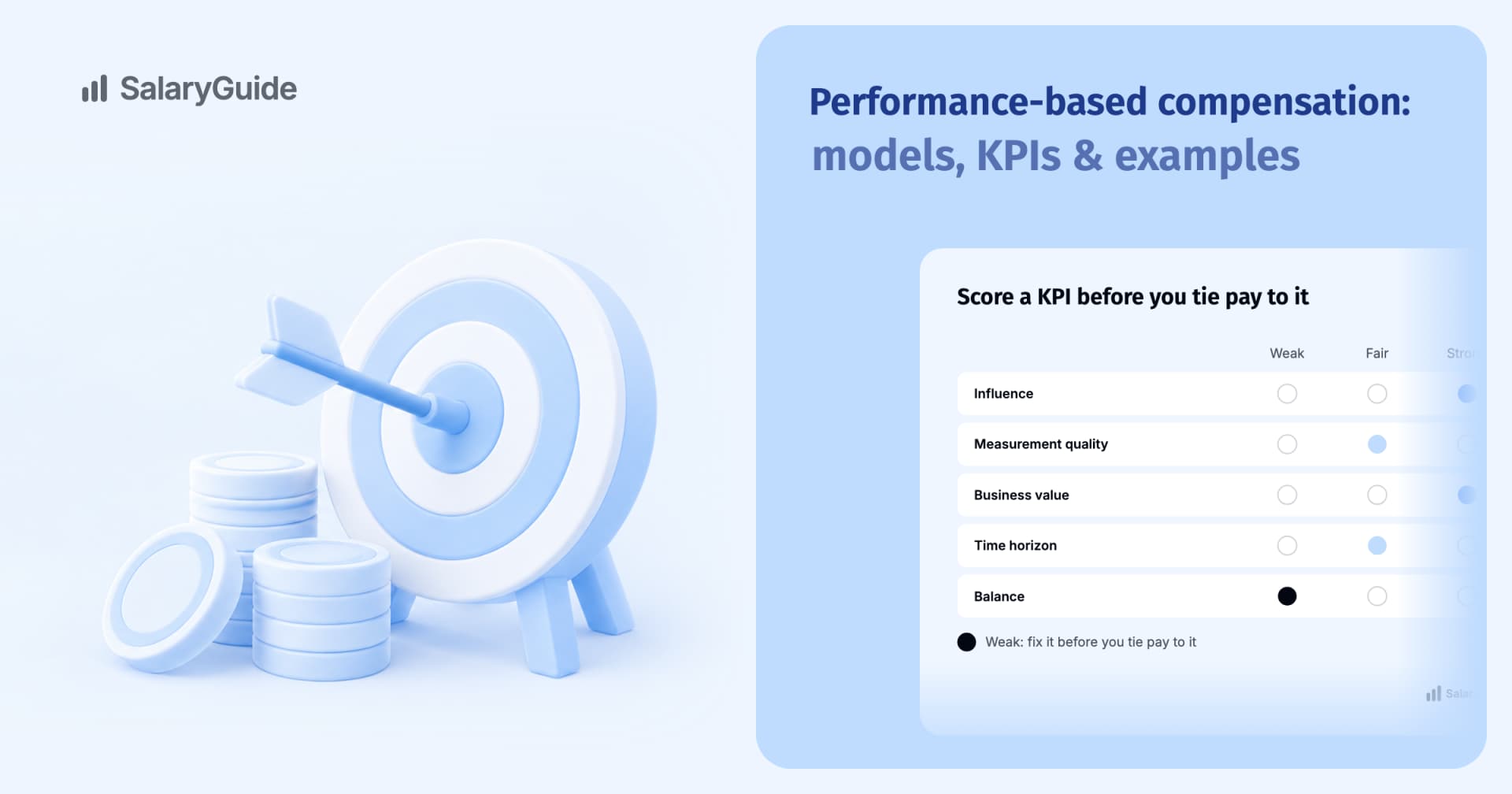
At its core, performance-based compensation is a simple idea: you pay people for their results, not just for showing up. It’s a pay strategy that links a portion of an employee's earnings directly to their individual, team, or company achievements. Simply put, better performance leads to higher pay.
What Is Performance Based Compensation Really?
Let’s get past the textbook definition. Think of performance-based compensation less as a transaction and more as a genuine partnership. Instead of just paying for time spent at a desk, you're rewarding the tangible value an employee creates. It’s a fundamental shift from rewarding presence to rewarding impact.
Here’s a simple analogy: a traditional salary is like paying a gardener a fixed fee to show up and tend the plants every day, regardless of how they look. Performance-based compensation, on the other hand, is like paying that gardener a base fee plus a bonus for every prize-winning rose the garden produces. The incentive is directly tied to a beautiful, measurable outcome.
A Partnership in Success
This model completely reframes the employer-employee relationship into one built on shared goals. When an employee succeeds, the company succeeds—and that success is reflected directly in their paycheck. This creates a powerful, built-in motivator for excellence and accountability. It's no surprise that more and more organizations are using this approach to get their teams pulling in the same direction toward key business objectives.
This model is a key part of a broader pay strategy known as variable compensation. This just means any pay that isn't fixed and can change based on performance. You can get a full breakdown by reading our guide on what is variable compensation.
From Theory to Reality
The impact of this shift isn't just theoretical. The data backs it up. Companies that put pay-for-performance systems in place often see a 10-15% increase in overall employee productivity. What’s more, research from platforms like PeopleHum shows that these organizations report up to a 22% increase in employee engagement compared to businesses with old-school salary structures.
This move away from purely fixed salaries helps build a culture where high performance isn't just expected but is tangibly rewarded. It gives employees a real stake in the outcomes they help create.
To see just how different these two approaches are, let's compare them side-by-side.
Traditional Salary vs Performance Based Compensation
This table gives a quick snapshot of the core principles behind traditional fixed salaries and modern performance-based pay.
| Attribute | Traditional Salary Model | Performance Based Compensation |
|---|---|---|
| Foundation | Pay is based on time and role level | Pay is linked to measurable results and impact |
| Motivation | Relies on job security and annual raises | Driven by direct financial incentives and goals |
| Risk & Reward | Low risk for employees, stable but capped pay | Shared risk; high performers have higher earning potential |
| Alignment | Loosely tied to company performance | Directly aligned with strategic business objectives |
As you can see, the philosophies are worlds apart. One prioritizes stability and predictability, while the other is built to drive growth, reward top talent, and align everyone toward a common goal.
Exploring Different Performance Pay Models
There's no single, magic formula for performance-based compensation. Instead, it’s more like a toolkit filled with different models, each designed to achieve a specific outcome. The right one for you will always depend on the role, the behaviors you want to encourage, and your company's bigger goals.
Some models are built for quick wins and immediate motivation. Others are designed to get your entire team rowing in the same direction toward a long-term vision. The real trick is matching the incentive structure to the results you want to drive—that’s what transforms a simple pay plan into a powerful performance engine.
This visual captures the core idea perfectly. It's about creating a partnership that rewards both the time an employee puts in and the results they deliver.
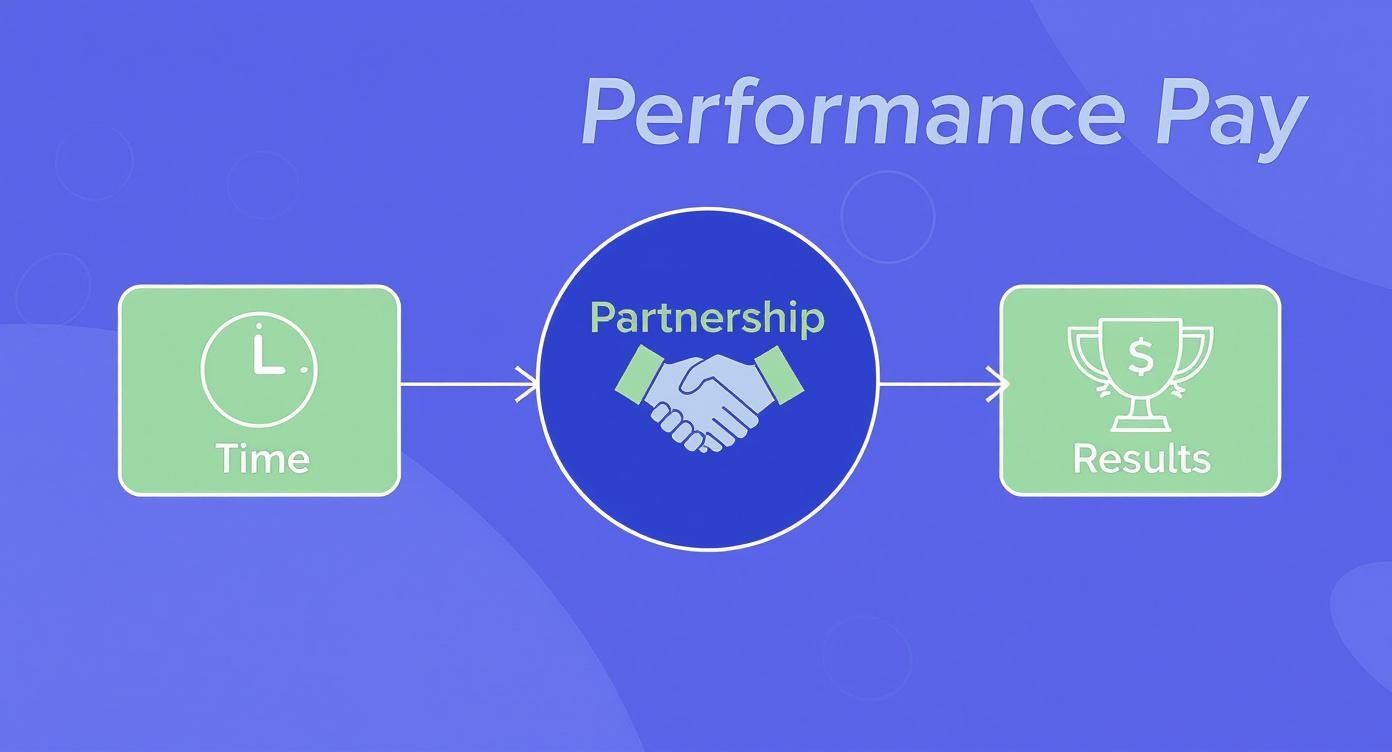
As you can see, modern compensation is all about striking a balance—valuing an employee's time while also putting a real focus on rewarding tangible results.
Commission-Based Plans
Probably the most famous model out there, commission, is a straight line between action and reward. It’s a percentage of the revenue an employee brings in, making it a classic in nearly every sales organization. The structure can be simple or quite complex, but it's always built to drive specific sales behaviors.
For instance, a marketing agency could use a tiered commission plan for its business development team to keep them hungry.
- Tier 1: 5% commission on the first $50,000 of new business each quarter.
- Tier 2: 7% commission on business between $50,001 and $100,000.
- Tier 3: 10% commission on all new business above $100,000 (the "accelerator" tier).
This kind of structure doesn't just reward solid performance; it heavily incentivizes top players to blow past their targets. If you want to get into the nitty-gritty, our guide on what is commission based pay breaks down how to build these plans from the ground up.
Spot and Annual Bonuses
Bonuses are incredibly flexible. You can use them to reward everything from a huge win last week to the successful completion of a year-long strategic project. They are typically paid as a lump sum and don't affect an employee's base salary.
You’ll generally see two main types:
- Spot Bonuses: These are on-the-spot, discretionary rewards for a job exceptionally well done. Think of a content marketer who writes a blog post that goes viral and floods the pipeline with leads. A manager could give them a $500 spot bonus right then and there to recognize that awesome contribution.
- Annual Bonuses: These are tied to bigger, yearly objectives, often a mix of individual and company performance. A marketing director might have an annual bonus target of 15% of their base salary, which they'll earn if the team hits its lead goals and the company meets its overall revenue targets.
A well-designed bonus program should be crystal clear. People need to know exactly what they have to do to earn it. This removes any mystery or feelings of favoritism from the equation.
Profit Sharing and Gainsharing
While commissions and bonuses tend to focus on individual or small-team wins, profit sharing and gainsharing get everyone focused on the bigger picture: the health of the entire organization.
Profit Sharing is exactly what it sounds like—a portion of the company's profits is divvied up among employees. This creates a powerful "we're all in this together" culture. For example, a company might share 5% of its annual profits, with each employee's share determined by their salary or tenure. It gets everyone, from marketing to operations, thinking about how their role impacts the bottom line.
Gainsharing is a bit more targeted. It rewards teams for specific improvements that make the company more efficient, like cutting costs or boosting productivity. A manufacturing team that figures out a new process to reduce material waste by 20% might get to share in a portion of those savings. It’s a fantastic way to empower teams to find and implement smarter ways to work.
Equity-Based Compensation
When it comes to aligning employees with the long-term success of the business, nothing beats equity. This type of compensation gives employees a literal piece of the company, turning them into owners.
The most common forms are:
- Stock Options: These give an employee the right to buy company stock at a fixed price in the future. If the company grows and its value increases, they can buy at the old, lower price and pocket the difference.
- Restricted Stock Units (RSUs): This is a straightforward grant of company shares that are handed over at a future date, as long as the employee is still with the company.
Because they usually "vest" over several years, these are powerful tools for keeping your best people around. By giving employees a direct stake in the company's future, their financial success becomes directly tied to the business's long-term growth.
Connecting Pay to Meaningful KPIs
A performance-based compensation plan lives and dies by the metrics you use. If you tie bonuses to vague or irrelevant goals, it's like giving a ship captain a map to the wrong island—you'll create a ton of frustration and end up completely off course. To make this work, the money has to be connected to meaningful Key Performance Indicators (KPIs).
Think of KPIs as the bridge between abstract company goals and concrete employee actions. They turn a fuzzy objective like "increase brand awareness" into a crystal-clear target like "achieve a 25% increase in organic search traffic this quarter." This clarity is what makes a performance pay system feel fair and effective.
Using the SMART Framework for KPIs
The most reliable way to set up powerful KPIs is with the SMART goal framework. It’s a simple checklist that forces you to define every metric in a way that’s directly linked to real business outcomes. Honestly, skipping this step is a recipe for disaster in any performance-based compensation structure.
Every single KPI should be:
- Specific: Nail down exactly what needs to be done. "Improve leads" is useless. "Increase the number of Marketing Qualified Leads (MQLs) from our blog content" is specific.
- Measurable: If you can't put a number on it, you can't track it. The goal needs a clear target, like "increase MQLs by 15%."
- Achievable: The target should stretch your team, not break them. Setting an impossible goal is the fastest way to kill motivation.
- Relevant: The KPI has to matter to the big picture. If the company is focused on profitability, a marketing KPI should be tied to customer lifetime value (CLV), not just vanity metrics like lead volume.
- Time-bound: Every goal needs a deadline. It creates a sense of urgency and gives everyone a clear timeline for evaluation. For example, "increase MQLs by 15% by the end of Q3."
When you run your KPIs through this filter, all the guesswork disappears. Your team knows exactly what the target is, how you’ll measure it, and when it’s due. That’s the foundation of a system built on trust.
Real-World KPI Examples for Different Roles
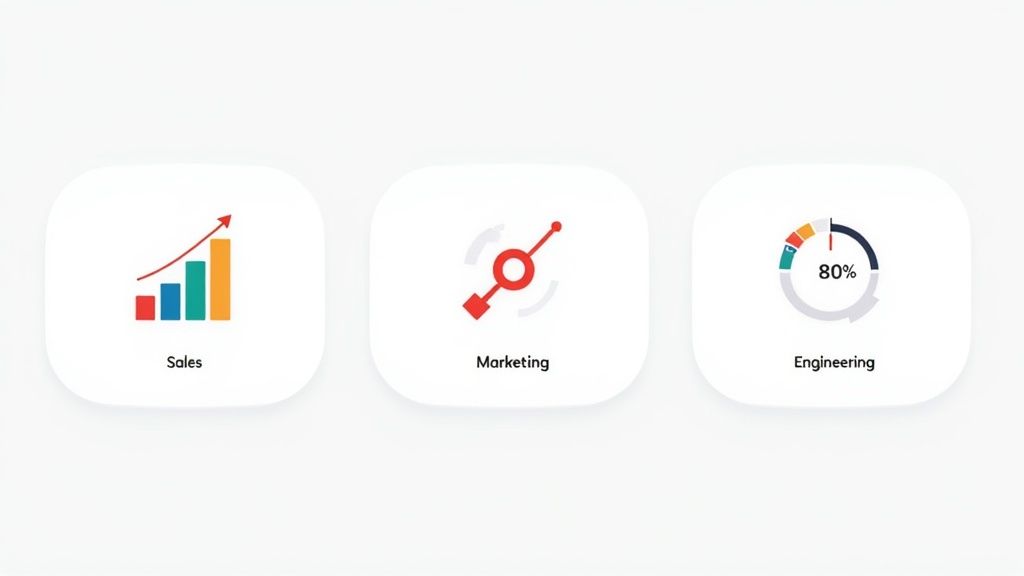
The right KPIs are never one-size-fits-all; they have to be tailored to the role. The trick is to pick metrics that an individual or team can actually influence with their work. Rewarding a developer for overall company revenue is silly because their day-to-day coding is too far removed from that final number.
Here are some solid examples of what this looks like in practice:
Marketing Teams
- MQL-to-SQL Conversion Rate: This measures how many marketing leads get accepted by the sales team. It's a fantastic metric because it shifts the focus from lead quantity to lead quality.
- Customer Lifetime Value (CLV): Perfect for marketers focused on retention. Tracking the total revenue a customer brings in over time is a direct measure of their success.
- Organic Traffic Growth: For an SEO specialist, a steady climb in non-paid website visitors is a clear sign they’re doing their job well.
Sales Teams
- Quota Attainment: The classic sales metric for a reason. It’s the percentage of a sales target a rep hits.
- Average Deal Size: Want bigger deals? Incentivize them. This pushes reps to go after more valuable contracts.
- Sales Cycle Length: Rewarding teams for closing deals faster is a great way to improve cash flow and overall efficiency.
Tech and Development Teams
- Sprint Velocity: This agile metric tracks how much work a dev team gets done in a single sprint, giving you a good read on their productivity.
- Bug Resolution Time: How long does it take to fix a reported bug? This is a direct reflection of the team's responsiveness and the health of the codebase.
- Uptime Percentage: For infrastructure folks, keeping servers running 99.99% of the time is a make-or-break performance indicator.
The ultimate goal is to choose KPIs that tell a story about an employee's contribution. When someone hits their target, it should be obvious how their work moved the company forward.
The Importance of Transparency and Buy-In
Finally, even the most perfectly crafted KPIs will fall flat if you just hand them down from on high. If you want a performance-based compensation plan to actually motivate people, transparency is non-negotiable.
Bring your employees into the conversation when setting goals. When people help define their own targets, they feel a real sense of ownership and are far more committed to hitting them. This collaborative approach makes the whole system feel less like a top-down mandate and more like a shared roadmap to success.
How Winning Companies Use Performance Pay
The theory behind performance-based pay sounds great, but seeing it work in the real world is what really makes it click. The best plans aren't just about handing out rewards for a job well done. They’re strategic tools that point your team toward very specific, high-impact business goals.
When companies get this right, they turn their compensation structure into a powerful engine for growth.
Of course, there’s no one-size-fits-all solution. A high-growth software company chasing market share has completely different priorities than a legacy manufacturer focused on operational efficiency. The secret is to align the reward directly with the result you want to see.
Let's dive into a few examples of how different industries put performance pay into action.
The SaaS Sales Accelerator Model
In the fast-paced world of Software-as-a-Service (SaaS), growth is the name of the game. A classic and incredibly effective tool for fueling that growth is a commission structure with accelerators, typically built into an On-Target Earnings (OTE) plan. An OTE plan is just the total potential pay for a role—a mix of base salary and variable, performance-based commissions.
Imagine a SaaS Account Executive with a $120,000 OTE, split down the middle: a $60,000 base salary and $60,000 in potential commission.
Here’s how accelerators could supercharge that plan:
- Up to 100% of Quota: The sales rep earns a standard 10% commission on every deal they close. Straightforward.
- 101% to 150% of Quota: Once they hit their target, the commission rate kicks up to 15% for every dollar they bring in above the quota.
- Above 150% of Quota: For the true top performers, the rate accelerates again to 20%, dramatically increasing their earning potential.
This structure does more than just pay for performance; it aggressively incentivizes over-performance. It sends a clear message to the sales team: "We don't just want you to hit your goals—we want you to shatter them. And when you do, we'll share the rewards generously."
The Digital Marketing Agency Bonus System
For a digital marketing agency, success is all about delivering results that make clients stick around. It makes sense, then, that their performance pay is often tied directly to client KPIs.
Take an SEO agency that wants to reward its specialists for landing clients on the first page of Google. They could use a quarterly bonus system based on a simple client scorecard:
- Metric 1: Keyword Rankings (40%): A big chunk of the bonus is tied to getting a client's core keywords into the top 3 search results.
- Metric 2: Organic Traffic Growth (40%): Another 40% is based on hitting a 20% quarter-over-quarter jump in organic traffic for their assigned clients.
- Metric 3: Client Retention (20%): The final piece is awarded for keeping clients happy, measured by maintaining a 95% retention rate.
This system perfectly aligns the employee's financial goals with the client's business goals. It gives specialists a real sense of ownership and a clear roadmap for how to earn more by getting better at what they do.
The Manufacturing Gainsharing Program
When you're running a manufacturing firm, it’s all about efficiency, safety, and quality. A gainsharing model is a perfect fit here because it rewards entire teams for operational improvements that save the company money.
Gainsharing plans are powerful because they give employees a direct stake in the operational success they help create. When a team figures out how to reduce waste or streamline a process, everyone shares in the financial upside.
Let’s say a factory implements a gainsharing program to cut down on material waste. The company knows its baseline waste level is 5%.
If a production team works together and rolls out a new process that drops waste to 3%, they’ve just saved the company thousands of dollars. With gainsharing, a set portion of that savings—maybe 50%—is paid out directly to the team members as a bonus.
This approach doesn't just slash costs. It builds a powerful culture of continuous improvement and collaborative problem-solving right on the factory floor. These tailored approaches show how what is performance based compensation can be adapted to any industry.
Bringing Your Performance-Based Pay Plan to Life
Okay, you've got the theory down. Now, let's get practical. Turning the idea of performance-based pay into a real-world, working compensation plan isn't something you do overnight. It’s a deliberate process that requires a clear roadmap.
If you just spring a new pay structure on your team without careful planning, you risk creating confusion and mistrust. But a thoughtful rollout ensures your plan is seen for what it is: a fair and exciting way to reward great work.
The first step? Get crystal clear on what you're trying to accomplish at a high level. Ask the big question: what’s the end goal here? Are we laser-focused on cranking up revenue, making our operations more efficient, or maybe keeping our customers happier? The answer shapes everything that comes next.

Step 1: Define Your Objectives and Budget
Before you get into the nuts and bolts of how the plan will work, you have to nail down the why. A compensation plan designed to attract new customers is going to look completely different from one built to improve product quality. When you define these goals upfront, you make sure every bonus dollar is pushing the business in the right direction.
With your objectives set, it's time to talk money. You need a realistic budget for this variable pay. This isn’t about pulling a number out of thin air; you have to model out a few scenarios. What’s the total payout if only half the team hits their targets? What if everyone knocks it out of the park? A solid budget prevents sticker shock down the road and keeps the program sustainable. This whole process is a cornerstone of a well-built pay structure, which you can see reflected in different compensation philosophy examples.
Step 2: Select Models and KPIs for Each Role
Now that you have your goals and your budget, you can start matching the right compensation models and Key Performance Indicators (KPIs) to specific roles. This is absolutely not a one-size-fits-all situation.
- For Sales Teams: You can't go wrong with commission plans that have accelerators for blowing past revenue targets. Their world revolves around quota attainment, and their pay should, too.
- For Marketing Teams: A bonus tied to lead quality—like the MQL-to-SQL conversion rate—or campaign ROI gets them perfectly aligned with what sales needs to succeed.
- For Operational Teams: Think about gainsharing. Rewarding your ops team for things like cutting production costs or reducing error rates is a fantastic way to motivate efficiency.
The trick is to pick KPIs that people can actually control. When an employee can see a direct link between their daily grind and their earning potential, the entire system feels fair and, more importantly, achievable.
Step 3: Create a Transparent Communication Plan
This might be the most crucial step of all. How you introduce this new plan is just as important as the plan itself. A sloppy, confusing rollout can breed suspicion and anxiety, killing your program's momentum before it even starts.
You have to be proactive and crystal clear. Set up meetings to walk everyone through the new structure. Don't just explain what's changing; explain why it's changing. Give them detailed documents with calculation examples and payout dates. I'd also recommend creating an FAQ sheet to get ahead of common questions. You want everyone on the same page from day one.
A successful performance pay plan is built on a foundation of trust. If employees don't understand the rules of the game or feel the system is a black box, it will fail to motivate them. Transparency is non-negotiable.
Step 4: Establish Tracking Systems and a Review Cadence
Finally, you need the right tools to make this all work. That means having a reliable way to track performance against those KPIs you so carefully selected. It could be a CRM for your sales data or a project management tool for your engineers—whatever it is, the data has to be accurate and easy for everyone to see.
And remember, these plans aren't "set it and forget it." Business goals shift, markets change, and your compensation plan has to keep up. You need to schedule regular reviews. Annually is the bare minimum, but quarterly check-ins are even better. Ask yourselves: Are these KPIs still the right ones? Is the plan actually encouraging the behaviors we want? Staying agile allows you to tweak the system so it keeps working for you.
Avoiding the Common Traps and Legal Headaches
A well-crafted performance bonus plan can be a powerful engine for growth. But get it wrong, and it can backfire spectacularly. It's like pouring rocket fuel into a car with a faulty engine—instead of a performance boost, you get an explosion. Steering clear of these risks is absolutely key to building a system that’s both fair and effective.
One of the quickest ways to kill motivation is by setting impossible goals. When the finish line keeps moving further away, people don't run faster; they just give up. It creates a sense of hopelessness that can poison the very culture you're trying to nurture. Employees need to feel like they have a fair shot at winning.
Another major pitfall is accidentally creating a hyper-competitive, "every person for themselves" culture. If your incentives only reward individual glory, you’ll find that teamwork and collaboration dry up overnight. Suddenly, helping a colleague feels like a personal sacrifice rather than a team win, which can sabotage the collective effort needed for real, long-term success.
When Good Intentions Go Wrong: The Problem with Metrics
Poorly chosen metrics can also lead to a serious case of tunnel vision. If you only reward what's easy to count, you can bet that's all your team will focus on. Important but less quantifiable work—like mentoring a new hire or brainstorming a long-term strategic initiative—gets pushed to the side.
This is the classic "what gets measured gets done" problem. It can lead to employees gaming the system to hit their bonus numbers, even if their actions aren't what's best for the company.
To sidestep this, you need a balanced scorecard. Make sure your plan rewards a mix of contributions:
- Individual Wins: Metrics tied directly to a person’s specific role.
- Team Victories: Incentives that pay out when the group succeeds together.
- Company Success: A piece of the bonus linked to big-picture health, like overall company growth or profitability.
This layered approach encourages everyone to see how their individual work connects to the success of their team and the entire business.
A compensation plan should never make an employee choose between what’s right for their wallet and what’s right for the company. When those two things are one and the same, you’ve hit the jackpot.
Staying on the Right Side of the Law
Beyond the strategic missteps, you’ve got to navigate some serious legal and tax minefields. This isn't a place for guesswork. A single misstep here can trigger expensive audits, fines, and legal battles that can sink your finances and tarnish your reputation.
For example, you have to comply with labor laws like the Fair Labor Standards Act (FLSA), which has strict rules about overtime pay. Many types of performance bonuses are considered "non-discretionary" and must be factored into an employee's regular rate of pay when calculating overtime. It’s an easy mistake to make, and a costly one to fix.
Then there’s the tax side of things. How bonuses and incentives are taxed is a critical detail for both you and your employees. Bringing in legal and financial experts isn't just a good idea; it's non-negotiable. They'll help you structure a plan that's motivating, effective, and, most importantly, 100% compliant.
Frequently Asked Questions
When you start digging into performance-based pay, the practical questions always bubble up. Getting these details right is what separates a plan that truly motivates from one that just creates confusion. Let's tackle the questions I hear most often from leaders trying to build these systems.
What’s a Good Ratio of Base Salary to Performance Pay?
There's no single magic number here; it really comes down to the role. For anyone in a direct revenue-generating seat, like sales, you'll often see a 50/50 or 60/40 split between base salary and variable pay. That makes sense—their performance is directly tied to a number on a spreadsheet, and you want to reward that aggressively.
But for most other roles, that kind of split would be incredibly stressful. Think about marketing, engineering, or support. For them, an 80/20 or 90/10 ratio is much more common. It provides a meaningful reward for great work without making their mortgage payment dependent on factors they can't fully control. The goal is to motivate, not create anxiety.
How Can You Apply Performance Pay to Non-Sales Roles?
This is the big one. The trick is to stop thinking exclusively about revenue and start focusing on the key outcomes that a specific role drives for the business. You have to measure what matters for that function.
- For Software Developers: Don't just look at code. Tie bonuses to hitting project deadlines, reducing bug counts, or maintaining system uptime.
- For Marketing Managers: Look past vanity metrics. Link incentives to lead quality (think MQL-to-SQL conversion rates), campaign return on investment (ROI), or the holy grail: customer lifetime value (CLV).
- For Customer Support Teams: Their impact is clear. Base rewards on customer satisfaction scores (CSAT), how often they solve an issue on the first try, or how quickly they close tickets.
How Often Should Performance Bonuses Be Paid Out?
The cadence of your payouts should mirror the cadence of your goals. If they're out of sync, the incentive loses its power. I've found that a mix of frequencies often works best.
Quarterly bonuses are fantastic for driving short-term objectives. They keep the team focused and provide a regular, tangible reward for their efforts. On the other hand, annual bonuses are perfect for rewarding progress toward the big, strategic goals that take a full year to achieve.
And don't forget about spot bonuses. These are your secret weapon for recognizing someone who goes above and beyond on a specific project or solves a sudden crisis. They provide immediate reinforcement and show your team you’re paying attention.
Ready to design a compensation plan that attracts and retains top marketing talent? With SalaryGuide, you can access real-time salary benchmarks and workforce analytics to build competitive, data-driven pay structures. Explore SalaryGuide's tools for employers.
